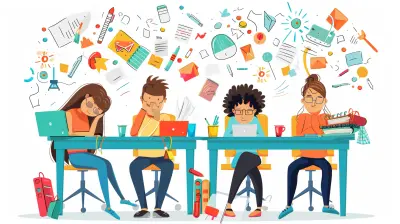
Building Stronger Learning Communities in 2026 and Beyond
1 May 2026
First, we have to admit that the old model is dead. The traditional classroom setup where one person talks and thirty people listen was designed for the industrial age. It was built for efficiency, not for connection. We are now living in the attention economy, and attention is the most expensive currency there is. You cannot buy it with a syllabus. You have to earn it with belonging.
Think about the last time you learned something really well. Was it in a silent room reading a textbook? Or was it in a study group where someone explained a concept wrong, everyone laughed, and then you figured it out together? The second scenario sticks because it had friction. It had emotion. It had community.
In 2026, the platforms we use will be smarter, but they will also be colder if we let them. The danger is that we automate everything. We automate grading, we automate feedback, we automate discussion prompts. But you cannot automate a relationship. You cannot automate the moment a student says "I don't get it" and another student says "me neither, but let's look at this differently." That is the magic. That is the thing we have to protect.
Why "Low-Stakes Connection" Beats High-Tech Gimmicks
Here is a truth that might sting a little: most "community features" in online learning platforms are garbage. The mandatory "Introduce yourself" forum where everyone posts the same three sentences and never looks at it again. The awkward breakout room where nobody wants to speak first. That is not community. That is a ghost town with a welcome mat.Real community is built in the low-stakes moments. It is built in the chat box during a boring lecture where someone cracks a joke. It is built in the shared frustration of a broken link. It is built in the Slack channel at 11 PM when someone posts a question and gets three replies in two minutes.
For 2026, we need to design for these moments intentionally. Instead of forcing a formal introduction, create a channel for memes related to the subject. Instead of a graded discussion board, create a "water cooler" space where students can talk about anything. The goal is to lower the barrier to entry. If making a connection feels like work, nobody will do it.
I remember teaching a cohort where the best conversations happened in the "off-topic" channel. People shared their pets, their weekend plans, their frustrations with the homework. That channel was not a distraction. It was the engine. Once people felt known as humans, they were way more willing to take intellectual risks in the main class.

The Role of the "Community Architect"
In the future, we are going to need a new role in education. I am not talking about a teacher or a facilitator. I am talking about a Community Architect. This is someone whose job is not to deliver content, but to design the social infrastructure around it.Think of it like a party host. A good host does not just open the door and say "have fun." They introduce people who have common interests. They make sure the music is at the right volume. They check on the person standing alone by the snack table. A Community Architect does the same thing for a learning group.
This person identifies the quiet students and gives them a low-pressure way to contribute. They notice when a conversation is dying and ask a provocative question. They celebrate small wins publicly. They create rituals. Maybe it is a "Friday Fun Fact" thread. Maybe it is a weekly "struggle session" where everyone shares what they found hardest that week. These small rituals become the heartbeat of the group.
If you are a teacher or a course creator, you can be this person. But do not try to do it alone. Empower your students to be co-hosts. Give a few trusted students the role of "community champions." Let them moderate, welcome newcomers, and start conversations. Ownership is the secret sauce. When students feel like they own the space, they protect it.
Asynchronous vs. Synchronous: The Balance We Keep Getting Wrong
We have been fighting about this for years. Some people say live classes are essential. Others say everything should be recorded and self-paced. The truth is, both camps are missing the point.The issue is not the format. The issue is the expectation. If you have a live session where the teacher talks for 90 minutes and nobody interacts, you have wasted everyone's time. If you have an asynchronous course with zero human touchpoints, you have created a lonely library.
The sweet spot for 2026 is a hybrid rhythm. You need a predictable heartbeat. For example, maybe you have one live session per week that is strictly for connection and Q&A, not for lecture. The lecture is pre-recorded. The live time is sacred. It is the time to look at each other, to ask "does this make sense?" and to dig into the messy parts.
But even the asynchronous parts need a pulse. Use tools like video responses instead of text posts. Seeing a face and hearing a voice creates a completely different level of empathy. A two-minute video of someone explaining their confusion is way more powerful than a paragraph of text. It humanizes the struggle.
Handling the Ghosting Problem
Let's talk about the elephant in the room. Ghosting. Students drop out. They stop showing up. They go silent. In a physical classroom, you notice the empty chair. In a digital space, it is easy to pretend everyone is fine until they are gone.Strong communities have a safety net. In 2026, we need to build systems that detect disengagement early and respond with a human touch. Not an automated email that says "We miss you!" That is insulting. Instead, a personal message from a peer or the Community Architect. "Hey, I noticed you haven't been around. Everything okay? Here is a summary of what you missed."
This requires effort. But it is the difference between a course and a community. A course sends a bill. A community sends a lifeline.
I have seen this work in practice. A friend of mine runs a coding bootcamp. They have a rule: if you miss two live sessions, you get a phone call. Not an email. A phone call. The dropout rate dropped by half. Why? Because someone cared enough to pick up the phone. That is not scalable in a traditional sense, but it is scalable in a meaningful sense. You can train a small team to make five calls a week. That small investment saves dozens of students.
The Danger of Echo Chambers
We cannot talk about building community without talking about the dark side. Communities can become echo chambers. They can become places where groupthink takes over and dissenting voices are silenced. In learning, this is deadly. If everyone agrees all the time, nobody is learning.A strong learning community in 2026 needs to be intentionally diverse. Not just in demographics, but in perspective. You need the person who thinks the theory is wrong. You need the person who asks "why are we even learning this?" You need the person who connects the topic to something completely unrelated.
As a Community Architect, your job is to protect the contrarian. Make it safe to disagree. Normalize the phrase "I have a different take." If the room feels too comfortable, stir the pot. Ask a controversial question. Present a flawed argument and ask students to tear it apart. Learning happens at the edge of discomfort, not in the center of agreement.
Tools Are Tools, Not Solutions
I am going to say something that might get me in trouble with the tech crowd. The tool does not matter. I do not care if you use Discord, Slack, Circle, or a custom platform. I do not care if you have AI moderation or not. If the culture is weak, the platform is a graveyard.That said, there are some features that genuinely help in 2026. Look for platforms that allow for lightweight, spontaneous interaction. Voice channels where people can just hang out. Threaded discussions that don't feel like a homework assignment. Easy ways to share media and react with emojis. But never let the tool dictate the culture. You dictate the culture.
One thing I do believe is that video will become even more important. Text is great for clarity, but video is great for connection. Encourage students to record quick video updates. Do a weekly "community check-in" where you record a short video talking about the week ahead. It does not need to be polished. In fact, the less polished, the better. A slightly messy video where you stumble over your words feels real. It feels human.
Measuring What Matters
We love data in education. We track completion rates, test scores, engagement metrics. But we rarely track belonging. How do you measure if someone feels like they are part of something?You cannot put it in a spreadsheet, but you can sense it. You can see it in the chat. You can hear it in the tone of the questions. You can feel it in the energy of a live session.
In 2026, we need to get comfortable with qualitative metrics. Ask your students simple questions. "Do you feel like you can ask for help here?" "Do you know someone in this class by name?" "Do you look forward to the live sessions?" These are the real KPIs. If the answers are yes, the learning will follow.
I run a simple pulse check every month. I ask students to rate their sense of belonging on a scale of 1 to 10. If it dips below a 7, I know I have work to do. It is not scientific, but it is honest. And it gives me a reason to reach out.
The Generosity Principle
Here is a mindset shift that changes everything. In a strong learning community, everyone is both a teacher and a student. The person who is struggling with the math might be amazing at explaining the historical context. The person who is quiet in class might write incredible notes that they share willingly.Encourage generosity. Create a culture where sharing is the default. If someone finds a great resource, they post it. If someone figures out a tricky problem, they explain it. This does not happen by accident. It happens when you model it. As the leader, share your own mistakes. Share the resources you found helpful. Be vulnerable about what you do not know.
When you give permission to be imperfect, you unlock the deepest level of community. Because nobody wants to learn with a perfect person. They want to learn with a real person.
Looking Ahead to 2027 and Beyond
So, what does the future look like? I think we are going to see a backlash against the hyper-personalized, isolated learning path. People are realizing that efficiency is not the same as effectiveness. You can learn faster alone, but you learn deeper together.I think we will see more "learning pods" small groups of 5-10 people who move through a course together. I think we will see more peer-to-peer feedback loops where the teacher is more of a guide than a lecturer. I think we will see communities that outlast the course itself. People finishing a class and staying in the group for years because they built real relationships.
That is the goal. Not just to deliver information, but to create a network of humans who support each other long after the final exam. That is the legacy of a strong learning community.
A Final Thought
If you take one thing away from this, let it be this: start small. You do not need to overhaul your entire program tomorrow. Pick one thing. Create a simple ritual. Send a personal message to one student who seems quiet. Encourage a student to share a video instead of a text post. The small things compound.Building a stronger learning community is not about having the best tech stack. It is about having the warmest welcome. It is about making sure that when someone shows up, they feel like they belong. In 2026, that feeling is the most valuable thing you can offer.
So, go ahead. Turn off the auto-pilot. Turn on the human connection. Your community is waiting.
all images in this post were generated using AI tools
Category:
Learning CommunitiesAuthor:

Bethany Hudson
Discussion
rate this article
2 comments
Asher Fisher
Learning communities are the future! Let's connect, collaborate, and watch the magic happen!
June 30, 2026 at 11:36 AM
Bethany Hudson
Absolutely! Collaboration is key to fostering innovation and growth in learning communities. Looking forward to seeing it unfold.
Parisa McWilliams
Empowering learning communities fosters growth and collaboration. Let's embrace innovative ideas and support each other as we shape a brighter future for education in 2026 and beyond.
May 2, 2026 at 12:48 PM
Bethany Hudson
Absolutely! Together, we can create vibrant learning environments that inspire and uplift everyone involved. Let's keep pushing the boundaries of education.