Discovering Microorganisms with Homemade Microscopes
7 April 2026
Have you ever wondered what invisible creatures live on a leaf, in a drop of pond water, or even on your own skin? You don’t need a fancy lab or expensive equipment to find out. With a homemade microscope and a little curiosity, you can peek into the hidden world of microorganisms right from your kitchen table.
Sounds cool, right? Let’s dive into the microscopic universe and see how you can start your very own journey of discovery—with just a few household items and a spark of curiosity!
🧫 What Are Microorganisms Anyway?
Okay, let’s start with the basics. Microorganisms, or microbes, are tiny living things that are too small to be seen with the naked eye. We’re talking bacteria, protozoa, algae, fungi, and even some viruses. These microscopic life forms are everywhere—literally everywhere.That yogurt you love? Packed with bacteria (the good kind!). The soil in your backyard? A jungle of microbes. Even your cellphone screen? Yeah, let’s not go there…
Microorganisms may be invisible to your eyes, but they are mighty. They help digest our food, decompose waste, and even produce oxygen. And the coolest part? You can observe them at home using a DIY microscope.
So, how do you even make a microscope at home? Let’s get into it.
🔬 Building Your Own Microscope at Home
You don’t need to break the bank or be a science wizard to build a microscope. In fact, you might already have what you need lying around the house. Here's a simple way to create a basic microscope using a few common items.🛠️ Supplies You’ll Need:
- A clean smartphone or tablet with a decent camera- A small laser pointer lens (you can salvage one from a broken laser pointer)
- Clear tape
- A flashlight or strong light source
- A flat surface and a few coins or bottle caps (to adjust height)
- Glass slides (or a clean piece of clear plastic)
- Droppers or pipettes (optional but helpful)
📱 Step-by-Step Guide:
1. Attach the LensTake the tiny lens from the laser pointer and tape it directly over your phone camera. This turns your regular camera into a macro lens—meaning it can zoom in SUPER close.
2. Set Up Your Light Source
Microorganisms are tiny, so good lighting is key. Place the flashlight underneath a transparent surface (like a glass table) or shine it from the side onto your slide.
3. Prepare Your Specimen
Use a clear slide or piece of plastic to place a drop of pond water or scrape from the inside of your cheek (yep, your OWN cells). Keep it thin—a thick sample won’t give you a clear view.
4. Adjust the Focus
Stack coins or bottle caps to raise or lower your phone until the image becomes sharp. Move slowly. Sometimes, even a millimeter can make a big difference.
5. Observe, Capture, Repeat
You can snap pictures or record videos using your phone camera. Try different samples—soil water, yogurt, moldy bread, even dust from under your bed.
Boom! You’re now operating your very own high-tech (well, kinda) microbiology lab right from your kitchen table.
🧬 What Can You See with Your Homemade Microscope?
Now that you’re all set up, what exactly can you see?🦠 1. Bacteria
These guys are EVERYWHERE. Try swabbing your phone or your sink and placing it on a slide. You might catch a glimpse of rod-shaped Bacillus or little clusters of Cocci.🌿 2. Algae
If you grab some green pond water, you’re in for a treat. Long strands of Spirogyra or tiny green dots called Chlorella may dance across your screen.🧻 3. Protozoa
These are the “animals” of the microscopic world. Some even look like spaceships or jellybeans with tails. Try collecting rainwater that's been sitting in a flower pot.🌾 4. Fungi
Have some moldy bread? (No judgment!) Scrape some onto a slide and prepare to be amazed. You might see spore-producing structures that look like miniature trees.👄 5. Human Cells
Swab the inside of your cheek and stain it with a tiny drop of food dye. Voilà—cells with visible nuclei. You’re literally looking at YOU!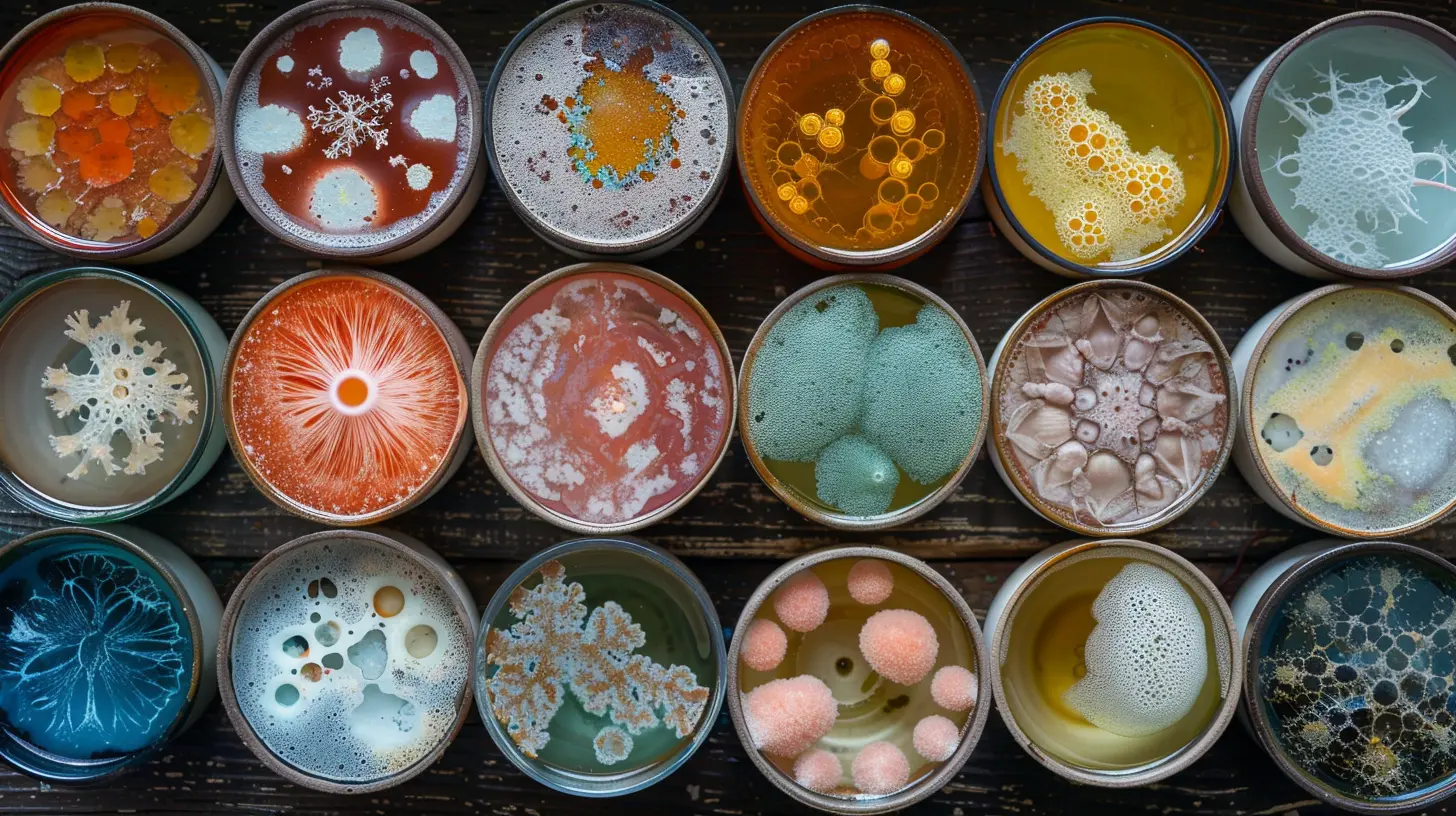
🌍 Why This Matters: The Bigger Picture
You might be thinking, “This is fun and all, but why should I care about microbes?” Great question.Microorganisms are the unsung heroes of our planet. While some can make us sick, the vast majority help keep the earth (and us!) alive and well.
- They power our immune system.
- They recycle nutrients in ecosystems.
- They help plants grow.
- They even clean up oil spills (yup, some bacteria are eco-warriors).
Understanding microbes helps us understand the natural world better—and there’s no better place to start than your own DIY microscope lab.
🧪 Turning Curiosity into Science Experiments
Want to take your microbial adventures to the next level? Here are a few fun (and safe) science experiments you can try:🌡️ Microbe Heat Test
Place identical samples (say, yogurt or pond water) in two spots: one sunny and warm, the other cold and dark. Examine them daily to see which microbes thrive where. It's a crash course in microbial preferences!🧂 Salt vs. Microbes
Try growing mold on slices of bread—one plain, one sprinkled with salt, and one with sugar. Which one molds faster? You’re testing how different environments affect microbial growth.🧼 Battle of the Germs
Swab different surfaces (your keyboard, kitchen sponge, your pet’s food bowl), place the samples on separate slides, and observe. Which one is the germiest? You’ll never look at your phone the same way again!👨🔬 Inspiring the Next Generation of Scientists
Here’s the thing—too many people think science is boring or only for "smart" kids. But when you build your own microscope, you realize science is really just structured curiosity. It's play. It's discovery. It's wonder.Homemade microscopes aren’t just for kids—they’re for anyone who’s ever asked, “What’s going on that I can’t see?”
And who knows? Your simple backyard science might just spark a lifelong passion, or even a future career in microbiology, medicine, environmental science, or technology.
🤓 Useful Tips for Better Microscopic Adventures
Let’s keep it real—your first few tries might feel more “blurry blobs” than “microscopic masterpieces.” Don’t stress. Try these tips:- Use very small samples. A thin layer gives better clarity.
- Keep your lens clean. Even the tiniest fingerprint can ruin visibility.
- Try different lighting angles. Shadows matter at this level!
- Be patient. Focusing takes fine-tuning and a steady hand.
And most importantly—have fun with it. There are no mistakes in science, only learning.
📝 Journaling Your Discoveries
Want to level up your science game? Keep a micro-journal!Write down:
- What sample you tested
- What day/time it was
- What you observed
- Any surprises or changes over time
Sketch what you see or snap photos. You’ll build up your very own microbial portfolio—and trust me, that’s cooler than it sounds.
🎯 Final Thoughts: The Microscopic World Is Now in Your Hands
With just a bit of tape, a smartphone, and some curiosity, you’ve got everything it takes to be a homegrown scientist. Discovering microorganisms with homemade microscopes isn’t just educational—it’s inspirational.You're not just observing tiny life forms. You're learning to see the world in a completely new way. You’re entering a hidden universe, one drop of water at a time.
So go ahead—grab your phone, fish out that laser pointer lens, and start discovering the living universe all around you. Who knows what unbelievable things you’ll uncover right beneath your fingertips?
all images in this post were generated using AI tools
Category:
Science ExperimentsAuthor:

Bethany Hudson
Discussion
rate this article
2 comments
Valerie Rodriguez
This article brilliantly highlights the innovative approach of using homemade microscopes to explore the world of microorganisms. It not only fosters curiosity in science but also encourages resourcefulness and creativity in learning. A fantastic resource for educators and students alike! Thank you for sharing this insightful piece.
April 24, 2026 at 11:08 AM
Bethany Hudson
Thank you for your thoughtful comment! I'm glad you found the article engaging and useful for educators and students. Exploring science can be so much fun with simple tools.
Reagan McGee
This article offers a fantastic insight into the fascinating world of microorganisms! The idea of creating homemade microscopes is both innovative and accessible, encouraging hands-on learning. I appreciate how it inspires curiosity and creativity in science. Thank you for sharing such valuable information!
April 16, 2026 at 10:50 AM
Bethany Hudson
Thank you for your kind words! I'm glad you found the article inspiring. Happy exploring with your homemade microscopes!