Effective Homework Strategies for Students with Learning Disabilities
1 October 2026
Let’s be honest—homework can feel like climbing a mountain in flip-flops for many students. But for students with learning disabilities? It can feel like climbing that same mountain... blindfolded, with a backpack full of bricks.
The good news? With the right strategies, homework doesn't have to be such a grind. In fact, it can become more manageable—even (dare we say it?) empowering. Whether your child has dyslexia, ADHD, or any other learning disability, there are practical, tried-and-true ways to help make homework a smoother ride.
So grab your favorite snack, settle in, and let’s chat about some real, effective homework strategies that work for students with learning disabilities.
Why Homework Is Harder for Students with Learning Disabilities
Before we dive into solutions, it helps to understand the problem. Why is homework such a struggle for these students?Well, it’s not just about being “lazy” or “unmotivated.” These kids are often working twice as hard just to stay afloat. Here’s what’s going on behind the scenes:
- Processing speed: Tasks that take most students 15 minutes may take 45 minutes.
- Memory gaps: They might forget instructions, even if they were just said a few minutes ago.
- Trouble organizing thoughts: It’s hard to put ideas down on paper when your brain feels like a messy desk.
- Focus issues: ADHD and similar challenges mean keeping attention on a task feels like herding cats.
Knowing the "why" helps us come up with a better "how."
1. Create a Consistent Routine (Structure Is Everything)
Let’s start with something simple but powerful—routine. Structure helps kids with learning disabilities feel safe and in control. When they know what to expect each day, they’re less likely to feel overwhelmed.- Set up a daily homework time and stick to it.
- Choose a quiet workspace away from distractions—TV, siblings, barking dogs—you get the idea.
- Keep all materials handy, like pencils, erasers, highlighters, and chargers (because dead laptops love to ruin study sessions).
⚡️ Pro Tip: Use a visual schedule or checklist! Crossing off completed tasks gives a dopamine kick that can be super motivating.
2. Break It Down Like a Cheeseburger
Imagine trying to eat an entire double cheeseburger in one bite. You’d choke, right? Homework’s the same. Big tasks need to be broken into bite-sized chunks.- Instead of “Write a 3-page essay,” try:
- Brainstorm 3 main ideas
- Write the intro
- Flesh out one paragraph at a time
- Conclude with a summary
By breaking it down, we reduce stress and create more natural stopping points to rest and reset.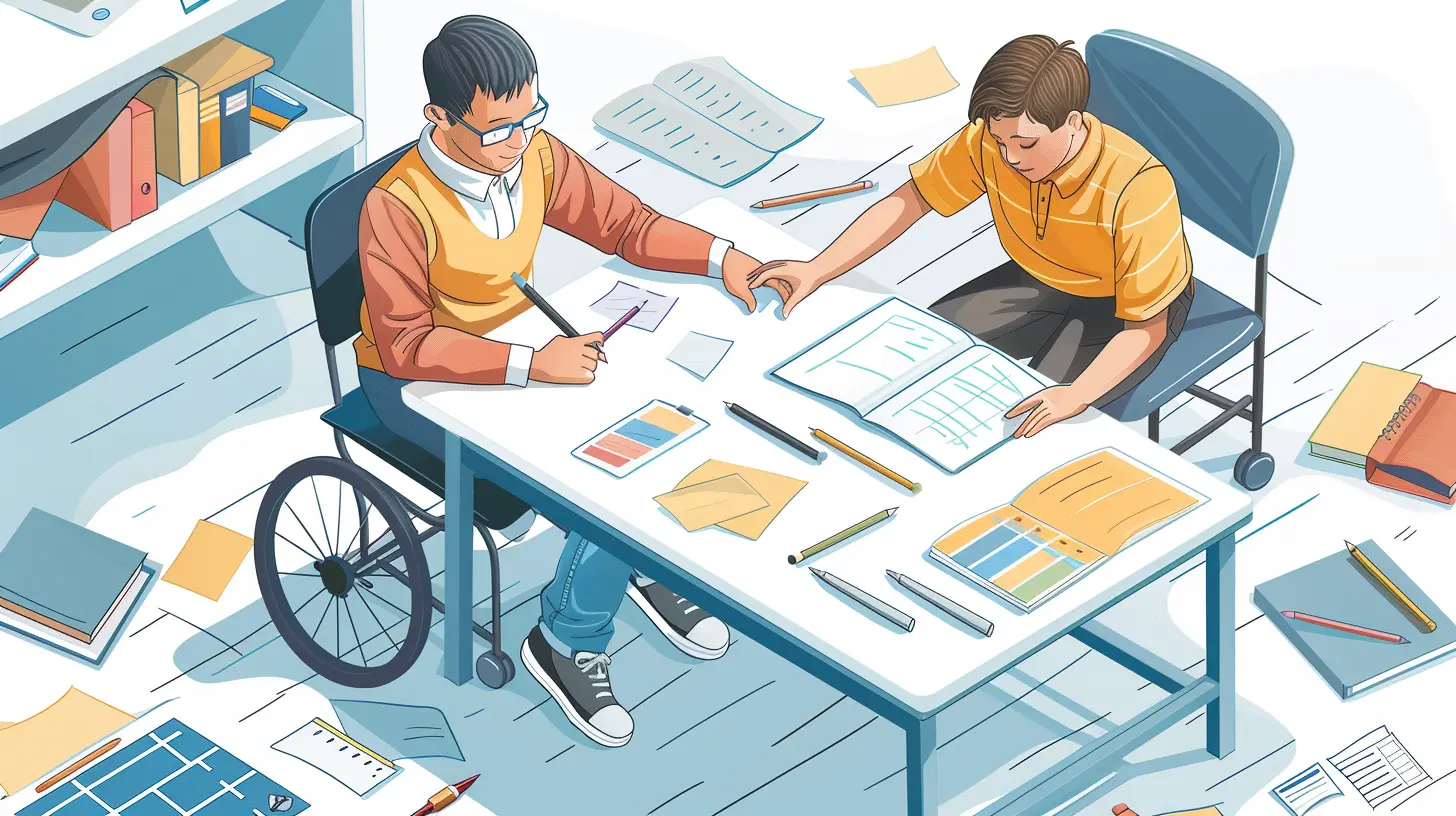
3. Chunk the Time, Not Just the Task
Even the most focused student can hit a wall after too much time on one subject. Enter the Pomodoro Technique (it’s not a pasta—it’s a time management trick!).Here’s how it works:
- Focus for 25 minutes
- Take a 5-minute break
- Repeat 3–4 times, then take a longer 15–20 minute break
Short, focused bursts of study time help keep the brain awake and engaged. And those little breaks? They’re like pit stops for your brain.
4. Use Multi-Sensory Learning Techniques
Students with learning disabilities often benefit from multiple ways of processing information. Why? Because their brains just light up when learning goes beyond words on a page.Here are a few ways to spice up study sessions:
- Read aloud while highlighting key points
- Use colored flashcards
- Draw diagrams or mind maps
- Tap into tech—like audiobooks or speech-to-text tools
Think of it like trying different doorways until one opens. Multi-sensory learning helps find the route that clicks.
5. Make Assistive Technology Your Best Friend
We’re living in a golden age of learning tools—so let’s use them! Assistive technology can level the playing field and make tasks more accessible.A few favorites:
- Speech-to-text software (like Google Voice Typing)
- Text-to-speech readers for reading assistance
- Apps like Grammarly or Hemingway Editor to help with writing
- Math apps with visual aids and step-by-step help
Technology isn't cheating—it’s the equivalent of giving someone glasses when their vision is blurry.
6. Focus on Effort, Not Just Perfection
Let’s be real: perfection is overrated. Especially for students who are already doing double time to keep up. Instead of stressing over perfect answers, we should be praising persistence and progress.Try these instead of the usual “good job”:
- “I love how hard you worked on this.”
- “You really stuck with it even when it got tough.”
- “Look how much better this is than last week!”
When kids feel safe making mistakes, they’re more likely to try—and keep trying.
7. Partner with Teachers (They're Not the Enemy!)
You don’t have to go it alone. Teachers (and learning specialists) are part of your support crew. Don’t be shy about reaching out.Ask for:
- Clarified instructions (sometimes assignments are confusing—you're not imagining it!)
- Extended deadlines, if needed
- Modified assignments if it helps achieve the same goal more accessibly
Open communication can make a massive difference and helps everyone stay on the same page.
8. Encourage Self-Advocacy (Start Small!)
Eventually, we want students to be their own best advocates. But that starts with baby steps.Teach them to:
- Ask for help when something is unclear
- Use break times wisely
- Know their strengths and play to them
Imagine self-advocacy as giving them a toolkit for life. It starts with knowing which tools they need—and being brave enough to reach for them.
9. Celebrate Every Win (Yes, Even the Small Ones)
Got five spelling words done? That’s a win. Finished math without tears? Another win!Celebrating small victories keeps motivation high and brings joy back into learning. You don’t always need balloons and cake (though we’re not against it!). A simple high-five or sticker chart can be just as meaningful.
Wins build confidence, and confidence is fuel.
10. Stay Positive and Patient (Easier Said Than Done, We Know)
Last but not least: patience. Homework can stir frustration for both parent and student. Take a breath. Step away if needed. It’s okay to hit pause.Remember, you’re not just raising a student—you’re raising a whole human. And learning is a journey, not a sprint.
Quick Recap – Top 10 Strategies for Homework Success
Let’s wrap it all up with a quick cheat sheet:1. Build a consistent homework routine
2. Break big tasks into small steps
3. Use time-blocking with breaks (Pomodoro)
4. Tap into multi-sensory learning styles
5. Leverage assistive technology tools
6. Praise effort, not just results
7. Stay in touch with teachers
8. Empower kids to advocate for themselves
9. Celebrate little wins
10. Show patience and keep a positive vibe
Every child learns differently, and that’s perfectly OK. With the right mix of strategies and support, homework can stop being the monster under the bed—and start being a stepping stone toward independence and success.
So the next time you’re sitting down for a homework session, take a breath, pull out these tools, and remind yourself: you’ve got this. And so does your child.
all images in this post were generated using AI tools
Category:
Learning DisabilitiesAuthor:

Bethany Hudson