Exploring Gravity: Fun Ways to See Physics in Action
15 December 2025
Gravity. It’s the invisible force that keeps our feet on the ground, makes apples fall from trees, and holds the moon in orbit. Sounds kind of magical, right? But the truth is, gravity is just good old physics doing its thing. The best part? You don’t need a PhD or a lab coat to understand it. In fact, there are tons of fun (and shockingly simple) ways to actually see gravity at work—in your backyard, your living room, or even in the kitchen.
So, grab your curiosity and let’s break down this mysterious force in a way that's anything but boring.
What Is Gravity, Really?
Alright, before we get to the hands-on stuff, let’s quickly understand what gravity is all about.In simple terms, gravity is the force that pulls things toward each other. The more mass something has, the stronger its gravitational pull. That’s why the Earth can hold us down, but we don’t exactly see people orbiting around cars (thank goodness).
Sir Isaac Newton was the first to give gravity a proper explanation back in the 17th century. Legend has it, he saw an apple fall and had an "aha" moment. Fast forward a few hundred years, and Einstein came in with his theory of general relativity, explaining gravity as the warping of space and time. Mind-blowing, right?
But we’re not getting into all the math here. Instead, let’s dive into real-life experiments and activities that bring gravity to life in ways you can see, touch, and totally geek out over.
Why Should You Care About Gravity?
Great question. Here’s the thing: gravity isn’t just some concept to memorize for a test. It’s literally shaping your life every second. From how you walk, to why objects fall, to the reason astronauts float in space—it’s all gravity.Understanding gravity helps us understand motion, space travel, planetary orbits, and even climate. Plus, once you grasp it, a whole bunch of other science concepts start to make a lot more sense.
Fun DIY Experiments to See Gravity in Action
Let’s get hands-on! These activities are easy, safe, and insanely cool. You can do most of them with stuff you already have lying around the house.1. The Classic Drop Test
What you'll need:- A heavy object (like a book)
- A light object (like a piece of paper)
Here’s what to do:
Hold both at the same height and drop them at the same time. What happens?
Usually, the heavy item hits the ground first, right? But is that gravity’s fault?
Not quite. Air resistance is playing a sneaky role here. Crumple the paper into a tight ball and try again. Boom—they land together. That’s gravity pulling equally on both, just like Galileo said centuries ago.
What it shows: Gravity pulls all objects at the same rate regardless of mass... unless air resistance interferes.
2. Water Cup Flip
What you'll need:- A plastic cup
- Some water
- A string
Fill your cup halfway with water. Tie the string securely around it. Now, swing the cup overhead in a full circle (like a cowboy swinging a lasso). Seems risky, but if you do it fast enough, the water won’t spill.
Why it works: Gravity wants the water to fall, but the circular motion creates a force (centripetal force) that keeps the water “stuck” inside the cup.
A great way to show: How gravity competes with other forces.
3. Balloon Rocket
What you'll need:- A balloon
- A string
- A straw
- Tape
Thread the straw through the string and tape the inflated balloon (don’t tie it!) to the straw. Let it go and watch it zoom along the string.
You’re probably thinking—what’s this got to do with gravity? Well, gravity is pulling down the whole time, but the air escaping the balloon creates a thrust strong enough to fight against gravity—just like in actual rockets.
Physics at play: Newton’s Third Law meets a real-world gravity challenge.
4. Pendulum Swing
What you'll need:- A string
- A small weight (like a washer)
Tie the weight to the string and hang it somewhere stable. Give it a little push and let it swing.
This simple swing can tell you a ton about gravity. The swinging motion is all about gravity trying to return the weight to its lowest possible point.
Tip: Try making pendulums of different lengths and see how their movement changes.
Lesson learned: Gravity and motion are a dynamic duo.
5. Egg Drop Challenge
Tried and true. The goal? Keep a raw egg from breaking after a fall.What you'll need:
- A raw egg
- Soft materials (cotton, straws, bubble wrap, etc.)
- Creativity
Design a “parachute” or a cushioning container. Then drop from a height.
This challenge helps you understand how we can manipulate gravity’s effects through design—much like engineers do when designing spacecraft or safety gear.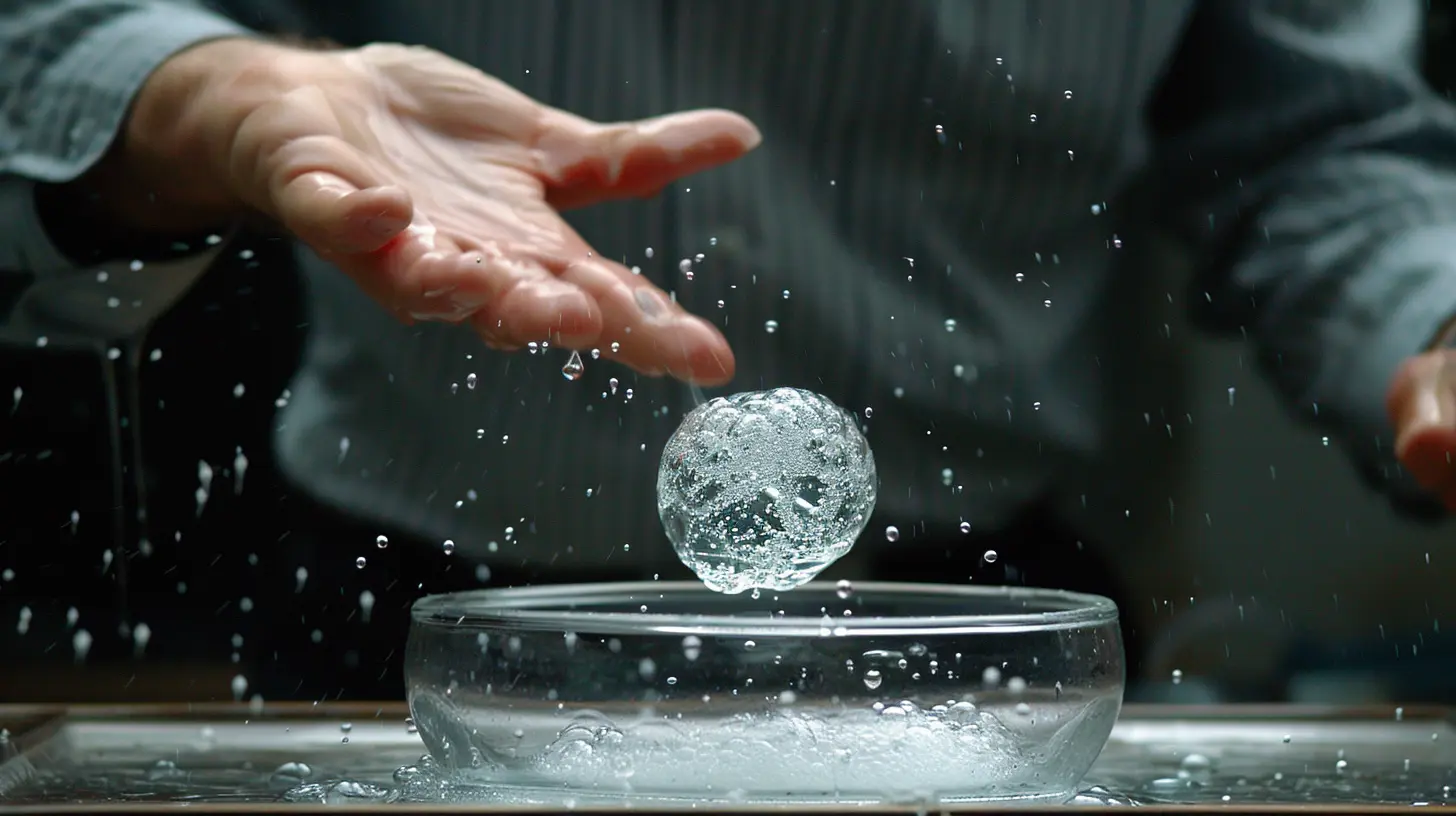
Gravity in Your Daily Life
You don’t always need a lab coat or experiment to notice gravity. It’s happening all around you:- Coffee spilling: That’s gravity reminding you not to rush.
- Jumping on a trampoline: You feel gravity's tug every time you come back down.
- Walking: Your muscles constantly work to keep balance against gravity.
- Sports: Ever tried to score a basketball? You’re literally battling gravity and using angles, speed, and force to win.
Once you start noticing, it’s hard to stop.
Gravity in Space: The Ultimate Playground
Wanna feel weightless? Head to space. Okay, maybe not right now, but astronauts definitely do.In orbit, astronauts experience something called "microgravity"—they're still under the influence of gravity, but it’s so small that they appear to float. They're actually in a constant free-fall around Earth. Wild, right?
Fun fact: The International Space Station (ISS) doesn’t escape gravity. It constantly falls towards Earth but keeps missing because it's moving sideways so fast. That’s orbital motion!
Make It a Gravity Game Night
Wanna mix science with fun? Try these gravity-inspired games:1. Jenga
Stack those blocks carefully. Here, gravity is the villain waiting to make your tower collapse if you mess up.2. Marble Run
Build your own track with cardboard or buy a kit. Watching marbles zoom through loops and drops is a super visual way to understand acceleration due to gravity.3. Paper Airplane Challenge
Design the longest-gliding plane. Air resistance, shape, and of course—gravity—all affect its flight.How Gravity Shapes Our World (Literally)
Beyond everyday fun, gravity is doing some heavy lifting (pun intended).- Tides: The moon’s gravity pulls on the Earth’s oceans, creating tides.
- Planets' shapes: Earth is not a perfect sphere—it’s slightly squished due to gravity pulling toward the center.
- Black Holes: These are regions where gravity is so strong, not even light escapes.
All of this happens because gravity is relentless. Quiet, invisible, but powerful beyond imagination.
Gravity and You: Apply What You’ve Learned
Now that you’ve got some fun gravity tricks up your sleeve, here's how you can take it further:- Build a Rube Goldberg machine using gravity to power motion.
- Try timing how long it takes different objects to fall (and maybe graph your results).
- Watch astronauts do gravity demos on the ISS (they’re on YouTube!).
- Start a science journal and write your gravity observations throughout the week.
Final Thoughts
Gravity doesn't have to be some abstract, textbook-only topic. It’s a real, tangible force you can observe, play with, and understand—no chalkboard equations needed.And the best part? Once you start seeing gravity in action, the world just makes a little more sense. Suddenly, it’s not just “stuff falling” or “things staying down”—it’s physics in motion.
So the next time you drop a pen, spill a drink, or jump up and down for fun—remember: you're interacting with one of the universe’s most important forces. And that? That’s pretty awesome.
all images in this post were generated using AI tools
Category:
Science ExperimentsAuthor:

Bethany Hudson
Discussion
rate this article
2 comments
Scarlett Hardy
What a delightful read! Exploring gravity through fun activities makes physics so accessible and exciting. Can't wait to try these experiments!
December 30, 2025 at 4:58 AM
Bethany Hudson
Thank you! I'm glad you enjoyed it and are excited to try the experiments. Have fun exploring!
Zayne McVeigh
Gravity: the universe's way of reminding us that what goes up must come down—preferably not on your head!
December 17, 2025 at 5:30 AM
Bethany Hudson
Thanks for the clever reminder! Gravity truly keeps us grounded—literally and figuratively!