Making Slime: A Fun Introduction to Polymers and Chemistry
1 December 2025
Ever stuck your hands in a gooey, stretchy, colorful mess of slime and thought, "Whoa, this is SO cool!"? You're not alone. Slime isn’t just a trendy toy or a fun YouTube sensory craze—it’s actually a gateway into the fascinating world of chemistry. Yup, that squishy blob you love fiddling with is a science lesson in disguise. Pretty neat, right?
In this article, we’ll slide right into the science behind slime, unpack some awesome chemistry (in a super fun way), and walk through how you can whip up epic batches of your own slime at home. Spoiler alert: It’s easier than making pancakes.
So roll up your sleeves—things are about to get gooey.
What’s Slime, Really?
Okay, so what even is slime? To your hands, it’s squishy, stretchy, and satisfying to poke. But scientifically? Slime is a non-Newtonian fluid. That means it doesn’t act like a regular liquid or solid—it’s got a slippery personality.Depending on how you play with it, slime can ooze like syrup or snap like a rubber band. It laughs in the face of physics. But the real secret sauce behind its weirdness? Polymers.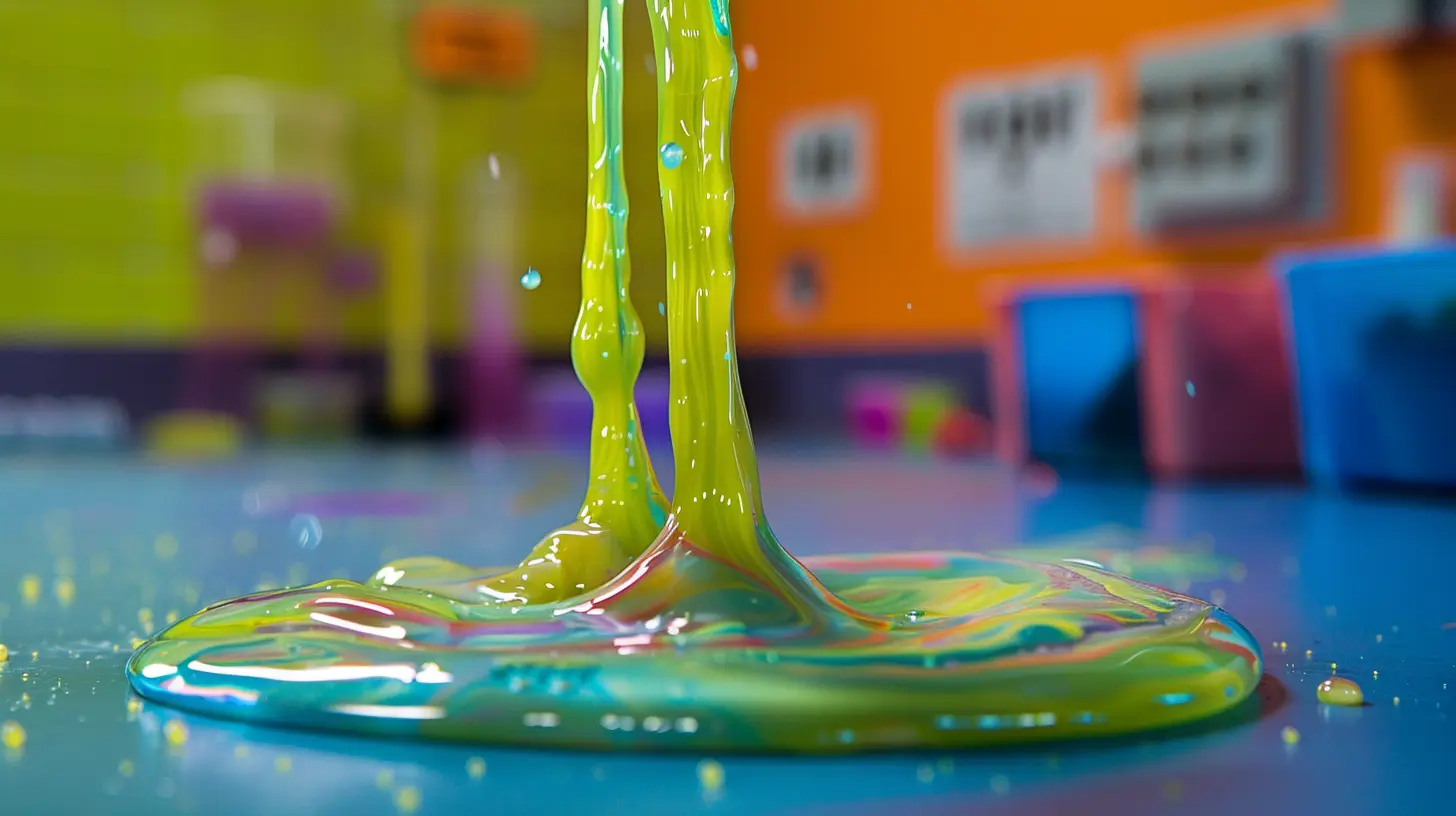
What Are Polymers? (Don’t Worry, This Isn’t a Chemistry Textbook)
Polymers are long chains of repeating molecules. Imagine a polymer like a necklace made of beads—each bead is a molecule, and the whole chain is the polymer. Cool, right?In the case of slime, these chains can slide past each other (making it squishy), but sometimes they get tangled or connected (making it stretchy or firm).
You use polymers every day. Think about plastic bottles, chewing gum, your hair, and even the DNA running your body—they're all made of polymers. So when you make slime, you're basically becoming a polymer pro without realizing it.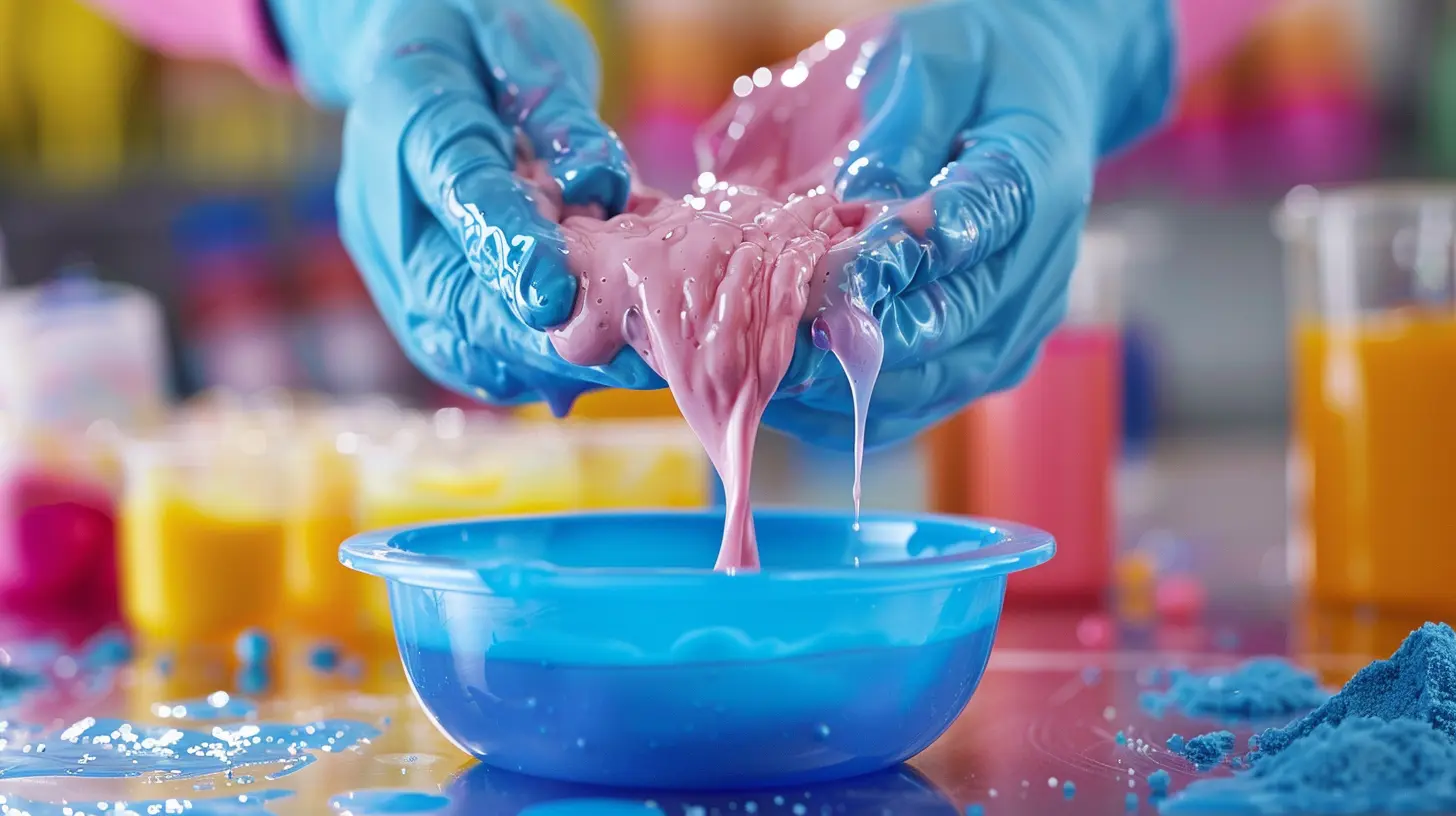
The (Simple) Chemistry Behind Slime
Let’s break this down without breaking your brain.Most slime recipes use these ingredients:
- Glue (usually white school glue)
- A slime activator (borax solution, contact lens solution, or liquid starch)
- Water
- Optional extras like food coloring, glitter, or foam beads to get fancy
Here’s where the chemistry magic kicks in.
Glue contains a polymer called polyvinyl acetate. When you add the activator (like borax), it helps link those individual polymer chains together. Imagine glue molecules holding hands with each other after the activator says “let’s all be BFFs!”—this linking is called cross-linking. And voilà! Your runny glue turns into that gloriously gooey slime.
Why Is Slime So Fun to Play With?
Good question. Slime isn’t just fun—it’s oddly satisfying. Here’s why:- Texture: It stretches, squishes, pops, and flops. It’s like stress relief for your hands.
- Sound: Ever hear those delightful “pops” and “plops”? ASMR gold.
- Customization: Add glitter, colors, scents, or even tiny charms. You’re basically a slime artist.
- Science in action: Watching ingredients transform in front of your eyes is like a real-life magic trick.
Let’s be honest: It’s the most hands-on, sensory, squishy science experiment ever.
Making Your Own Slime (The Classic Recipe)
Ready to get your hands dirty—err, slimy? Here's the tried-and-true recipe that works like a charm every time.Ingredients:
- 1/2 cup of white school glue (like Elmer’s)- 1/2 cup of water
- Food coloring (optional but highly recommended for flair)
- Glitter (because, obviously)
- 1 tablespoon of borax powder
- 1 cup of warm water
Steps:
1. In a bowl, mix glue and 1/2 cup of water. Stir until smooth.2. Add several drops of food coloring and some glitter. Stir again. (This is where the magic begins.)
3. In a separate cup, dissolve 1 tablespoon of borax in the warm water. This is your activator.
4. Slowly pour the borax solution into the glue mix, a little at a time. Stir as you go.
5. Boom! Slime will start forming almost instantly. Use your hands to knead it once it gets thicker.
6. Store in an airtight container so it doesn’t dry out.
Wasn’t that ridiculously easy?
Try These Slime Variations Like a True Chemist
Tired of basic slime? Spice things up! Each slime variation teaches you something new about chemical properties and polymers. Who knew experimenting could be this fun?1. Fluffy Slime
Add shaving cream to your glue mixture before the activator. It creates a cloud-like texture that’s super squishy. Science bonus? It introduces air into the mix, giving your slime more volume.2. Glow-in-the-Dark Slime
Use glow paint or glow powder. This shows how certain materials store and release energy—aka phosphorescence. Science AND style? Yes, please.3. Magnetic Slime
Add iron filings (available online) for a slime that responds to magnets. This taps into physics and materials science. Plus, it’s incredibly cool to watch slime creep toward a magnet.4. Butter Slime
Mix in soft modeling clay (like Daiso or Crayola Model Magic). It spreads like butter and offers a totally different tactile feel. Oh, and it smells divine.Oops, My Slime Failed! What Went Wrong?
Listen, even the best slime scientists have mishaps. If your slime’s more soup than goop, here’s what might’ve happened:- Too much activator: Your slime will be stiff and rubbery.
- Not enough activator: It’ll stay sticky and messy.
- Cheap glue: Not all glues are created equal. Stick to school glue with polyvinyl acetate.
- Wrong ratios: Slime is all about balance. Like baking, measurements matter.
Don’t give up. Adjust, experiment, and try again. That’s how all great scientists learn!
Slime and the Scientific Method
Guess what? Making slime is a real science experiment. No lab coat needed!Here’s how:
1. Ask a question: What happens if I add more activator?
2. Make a hypothesis: Maybe it’ll make the slime firmer.
3. Test it: Mix it up and see what happens.
4. Observe and record results: Did it get firmer or fall apart?
5. Repeat: Tweak the formula and keep going.
Boom—you’re doing science.
A Bit About Safety (Because Chemistry Is Cool, But… Let’s Be Smart)
Most slime ingredients are safe household items, but we’ve gotta play it smart:- Don’t eat the slime (no matter how yummy it looks).
- Wash your hands after playing.
- Keep borax and activators away from little kids or pets.
- If you have sensitive skin, wear gloves.
Safety goggles might be overkill…but bonus points if you wear 'em anyway. #MadScientistVibes
Why Teachers and Parents Love Slime
Beyond just the fun factor, slime is a sneaky educational tool:- Promotes hands-on learning
- Encourages critical thinking and experimentation
- Teaches chemical reactions and properties
- Gets kids curious about STEM
Let’s be real: If science class had more slime, we’d all have aced chemistry.
Turning Slime Into a STEM Lesson
Want to go next-level? Use slime to teach:- Density: Add lightweight beads vs. heavy glitter. Watch what sinks or floats.
- Viscosity: Compare fluffy slime to buttery slime. How fast do they stretch?
- Chemical reactions: See how different activators change the texture or speed of slime formation.
Suddenly you're not just playing—you're exploring real scientific concepts. Take that, boring worksheets!
Final Gooey Thoughts
Making slime is more than just a goofy afternoon activity (though it's PERFECT for that). It’s chemistry you can hold in your hands, a way to discover the magic of polymers, and a chance to feel like a scientist without cracking open a dry textbook.So the next time someone says slime is “just a fad,” hit them with your science smarts. Show them your stretchy, sparkly, polymer-packed genius. Because slime isn't just fun—it’s brainy, oozy, hands-on learning at its absolute best.
Now grab that glue, and get to experimenting. Your inner scientist (and inner kid) will thank you.
all images in this post were generated using AI tools
Category:
Science ExperimentsAuthor:

Bethany Hudson
Discussion
rate this article
2 comments
Chelsea Wilcox
This article beautifully blends hands-on fun with educational value, making slime an engaging way for kids to explore polymers and chemistry. It's a creative approach to learning science concepts!
December 12, 2025 at 11:58 AM
Bethany Hudson
Thank you! I'm glad you enjoyed the article and see the value in using hands-on activities like slime to inspire curiosity in science.
Faith McIlroy
What a delightful way to explore chemistry! Slime-making is fun and educational for all ages! 😊
December 1, 2025 at 3:58 AM
Bethany Hudson
Thank you! I'm glad you enjoyed it—slime truly is a fantastic way to spark interest in chemistry! 😊