Strategies for Supporting Students with Special Needs in Classroom Management in 2027
18 September 2026
Classroom management has always demanded more than keeping order. It asks a teacher to read a room, anticipate friction, and build conditions where learning can happen. When students with special needs are part of that room, the work becomes more precise. By 2027, several converging trends will reshape how schools approach this work: wider use of inclusive placements, growing recognition of sensory and executive function needs, more sophisticated assistive technology, and a teaching workforce stretched thinner than ever. The strategies below are not a menu to sample randomly. They form a coherent approach that treats behavior as communication, environment as instruction, and consistency as a form of respect.

Why Classroom Management for Special Needs Looks Different in 2027
A decade ago, many schools treated special education support as a parallel system. A student might spend part of the day in a general classroom and part in a resource room, with two separate sets of expectations. That model still exists, but the direction of travel is toward fuller inclusion, which means general education teachers now carry responsibilities that once belonged to specialists.Three forces drive this shift.
First, diagnosis rates for conditions such as autism spectrum disorder, ADHD, and language-based learning disabilities have risen, and students are being identified earlier. A typical elementary classroom in 2027 is likely to include two to four students with formal individualized education programs, plus several more with informal needs that never reach a formal label.
Second, the understanding of what counts as a special need has broadened. Trauma responses, anxiety, and sensory processing differences now sit alongside traditional categories. A student who shuts down after a loud fire drill may have no diagnosis at all, yet the management strategy required looks similar to one designed for a student with autism.
Third, technology has changed both the tools available and the distractions present. Speech-to-text, visual schedules on tablets, and noise-canceling headphones are more accessible than ever. So are notifications, games, and social media that compete for the same attention.
The practical consequence is this: classroom management for special needs is no longer a specialty within a specialty. It is becoming the baseline skill set for every teacher.
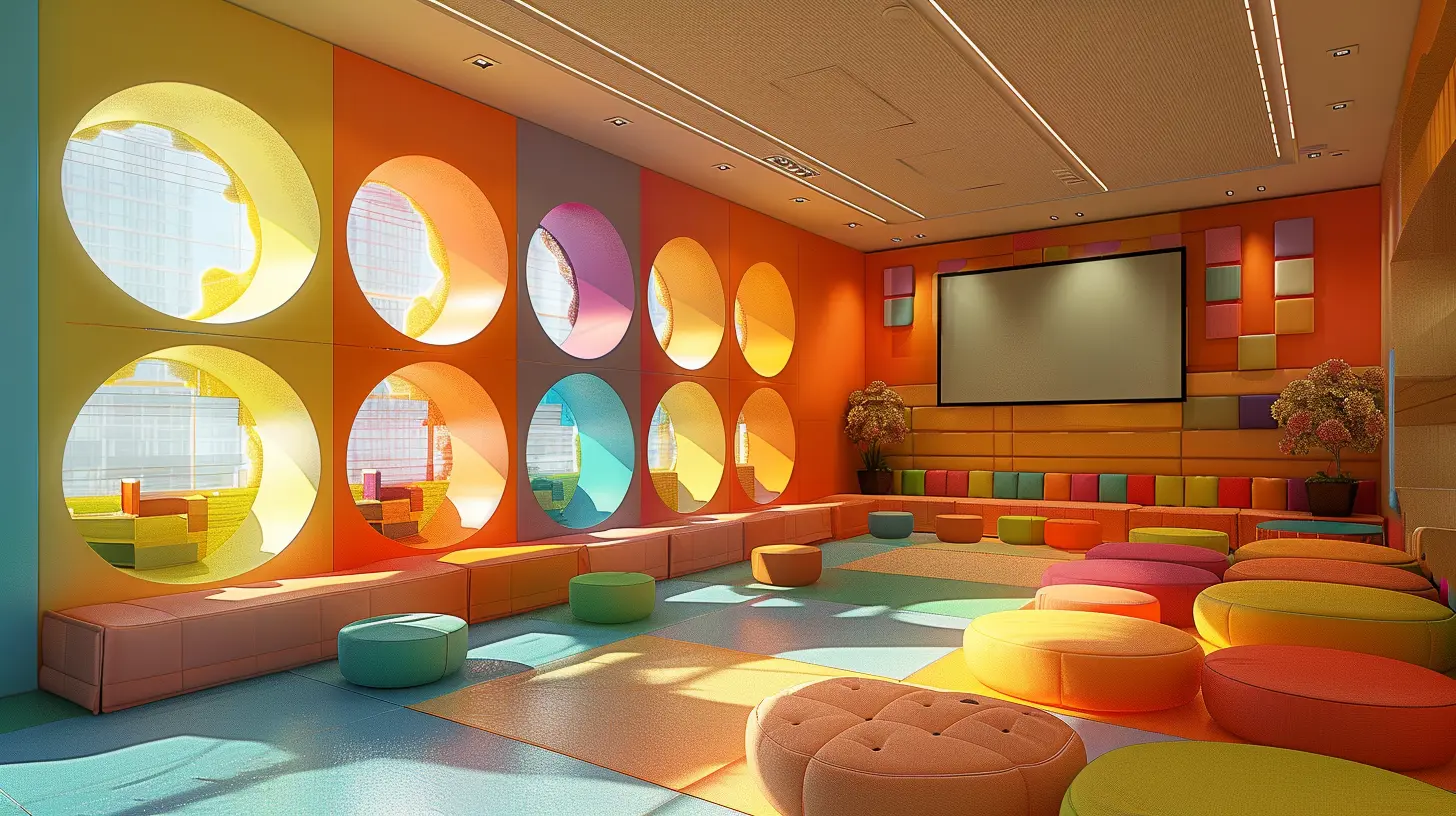
Build the Environment Before You Manage the Behavior
Most behavior problems are environment problems wearing a disguise. A student who bolts from his seat during independent reading may not be defiant. He may be sitting under a flickering fluorescent light, next to a noisy air vent, with a worksheet that requires handwriting he finds physically painful.Before writing any behavior plan, walk the room as if you were the student.
Ask specific questions:
- Where are the loudest and quietest zones?
- Which seats face high-traffic areas or doorways?
- Is the lighting uniform, or are there glare spots?
- Can a student move without squeezing past others?
- Are materials reachable without asking for help?
The Case for Flexible Seating Done Properly
Flexible seating has become a cliche in some schools, often reduced to beanbags and wobble stools scattered without purpose. Used well, it serves a specific function: giving students choice over the sensory input they receive. A student who seeks movement can use a rocking chair. A student who is easily overstimulated can choose a corner with a privacy screen.The trade-off is real. Flexible seating can increase off-task behavior if boundaries are vague. The solution is not to abandon it but to pair every option with a clear expectation. "You may sit on the floor cushion, but your body stays in one place and your eyes stay on your work" is a workable rule. "Sit wherever you want" is not.
Visual Supports as Permanent Infrastructure
Visual schedules, labeled supply bins, and posted routines help students with language processing difficulties, attention deficits, and anxiety. They also help everyone else. The mistake many teachers make is treating visual supports as temporary scaffolding to be removed once a student adjusts. In practice, many students benefit from these supports all year, and removing them prematurely often triggers regression.Consider a middle school example. A student with ADHD consistently forgets what to do after finishing a quiz. A simple laminated card on her desk listing three options (read quietly, check yesterday's notes, start the next assignment) eliminates the need for her to ask, reduces her anxiety, and removes a frequent source of disruption.

Regulation Comes Before Instruction
You cannot teach a dysregulated brain. This principle, drawn from what researchers describe as the stress response system, explains why so many behavior interventions fail. A student in fight, flight, or freeze mode is not choosing to ignore you. His nervous system has prioritized survival over algebra.This means classroom management must include planned opportunities for regulation, not just consequences for losing control.
Co-Regulation Is a Skill Teachers Can Practice
Co-regulation means lending your calm to a student who has none. It looks like lowering your voice rather than raising it, moving slowly, and offering a predictable presence. It sounds simple and is genuinely difficult, especially when you are frustrated.Practical techniques include:
- Getting at or below the student's eye level rather than looming
- Using short, concrete phrases instead of explanations
- Offering two acceptable choices to restore a sense of control
- Waiting silently for several seconds after speaking
What makes co-regulation effective is that it addresses the physiological state first. Reasoning with a dysregulated student is like trying to run software on a computer that has no power. The order matters.
When to Use a Break Space and When Not To
A calm corner with soft seating, fidget tools, and a timer can prevent escalation. But a break space becomes counterproductive when it functions as a reward for misbehavior or as a dumping ground. Students notice inconsistency quickly. If one student is sent to the calm corner as punishment and another is invited there to regroup, the space loses its meaning.The better approach is to make the space available to everyone, teach its purpose explicitly, and track who uses it and why. If a particular student uses it ten times a day, that is data, not defiance. It suggests the classroom environment or the academic demand needs adjustment.

Individualized Plans That Teachers Actually Use
Every student with an IEP has a document describing accommodations and goals. Many of those documents sit in a binder and are never consulted during the school day. That gap between paperwork and practice is where most inclusion efforts break down.Translate the Plan into Daily Actions
An accommodation like "preferential seating" is meaningless until someone decides what it means in room 214. Does it mean front row? Near the door? Away from the pencil sharpener? The teacher and the special education case manager should agree on specifics before the first day.A useful practice is to create a one-page summary for each student with significant needs. It should include:
- Triggers that predict difficulty
- Early warning signs of escalation
- Two or three strategies that reliably help
- What to avoid
- Who to call and when
This is not a replacement for the legal document. It is a working tool that a substitute teacher or a new aide can read in two minutes.
The Mistake of Over-Accommodating
There is a real tension between providing support and removing challenge. An accommodation that eliminates all frustration can prevent a student from developing coping skills. A student with anxiety who is always allowed to skip presentations may never build the tolerance needed for later life.The balanced approach distinguishes between accommodations that provide access and those that avoid growth. Extended time on tests provides access. Never requiring any oral participation avoids growth. Teams should revisit accommodations annually and ask whether each one is still necessary, rather than letting them accumulate indefinitely.
Behavior as Communication: Reading the Function
Every behavior serves a purpose, even when that purpose is not obvious or desirable. The traditional four functions are attention, escape, access to something tangible, and sensory stimulation. Identifying the function changes the intervention.Consider a student who rips up worksheets. If the function is escape from difficult work, offering a reward for not ripping will likely fail, because the work is still difficult. The effective response is to adjust the task difficulty, chunk the assignment, or provide a scribe. If the function is attention, the same ripping behavior might increase if the teacher responds with a lengthy lecture.
Functional Thinking Without a Formal Assessment
Full functional behavior assessments take time and trained personnel. Teachers can still apply the logic informally by tracking three things for a week: what happened right before the behavior, what the behavior looked like, and what happened right after. Patterns usually emerge.A high school example: a student argues with the teacher almost every day during the last ten minutes of class. The antecedent is fatigue and hunger. The consequence is being sent to the hallway, which removes him from an unpleasant task. The intervention is not a stricter consequence. It is a scheduled break and a protein snack.
Collaboration That Goes Beyond the Meeting
Inclusion depends on teamwork, but teamwork is often reduced to quarterly meetings where everyone nods and nothing changes. Effective collaboration is ongoing and informal.The Role of Paraprofessionals
Many classrooms include a paraprofessional assigned to support one or more students. The relationship between teacher and para can make or break the year. Common problems include unclear roles, paras hovering too closely over students, and teachers treating paras as aides for the whole class.Best practice is to clarify three things at the start: which students the para supports, what the para should do during whole-class instruction, and how the two of you will communicate. A brief daily check-in of two minutes often prevents weeks of small misunderstandings.
Working with Families
Families hold information that no assessment captures. They know what soothes their child, what happened last night, and which strategies have already failed. Inviting that knowledge in, rather than treating families as recipients of decisions, tends to produce better outcomes.That said, not every family can engage in the same way. Some work multiple jobs. Some have had difficult experiences with schools. Offering flexible communication, such as a short weekly text or a shared digital log, can be more effective than requiring in-person meetings.
Technology: Helpful, Neutral, or Harmful
Assistive technology in 2027 can be transformative. Text-to-speech lets a student with dyslexia access grade-level content. Speech-to-text lets a student with dysgraphia produce essays. Visual timers help students with time blindness manage transitions.Technology also introduces new problems. A student with impulse control difficulties may find a tablet more distracting than a worksheet. Headphones intended for noise reduction may become a way to avoid instruction.
The guiding question is not whether a tool is modern but whether it increases access to learning for a specific student. A low-tech index card sometimes outperforms an app. Teachers should trial any tool for two weeks and evaluate honestly, rather than adopting it because it seems innovative.
Common Mistakes and Misconceptions
Several beliefs sound reasonable but lead teachers astray."Consistency means treating everyone the same." Fairness is not sameness. A student with a sensory processing disorder may need a quieter workspace. That is not a privilege. It is a condition for learning.
"Rewards and consequences are enough." External incentives work for some behaviors and fail for others, especially when the underlying need is unmet. A sticker chart will not resolve a reading disability.
"The specialist will handle it." Specialists are essential, but they are not present for most of the school day. The general education teacher is the primary manager of the classroom environment.
"If it worked last year, it will work this year." Students change. Class composition changes. A strategy that succeeded in September may need revision by January.
A Realistic Framework for 2027
No single strategy covers every situation. What holds up across settings is a sequence.Start with the environment. Reduce unnecessary triggers. Make expectations visible. Build in movement and breaks.
Then observe. Track patterns without judgment. Ask what the behavior accomplishes for the student.
Then adjust. Change the antecedent before increasing the consequence. Provide support that preserves access without removing challenge.
Then collaborate. Share what you see with families, specialists, and support staff. Revise as you go.
This sequence is not glamorous, and it rarely produces instant results. It does, however, respect both the student and the teacher. It treats classroom management not as a contest of wills but as a design problem, one that rewards patience, curiosity, and a willingness to keep revising the plan.
The teachers who do this well are not necessarily the ones with the most training in special education. They are the ones who pay attention, stay flexible, and remember that behind every behavior is a person trying to communicate something. In 2027, that remains the most durable strategy of all.
all images in this post were generated using AI tools
Category:
Classroom ManagementAuthor:

Bethany Hudson