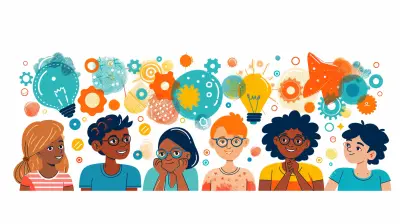
Developing Critical Thinking Skills for Academic Success
11 February 2026
Let’s face it — school isn't just about memorizing facts or acing exams. It's about learning how to think. And not just any kind of thinking, but critical thinking. Whether you're tackling a tricky math problem, writing a persuasive essay, or deciding which sources to trust for a research paper, your critical thinking muscles are working behind the scenes.
But here’s the thing: just like physical muscles, these mental ones need training. So, if you’re aiming for academic success (and let’s be real, who isn’t?), developing critical thinking skills is a game changer.
So, grab a coffee, get comfy, and let’s talk about how to sharpen that mind of yours.
What Is Critical Thinking Anyway?
Before we go any further, let’s break this down. Critical thinking is the ability to analyze information logically, consider different perspectives, and make reasoned judgments.It’s not about being critical in a negative way — you’re not just shooting down every idea you come across. Instead, it's about asking the right questions:
- Does this argument make sense?
- Is the evidence solid?
- Are there other ways to look at this?
Think of it like being a detective of thoughts. You're not just accepting what you're told — you're unraveling it, testing it, flipping it upside down, and seeing what holds up.
Why Does Critical Thinking Matter in School?
Okay, so now you know what it is. But why should you care? Can’t you just memorize stuff for the test and call it a day?Sure, you can. But if you want to go beyond surface-level learning — to really understand, apply, and engage with your education — critical thinking is your best friend.
Here’s how it directly impacts your academic game:
1. Better Problem-Solving
Whether it's a confusing science experiment or a philosophical debate, critical thinking helps you navigate complexity. Instead of freezing up, you break the problem down into manageable chunks and tackle each one with logic.2. Stronger Writing and Arguments
Ever had to write an argumentative essay or defend your position in class? Critical thinking makes your arguments rock-solid. You’ll learn to use evidence, anticipate counterclaims, and build a case that actually makes sense.3. Improved Reading Skills
Reading critically means you’re not just absorbing content — you’re interacting with it. You're analyzing the author's intent, identifying biases, and understanding the deeper meaning. It turns reading into an active conversation.4. Boosted Creativity
Here’s a fun twist: critical thinking doesn’t kill creativity — it fuels it! By evaluating ideas and combining them in new ways, you open up paths to fresh insights and solutions.5. Confidence in Learning
When you trust your reasoning process, you stop second-guessing yourself. You become a more independent learner — one who isn’t afraid to challenge the status quo or dig deeper.
The Building Blocks of Critical Thinking
Critical thinking isn’t a switch you just flip on. It’s a skill set, made up of smaller abilities you can practice and strengthen over time. Let’s break it down.💡 Observation
It starts with noticing what’s around you. Paying attention. Being aware of details, patterns, or inconsistencies.Think of it like being Sherlock Holmes — little clues can reveal big truths, but only if you're tuned in.
💭 Analysis
Once you’ve gathered information, it’s time to dissect it. What does it mean? What are the connections? Are there hidden assumptions?This step is like sorting puzzle pieces before you build the picture.
❓ Questioning
This one’s huge. Don’t accept things at face value. Ask “why,” “how,” and “what if.”Questioning is how we get to the root of the matter. It’s also how we uncover bias, vagueness, or manipulation.
⚖️ Evaluation
Now you’re judging the quality of the information. Is the source reliable? Is the argument sound? Are the facts legitimate?This is your inner fact-checker doing some heavy lifting.
🧠 Inference
Inference is drawing logical conclusions based on what you know. It’s like being a mental detective — connecting the dots even if not all the information is right in front of you.🗣️ Communication
Finally, you need to express what you’ve reasoned out. Whether it’s a class discussion, presentation, or paper, effective communication is how you share your critical insights with the world.
Real-Life Ways to Build Critical Thinking Skills
Alright, enough theory. Let’s get practical. Here are some simple, everyday ways to work on your critical thinking — no extra textbooks required.1. Ask More (and Better) Questions
Get curious. When you read something, hear something, or learn something, train yourself to ask:- Who’s saying this?
- What’s the evidence?
- What’s the counterpoint?
- Why does it matter?
Grab a journal and jot down your questions — it’s like a workout for your brain.
2. Play Devil’s Advocate
This one's fun (and a little mischievous). Take a stance opposite to your gut reaction, and try to defend it.If you think social media is bad for mental health, argue the opposite for a few minutes. You might not change your mind, but you’ll see the issue more clearly.
3. Break Big Ideas into Small Pieces
Got a complex concept in class? Don’t panic. Break it down like a LEGO set — piece by piece.Simplifying helps you really understand what’s at the core of the idea. It also helps you explain it to others.
4. Engage in Thoughtful Discussions
Talk with people who think differently from you. Really listen to them. Challenge each other respectfully.It’s not about winning an argument — it’s about expanding your mind.
5. Reflect Often
Take five minutes at the end of each day to reflect. What did you learn? What surprised you? Did you change your opinion?Reflection helps you connect the dots and internalize your growth.
The Role of Teachers and Schools
Of course, you’re not on this journey alone. Teachers and schools play a huge role in helping students develop critical thinking.Great educators do more than just deliver facts. They:
- Ask open-ended questions
- Encourage debate
- Provide real-world problems to solve
- Challenge assumptions
- Create space for reflection
If you're a student, don’t be afraid to ask for these things. And if you're a teacher or parent, model critical thinking in your own actions and conversations.
Where It All Leads…
Let’s zoom out for a second.Yes, critical thinking helps you get better grades. Yes, it helps you write stronger essays and crush exams. But the truth is, it does something much bigger:
It prepares you for life.
Life throws a lot at you — mixed messages, tough decisions, unpredictable problems. If you can think critically, you can handle all that with clarity and confidence.
You’ll be the one who sees through the noise, makes smart choices, and leads with reason rather than emotion.
That’s not just academic success — that’s real success.
Common Mistakes and How to Avoid Them
Because hey, we’re all learning, here are some common mistakes students make when trying to think critically — and how to overcome them.❌ Jumping to Conclusions
You see one piece of evidence and boom — you think you’ve solved it. Slow down. Gather more info. Think it through.❌ Believing Everything You Read
Just because it’s in a book or online doesn’t mean it's true. Always question the source and the motive behind the message.❌ Only Seeing One Side
It’s easy to get stuck in our own perspectives. But good thinking means considering multiple viewpoints — even the uncomfortable ones.❌ Confusing Emotions with Facts
Feelings are valid, but they aren’t always facts. Learn to separate the two when forming judgments.Quick Daily Habits That Sharpen Critical Thinking
Let’s wrap it up with some quick wins. Want to build your critical thinking in just a few minutes a day? Try this:- Read a news article and summarize it in your own words.
- Watch a debate and identify the strongest and weakest arguments.
- Solve a puzzle or brain teaser to flex your logical thinking.
- Write a journal entry reflecting on a decision you made and how you reached it.
- Teach someone else something you’ve learned — if you can explain it clearly, you understand it deeply.
Final Thoughts
You don’t need to be a genius to be a critical thinker. You just need to be intentional. It’s about having the courage to question, the patience to reflect, and the drive to push deeper.So the next time you're faced with a tough assignment, a group project, or even just a confusing situation in life, remember: thinking critically is your secret superpower.
You're not just here to pass tests — you're here to think, grow, and lead. Lean into it.
all images in this post were generated using AI tools
Category:
Student SuccessAuthor:

Bethany Hudson
Discussion
rate this article
2 comments
Nix Griffin
Empower minds, ignite curiosity, achieve greatness!
February 23, 2026 at 5:56 AM
Bethany Hudson
Thank you! Empowering minds and fostering curiosity are indeed key to developing critical thinking skills for academic success.
Micah Harper
This article highlights the vital role of critical thinking in academic achievement. I'm intrigued by the strategies shared for fostering these skills. It would be fascinating to explore how different disciplines might uniquely benefit from enhanced critical thinking. Looking forward to engaging discussions on this topic!
February 11, 2026 at 5:03 AM
Bethany Hudson
Thank you for your insightful comment! I agree that exploring the discipline-specific benefits of critical thinking can lead to enriching discussions. I look forward to hearing your thoughts on this topic!