Integrating Technology Without Losing the Human Touch
3 November 2026
Every school district that hands a tablet to a nine-year-old faces the same quiet question, usually unspoken in the planning meeting: what are we trading away? The device promises personalized practice, instant feedback, and access to worlds the classroom cannot contain. It also promises a screen between a child and the adult who knows when that child is having a bad morning. Both promises are real. The work of educational technology is not choosing one over the other. It is designing the conditions under which both can be true at once.
This article is about that design work. It is not a list of apps. It is a way of thinking about where technology belongs in learning, where it does harm, and how educators can make deliberate choices instead of default ones. The central claim is simple and defensible: technology in education succeeds or fails based on whether it amplifies human relationships or substitutes for them. Tools that extend a teacher's attention, feedback, and judgment tend to work. Tools that replace those things tend to fail, no matter how polished the interface.
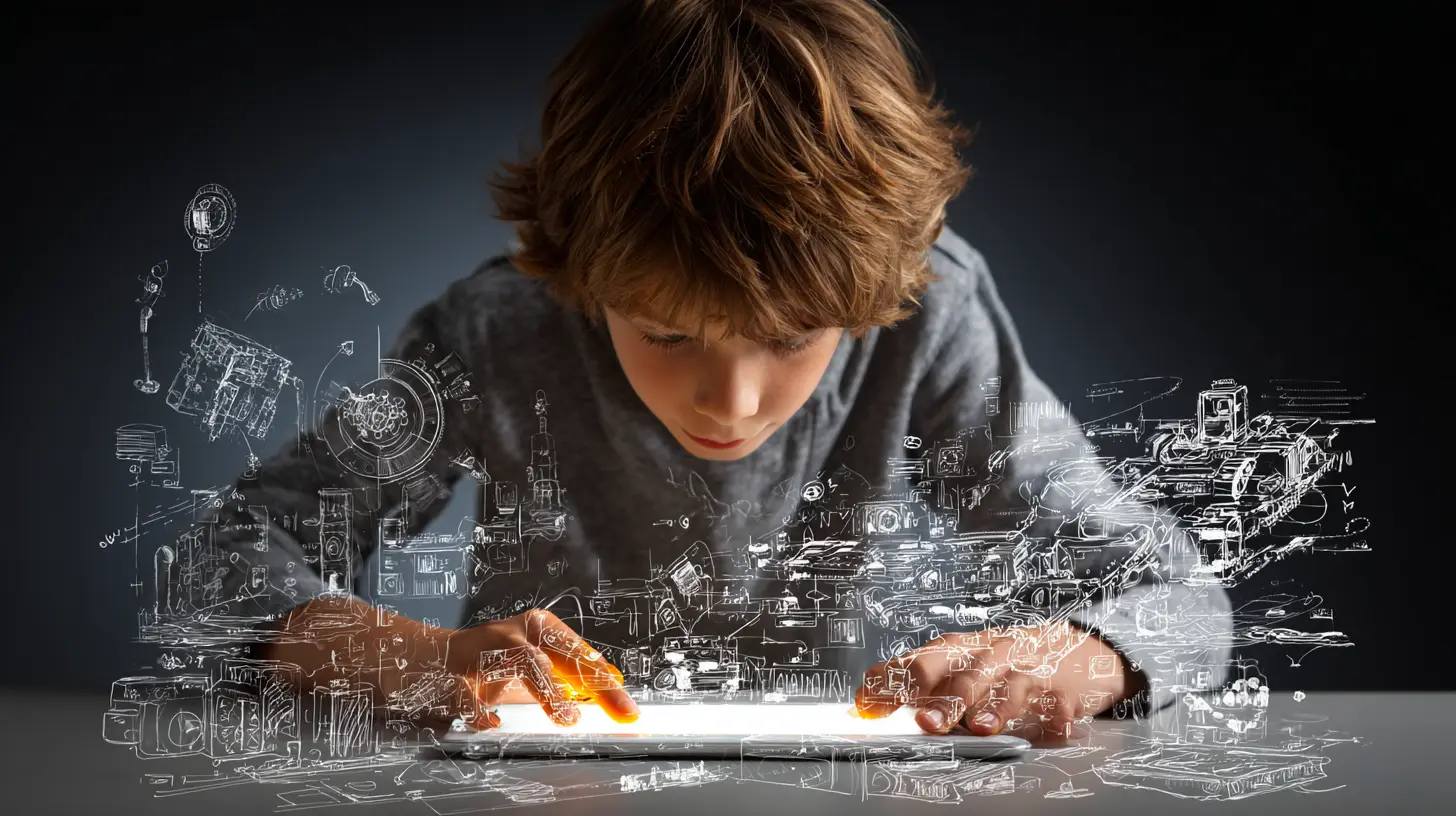
Why the "human touch" question keeps returning
The debate resurfaces every few years because each new technology arrives with the same two arguments attached. Advocates point to scale and efficiency. Critics point to isolation and depersonalization. Both sides are usually right about the extremes and wrong about the middle.What gets lost in the argument is that the human touch is not a single thing. It is a bundle of distinct functions, and different technologies interact with each function differently. Consider what a teacher actually provides:
- Diagnosis. Reading a student's error to understand the misconception behind it.
- Timing. Knowing when to push and when to back off.
- Modeling. Showing what expert thinking looks like in real time.
- Relationship. Being a person the student trusts enough to risk failure in front of.
- Judgment. Deciding what matters, what can wait, and what a particular student needs next.
A well-designed adaptive practice tool can genuinely help with parts of diagnosis and timing. It cannot model expert thinking in a way a student finds meaningful, and it cannot build trust. A discussion forum can extend relationship across distance but often weakens the timing and warmth that make relationships work. Once you separate the functions, the question stops being "should we use technology" and becomes "which functions should this tool touch, and which must remain human."
That reframing is the single most useful move an educator or administrator can make. It turns an ideological argument into a design decision.
The substitution trap
The most common mistake in edtech integration is what you might call the substitution trap: using a digital tool to do exactly what a human was doing before, only worse, and calling it innovation. A worksheet moved to a screen is still a worksheet. A lecture recorded and posted is still a lecture, minus the ability to read the room.Substitution is not always wrong. Sometimes it is the right first step, especially when it removes a genuine friction, like a student who cannot read the board from the back row or a family that needs to review material at home. But substitution becomes a trap when it is treated as the destination. The tool gets adopted, the human element gets quietly removed, and nobody asks whether the removed element was doing important work.
The useful test is this: before digitizing a practice, ask what the human was providing that the tool cannot. If the answer is "nothing important," digitize away. If the answer includes monitoring confusion, adjusting pace in real time, or noticing that a student has gone quiet, then the tool needs to be paired with a human process, not replace one.

Where technology genuinely amplifies teachers
The strongest cases for technology in education are not about replacing teaching. They are about extending a teacher's reach into places it could not otherwise go.Feedback at a frequency humans cannot match
A teacher with thirty students can give each one thoughtful written feedback perhaps once a week. A well-built practice system can flag errors immediately and repeatedly. The mistake is assuming that makes the tool a better teacher. It does not. Immediate corrective feedback is excellent for procedural fluency, like math facts, grammar drills, or vocabulary retrieval. It is weak for conceptual understanding, where a student needs someone to ask "why did you do that?" and then listen to the answer.The productive pattern is division of labor. Let the tool handle high-frequency, low-nuance feedback so the teacher can spend scarce human attention on low-frequency, high-nuance conversations. A teacher who no longer spends an hour grading routine practice has an hour for small-group discussion. That trade is only real if the time is actually redirected. If it is absorbed by administrative tasks, the technology has added cost without adding value. Leaders should track where reclaimed time goes, not just whether the tool was adopted.
Visibility into thinking that was previously invisible
Digital tools can surface process, not just product. A shared document shows revision history. A discussion board shows who built on whose idea. A simulation log shows every decision a student made, not just the final answer. This is genuinely new information, and it can change how a teacher intervenes.The caution is that visibility can become surveillance. Students who know every keystroke is logged may write more cautiously, take fewer intellectual risks, and perform compliance rather than thinking. The fix is transparency and restraint: tell students what is recorded and why, and collect only what you will actually use. Data that is gathered but never acted on is a cost with no benefit, and it erodes trust.
Access and flexibility
Technology removes real barriers: a student recovering at home, a family that speaks another language, a learner who needs text read aloud, a teenager who works evenings. These are not abstractions. They are the difference between participation and exclusion for specific students.The trade-off is that flexibility can become fragmentation. A course delivered entirely asynchronously may reach more people while offering fewer of the synchronous moments where belonging forms. The best designs usually blend: asynchronous for content and practice, synchronous for discussion and relationship. The ratio should follow the learners, not the platform.

Where technology quietly erodes the human element
The erosion is rarely dramatic. It happens through small defaults that nobody examines.The dashboard that replaces the conversation
Learning analytics dashboards are seductive because they feel like insight. A red flag next to a student's name appears to tell a teacher something. But a flag usually means the student is not clicking, not that the student is not learning. A quiet student who is thinking deeply and a disengaged student who is avoiding work can look identical in the data.When teachers act on dashboards without talking to students, they can misdiagnose and misintervene. The dashboard should trigger a conversation, not replace one. Treat every flag as a question to ask the student, not a conclusion to act on. This single habit preserves the human function of diagnosis while still using the data.
Personalization that narrows the world
Adaptive systems are good at routing students to the next item they are likely to get right. That is efficient for building fluency. It can also trap students in a narrow band of content, never exposing them to the challenging material that stretches them or the unexpected material that sparks curiosity.Human teachers do something adaptive systems struggle with: they deliberately assign work a student is not ready for, because the struggle itself is the point, or because the topic will matter to that student for reasons no algorithm knows. Personalization should be a tool in service of a broader curriculum, not a replacement for a teacher's judgment about what a student should encounter.
The disappearance of wait time
Good classroom discussion depends on silence. A teacher asks a question, waits, and lets students think. Digital response systems often compress this. The first hand raised or the first response submitted sets the pace, and the thoughtful student loses the space to think.If you use response tools, build in the wait. Show responses only after everyone has submitted. Ask students to write before they discuss. The technology should protect thinking time, not consume it.
A practical framework for integration decisions
Before adopting any tool, run it through four questions. They take ten minutes and prevent most bad purchases.1. What human function does this touch? Name it specifically: diagnosis, feedback, modeling, relationship, or judgment. If the tool claims to improve several, ask which one it does best and whether the others are actually served or just marketed.
2. What does the teacher do differently because of this tool? If the answer is "nothing," the tool is decorative. If the answer is "less of the important stuff," stop. The best tools change what teachers spend time on, shifting them toward higher-value human work.
3. What happens to the student who struggles most? New tools often work well for motivated, organized students and add friction for everyone else. Check the edge cases before rollout, not after.
4. How will we know it worked, and what would make us stop? Define success in terms of learning and relationship, not usage. A tool with high login rates and no measurable learning gain is a failure that looks like a success. Set a review date and a stopping condition in advance.
These questions are unglamorous. That is the point. Most edtech failures are not failures of technology. They are failures of decision-making.
Designing the blend: practical patterns that work
Certain patterns reliably preserve the human element while using technology well. None are universal. Each comes with conditions.The station rotation with a human anchor
Students rotate through stations, one of which is technology-based practice, one of which is teacher-led small-group instruction. The technology station handles repetition and immediate feedback. The teacher station handles diagnosis, discussion, and relationship. This works because the human station is protected by design, not left to chance. It fails when the teacher station becomes a catch-up or grading station instead of instruction.The flipped discussion, not the flipped lecture
Instead of recording lectures for home viewing, assign short readings or media for home and protect class time for discussion and application. This works because the human time is used for the functions only humans do well: modeling reasoning, probing misconceptions, building community. It fails when the home portion is too long or too passive, and when class time is not actually restructured to use the freed minutes.The feedback loop with a human close
Students use a tool for practice and receive automated feedback. Then, at intervals, the teacher reviews the tool's error patterns and holds short individual or small-group conversations about them. The tool does the volume work. The human does the meaning work. This works because the automated feedback is treated as raw material for a conversation, not as the conversation itself.The digital portfolio with human reflection
Students collect work digitally over time and periodically write or present reflections on their growth. The technology makes the collection easy and the history visible. The reflection is human, and it is where the learning consolidates. This works because the portfolio is a means, not an end. It fails when portfolios become compliance exercises with no audience and no reflection.Common misconceptions worth correcting
"More technology means more modern teaching." Modern teaching is about what students do with their minds, not what devices are present. A classroom with no devices can be more student-centered than one with a cart of tablets used for drills."Personalization means each student works alone." The most powerful personalization often comes from a teacher who knows a student well enough to make a specific, human judgment. Software personalization is one input among many.
"Data removes bias." Data reflects what was measured. If the measurement favors students with reliable internet, quiet homes, or prior familiarity with the format, the data carries that bias forward and dresses it in objectivity.
"Teachers resist technology because they fear change." More often, teachers resist because they have seen tools adopted, under-supported, and abandoned, with the costs borne by them and their students. Resistance is frequently a rational response to a history of poor implementation.
What leaders must get right
Integration succeeds or fails at the organizational level as much as the classroom level. Three leadership commitments matter most.Protect time for the human work. If a tool is meant to free teacher time, the organization must defend that time. Otherwise the freed minutes vanish into meetings and paperwork, and the promised human benefit never materializes.
Invest in support, not just licenses. A tool without training, coaching, and troubleshooting becomes shelfware. Budget for the human support around the technology, not only the technology itself.
Model honest evaluation. Leaders who ask hard questions about whether a tool is working, and who are willing to stop using it, create a culture where teachers can do the same. Leaders who treat adoption as the goal teach everyone to hide problems.
A note on AI in particular
AI tools are now entering classrooms with the same pattern of promise and risk. They can draft feedback, generate practice, and help students brainstorm. They can also flatten voice, produce confident errors, and tempt students to skip the productive struggle that builds understanding.The framework above applies without modification. Ask what human function the AI touches. Use it for high-volume, low-nuance work and keep humans on judgment and relationship. Be transparent with students about what the tool is doing and what it is not. And remember that the value of struggle is not a bug to be optimized away. A student who uses AI to avoid thinking has been served badly, no matter how polished the output.
The bottom line
Technology does not have a human touch problem. It has a design problem. Tools are neutral until we decide what they replace and what they protect. The educators who get this right are not the ones with the most devices or the newest platforms. They are the ones who ask, before every adoption, which human function is at stake and how it will be preserved.That question is not anti-technology. It is the most pro-technology stance available, because it ensures technology is used where it genuinely helps and kept away from where it quietly harms. The human touch is not a sentimental extra to be added at the end. It is the core of the work, and every integration decision should be measured against whether it strengthens or weakens it.
all images in this post were generated using AI tools
Category:
EducationAuthor:

Bethany Hudson