The Power of Patterns: How Math Shapes Our World
7 January 2026
Let’s face it—math has a bit of a reputation. For many, it’s the subject that made us sweat in school, filled with numbers, formulas, and puzzling equations. But here's the thing: math isn’t just about solving for x or memorizing multiplication tables.
It’s about patterns. And once you start noticing them? Whoa. It's like putting on a pair of glasses that reveal the hidden code behind, well… everything.
Yep, math is the wizard behind the curtain pulling the strings, laying out the blueprint of the universe, and guess what? You’re already using it every day—you just didn’t realize it.
Let’s jump into this fascinating world and see how math (specifically patterns) really runs the show.
The Universe: Brought to You by Patterns
Okay, imagine the universe as one giant jigsaw puzzle. Every piece is a number, a shape, a sequence. From the spirals in a sunflower to the predictable orbits of planets, everything in nature follows mathematical patterns.Think that’s just coincidental? Think again.
Take the Fibonacci sequence—a number sequence where each number is the sum of the two before it (1, 1, 2, 3, 5, 8, 13, and so on). You’ll find this quirky little sequence in pinecones, hurricanes, snail shells, and even the stock market.
Math isn't just confined to textbooks—it’s coded into our DNA, our cities, and even in the way we swat a fly. Seriously.
Why Do Patterns Matter Anyway?
Patterns are the brain’s BFF. They're how we make sense of chaos. When you recognize a pattern, you’re basically predicting what's coming next. Handy, right?Let’s say you've been binge-watching a mystery series. If you've figured out that someone dies every third episode, you're detecting a pattern—and probably watching too much television. But this is exactly what detectives, doctors, meteorologists, and even your Spotify playlist do.
Recognizing patterns = making sense of the world.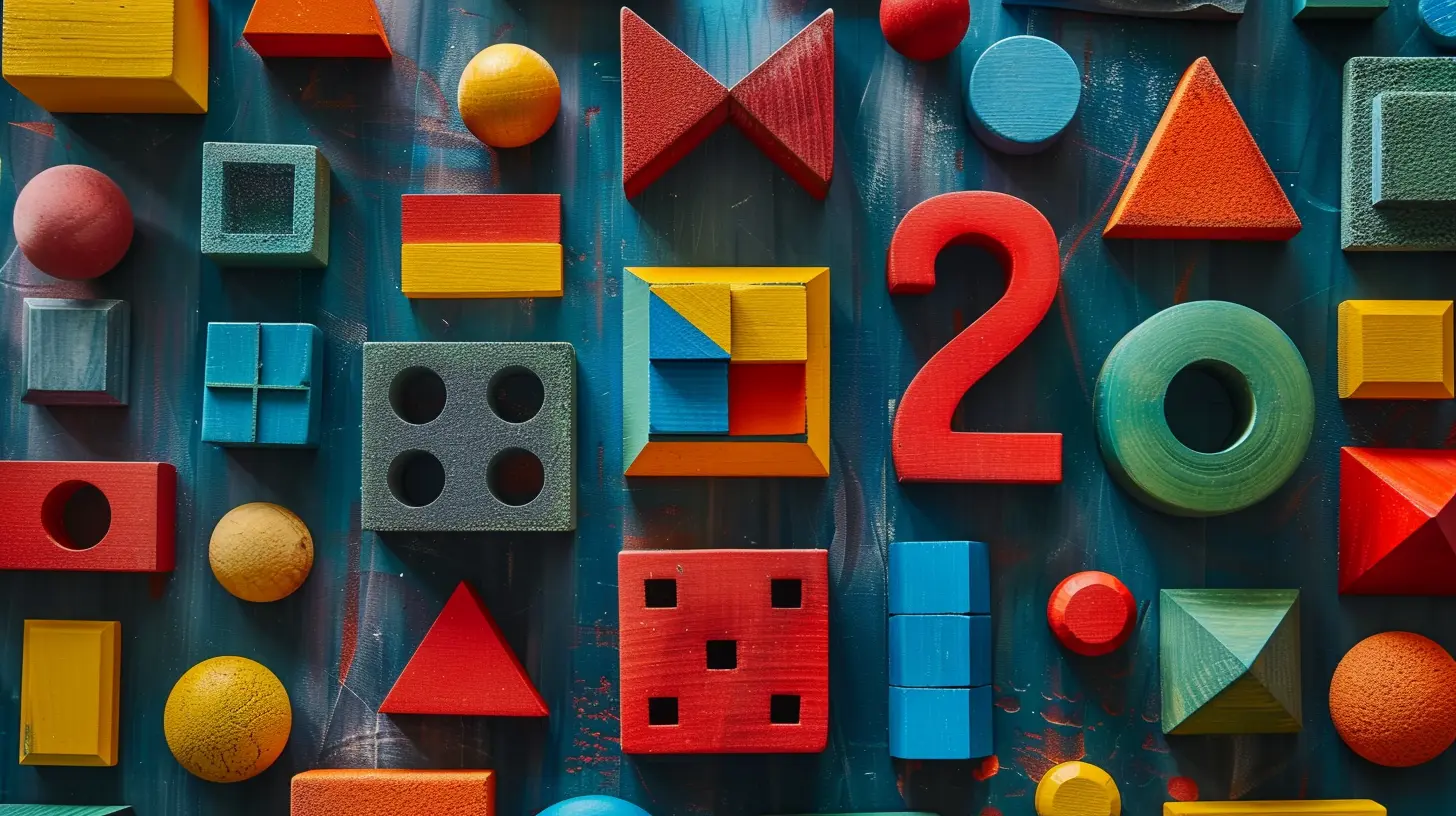
Nature’s Obsession With Patterns
We can’t talk about mathematical patterns without giving Mother Nature a standing ovation. She’s the original pattern addict.Fractals: Nature’s Geometric Flex
Ever seen a tree and noticed how the branches split into smaller branches, and then smaller ones after that? That’s a fractal. It's a pattern where the whole looks like the parts, and it's repeated at every scale.Mountains, clouds, river networks, even broccoli (shoutout to Romanesco!) follow fractal geometry.
Symmetry: Nature’s Aesthetic Code
From a butterfly’s wings to a tiger’s stripes, symmetry is everywhere. And it’s not just a pretty face—symmetry in animals often signals health and vitality. Even humans are wired to find symmetrical faces more attractive.Why? Because symmetry = order. And we love order like cats love cardboard boxes.
Math in Motion: Patterns in Time and Space
Patterns aren't just stuck in space—they roll through time too.Rhythms and Time Cycles
Ever tapped your foot to music? That beat you’re grooving to is a pattern. Drummers live by it, dancers love it, and your internal body clock (circadian rhythm) ticks right along with it.From menstrual cycles to moon phases, we’re rhythm babies, living on a beat.
Tidal Waves and Traffic
Patterns of ebb and flow don’t only apply to the ocean. Traffic jams, stock markets, and even fashion trends move in waves. And guess what? Math can predict and model these swells.No, it can’t tell you if shoulder pads will ever come back (please, no), but it can analyze how and when trends resurface.
How Technology Hugs Math Every Day
Okay, tech nerds, lean in. Your favorite gadgets are math-based wonders.Algorithms: Pattern-Detecting Ninjas
From the ads you see on Instagram to Netflix suggesting your next show-binge, algorithms are doing the heavy lifting behind the scenes. These bad boys are built on math patterns, predicting what you like based on what you’ve done.Sure, it’s creepy—but also cool?
Coding = Patterns in Disguise
Every app, game, or website you use started with lines of code. And coding? It’s just patterns turned into syntax. Once you understand the logic (the pattern), you can predict, fix, or create new behavior from machines.It’s like speaking robot—but with math.
The Art + Math Connection (Yep, Even Picasso Used Patterns)
Math and art? Oh, they’re besties.Artists use geometry for composition, balance, and symmetry. Musicians work with scales and rhythms (hello, fractions!). Even writers use plot patterns—think Hero’s Journey or the classic three-act structure.
And architecture? It’s basically math made physical. Patterns in columns, domes, arches—math holds the roof up. Literally.
The School Stuff: Patterns Are the Foundation
Let’s not forget: patterns are the first step in math education. It starts with things like “red, blue, red, blue… what comes next?” and evolves into algebra and calculus.Without understanding patterns, solving equations would be like trying to finish a puzzle with no corner pieces. Pure chaos.
So yeah, when your math teacher droned on about sequences, they weren’t just torturing you. They were showing you how to think logically. To predict. To create order from chaos.
Fun & Freaky: Weird Math Patterns That’ll Blow Your Mind
Brace yourself. These are the kinds of things that make math nerds (and low-key the rest of us) giddy.Rule of 9s
Multiply any number by 9 and add the digits of the result—guess what you get?9!
Example: 9 × 7 = 63 → 6 + 3 = 9
Try it with any number. It’s wild.
Palindromic Numbers
These are numbers that read the same backward and forward—like 121, 1331, or 12321. They’re symmetrical in a numeric way—a geeky cousin of mirrored selfies.Pascal’s Triangle
Looks like just a triangle of numbers, right? But dig deeper, and you’ll find binomial coefficients, Fibonacci sequences, and even fractals hiding in there. Basically, it’s the Swiss Army knife of math patterns.So... Why Should You Care?
Good question.Because recognizing patterns makes you smarter. It helps you make decisions faster, spot problems earlier, and build solutions creatively.
Whether you're trying to ace your next test, build a business, or just beat your friend at chess, pattern recognition gives you an edge. It's like having superpowers, except instead of flying, you're forecasting trends, solving puzzles, and decoding the matrix of life.
Not as flashy. Way more useful.
How to Start Seeing Patterns Everywhere
Here’s your challenge: Spot the patterns. They’re all over your day-to-day life.- Listen to your speech. Does it have rhythm?
- Watch traffic lights. Is there a cycle?
- Look at your hands. Notice symmetry?
- Try a sudoku or a Rubik’s cube. Feel your brain flex?
- Analyze your habits. Got a routine?
Once you start noticing these repetitions, your brain will start firing on all cylinders. You’ll begin to predict, prepare, and maybe even prevent problems. (And let’s be honest, that’s adulting at its finest.)
The Final Pattern
We started with the idea that math is full of patterns, and what we’ve uncovered is something way bigger.Math is the melody in music, the rhythm in your breath, the symmetry in your selfies, the heartbeat of cities, and the code embedded in everything from snails to skyscrapers.
Once you see that? You can't unsee it.
So, the next time someone rolls their eyes and says, “Ugh, I’ll never use this math stuff in real life,” just smile and say, “You're already using it—you just haven't noticed.”
Game. Set. Pattern.
all images in this post were generated using AI tools
Category:
Math SkillsAuthor:
Bethany Hudson
Discussion
rate this article
2 comments
Romina Conrad
Thank you for this insightful article! It's amazing how patterns in math not only structure our world but also connect us to nature and art. Your ability to highlight this relationship inspires a deeper appreciation for the beauty and relevance of math in our lives.
February 2, 2026 at 4:48 AM
Bethany Hudson
Thank you for your kind words! I'm glad you found the connection between math, nature, and art inspiring.
Poppy Pope
Great article! Understanding how patterns in math influence our daily lives is truly empowering. It opens up new ways of thinking and problem-solving. Keep sharing these insights; they inspire us to appreciate the beauty of mathematics!
January 8, 2026 at 11:31 AM
Bethany Hudson
Thank you for your thoughtful comment! I’m glad you found the insights empowering. Mathematics truly is beautiful and transformative!