The Rise of Personalized Learning Paths by 2027
26 April 2026
Picture this: You’re sitting in a classroom, staring at a whiteboard, while the teacher drones on about something you already mastered last week. Meanwhile, the kid next to you is completely lost, doodling spaceships because the lesson might as well be in Martian. Sound familiar? That’s the old model—one-size-fits-all education—and honestly, it’s been broken for decades. But here’s the good news: by 2027, that static, cookie-cutter approach is getting a radical makeover. Welcome to the rise of personalized learning paths, where your education bends to fit you, not the other way around.
Think of it like this: traditional schooling is like a buffet where everyone grabs the same plate of lukewarm spaghetti. Personalized learning? That’s a Michelin-star chef crafting a meal just for your taste buds, allergies, and cravings. By 2027, this isn’t just a buzzword—it’s becoming the backbone of how we teach, train, and grow. So, grab a coffee, and let’s dive into why this shift is unstoppable, how it’ll transform classrooms and careers, and what it means for you.
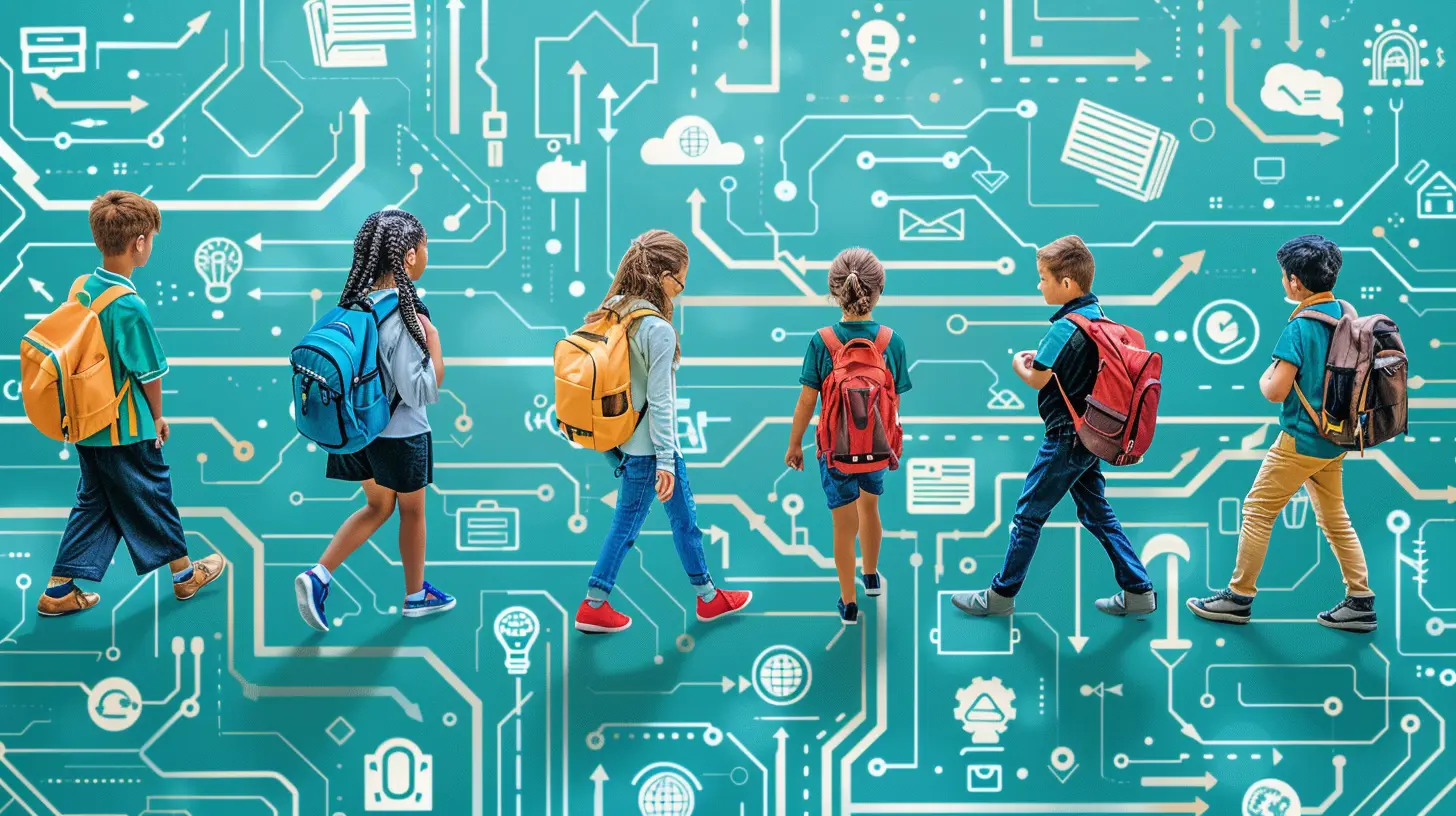
Why Now? The Perfect Storm for Personalized Learning
You might be wondering, “Why 2027? What’s so special about that year?” Great question. The answer isn’t a single event—it’s a convergence. Imagine three rivers merging into a roaring waterfall: technology, neuroscience, and a global hunger for relevance. Let’s break it down.First, the tech. Artificial intelligence isn’t just for self-driving cars or recommending cat videos anymore. By 2027, AI-powered platforms will be cheap, fast, and intuitive enough to analyze how you learn—your pace, your strengths, your blind spots—in real time. We’re talking adaptive algorithms that adjust a lesson’s difficulty mid-sentence. Think of it as a GPS for your brain: if you take a wrong turn, it recalculates instantly, no judgment.
Second, neuroscience. We finally understand that learning isn’t a linear highway. It’s a messy, beautiful network of connections. Researchers have shown that when content matches your prior knowledge and interests, your brain literally lights up like a Christmas tree. By 2027, schools and companies will use this data to design paths that feel less like homework and more like a personal quest.
Third, the demand. The old degree-for-life contract is dead. Jobs are evolving faster than ever—by 2027, experts predict that 85 million roles will shift or disappear. People need to upskill constantly, but who has time for a rigid, semester-long course? Personalized paths let you learn Python in three weeks while skipping the history of floppy disks. It’s about efficiency, not endurance.
The Technology Engine: AI, VR, and Micro-Credentials
Let’s get nerdy for a moment—but in a fun way. The tools powering this revolution are anything but boring. Artificial intelligence is the star player, but it’s got a strong supporting cast.AI Tutors That Actually Know You
Remember those clunky “smart” programs from a decade ago? They’d ask you a question, and if you got it wrong, they’d just repeat the same explanation. Useless. By 2027, AI tutors will be more like a patient, perceptive friend. They’ll notice when you’re zoning out (based on your response time or even eye-tracking) and pivot to a video, a game, or a real-world example. For instance, if you’re struggling with calculus, the AI might ask, “Hey, you love basketball, right? Let’s calculate the arc of LeBron’s three-pointer.” Suddenly, math clicks.Virtual Reality Field Trips
Learning history? Instead of reading about ancient Rome, you’ll walk its streets in VR, bartering with a digital merchant or debating in the Senate. By 2027, VR headsets will be as common as textbooks—maybe cheaper, too. This isn’t escapism; it’s immersion. When you experience a concept, you retain it 75% longer than when you just read about it. Personalized paths will let you choose your virtual adventures based on what excites you. Want to learn chemistry by mixing virtual potions? Go for it.Micro-Credentials and Badges
Forget the four-year degree as the only gold standard. By 2027, employers will value a stack of micro-credentials—think digital badges for specific skills like “Data Analysis with Python” or “Conflict Resolution in Remote Teams.” These aren’t fluffy certificates; they’re verified, portable, and earned at your pace. You could complete a badge in a weekend while binge-watching your favorite show (okay, maybe not while watching, but you get the idea). Personalized learning paths will string these badges together like pearls, creating a custom necklace of expertise.
From Classrooms to Corporate: Where Personalized Paths Thrive
Here’s the kicker: this isn’t just for kids in school. By 2027, personalized learning will invade every corner of our lives—workplaces, hobby communities, even retirement homes. Let’s look at two key arenas.K-12 Education: The End of “Teaching to the Middle”
I remember sitting in algebra class, bored out of my mind because I’d already taught myself the material from a book. My teacher had to pace for the majority, so I just doodled. Meanwhile, a friend of mine cried over the same equations because she needed more time. Personalized paths solve this nightmare. By 2027, a typical classroom might have 30 students on 30 different trajectories—some racing ahead, some taking scenic routes. The teacher isn’t a lecturer anymore; they’re a coach, a mentor, a “learning concierge” who checks in, offers encouragement, and helps when the AI hits a wall.This isn’t just about grades. It’s about reclaiming joy. When you learn what you’re curious about, at your own speed, school stops being a chore. It becomes a playground for the mind. By 2027, we’ll see fewer dropouts and more “drop-ins”—students so engaged they can’t wait to log in.
Corporate Training: Boosting Skills, Not Burnout
Have you ever sat through a mandatory training video that felt like watching paint dry? I have. It’s soul-crushing. Companies spend billions on training, but most of it is forgotten within a week. Personalized learning paths flip the script. Imagine a new hire at a marketing firm. Instead of a generic onboarding deck, they get a custom playlist: a quick module on the company’s brand voice (since they already know SEO), a deep dive into analytics (their weak spot), and a virtual role-play with a simulated client. By 2027, this will be the norm. Employees will learn faster, retain more, and actually enjoy professional development.
The Human Side: Why Your Brain Loves This
Let’s get personal for a second. You’ve probably felt that spark when you finally understand something that previously felt impossible—like solving a Rubik’s cube or mastering a guitar chord. That’s dopamine, the brain’s reward chemical. Personalized learning paths are designed to trigger this repeatedly. They break big goals into tiny, achievable steps, each one a little victory. It’s like climbing a mountain with switchbacks instead of a vertical cliff: you still reach the summit, but you don’t collapse on the way.Moreover, this approach respects your identity. We all have different learning styles—visual, auditory, kinesthetic, reading/writing. A one-size-fits-all curriculum ignores this, forcing a square peg into a round hole. By 2027, your path will adapt to your style. If you’re a hands-on learner, you’ll build things. If you’re a reader, you’ll get articles and e-books. It’s not about labeling you; it’s about liberating you.
Challenges Ahead: The Roadblocks to 2027
I’d be lying if I said this transition will be smooth. Change is messy, and personalized learning has its skeptics—and valid concerns.The Digital Divide
Not everyone has a high-speed internet connection or a VR headset. By 2027, we risk creating a two-tier system: the haves (with AI tutors and adaptive platforms) and the have-nots (stuck with outdated methods). This is a real equity issue. Schools and governments must invest in infrastructure, not just software. Imagine a rural student in Montana accessing the same personalized path as a kid in Silicon Valley. That’s the goal, but it’ll require serious funding and political will.Data Privacy
For an AI to personalize your learning, it needs data—lots of it. How you answer questions, how long you pause, even your emotional cues (via facial recognition). That’s a goldmine for hackers or overzealous advertisers. By 2027, we’ll need ironclad regulations. Think of it like a bank vault: your learning data should be locked up, with you holding the key. Transparency will be non-negotiable.Teacher and Trainer Resistance
Let’s be honest: some educators feel threatened. “Will AI replace me?” they ask. The answer is no, but their role will change. A teacher in 2027 won’t be a sage on the stage; they’ll be a guide on the side. That’s a tough pivot for veterans who’ve spent decades perfecting lectures. Training programs for teachers will be crucial—they need to embrace the new tools, not fear them.
How You Can Prepare for This Shift
So, what can you do right now to ride this wave? Whether you’re a student, a parent, a professional, or a lifelong learner, here are a few actionable steps.Start Self-Directing
Don’t wait for 2027. Pick a topic you’re curious about—say, cooking Italian cuisine or understanding blockchain—and design your own mini-path. Use free tools like Khan Academy, Coursera, or YouTube. Set your own goals, track your progress, and celebrate small wins. This builds the muscle of self-directed learning, which will be essential soon.Advocate for Choice
If you’re in a school or workplace, ask for flexibility. Say, “Can I skip the module on Excel basics and jump to advanced macros?” or “Can I take this course at my own pace?” You’d be surprised how many institutions are open to experimentation. By 2027, these requests will be standard, but you can plant the seeds now.Embrace Technology, But Stay Human
Don’t let the algorithms do all the thinking. Personalized paths are tools, not crutches. Keep asking “why?” and “what if?” The best learning still involves messy conversations, debates, and mistakes. By 2027, the most successful learners will be those who blend AI efficiency with human curiosity and empathy.The Big Picture: Education as a Living System
Let’s zoom out. By 2027, personalized learning paths won’t just change how we study—they’ll redefine what education means. It’s no longer a fixed sequence of courses you survive to get a piece of paper. It’s a dynamic, lifelong journey that evolves with you. Think of it like a garden. Traditional education is a row of identical corn stalks, all planted and harvested at the same time. Personalized learning is a wildflower meadow, where each plant blooms when it’s ready, in its own color, attracting its own pollinators. It’s messier, but infinitely more vibrant.This shift also fosters resilience. When you design your own path, you learn to navigate uncertainty. You fail, adjust, and try again—not because a grade depends on it, but because you’re invested. By 2027, we might see a generation that’s not just educated, but adaptable. And in a world that changes by the hour, that’s the ultimate superpower.
A Final Thought: It’s Already Happening
Here’s the secret: personalized learning isn’t some distant sci-fi fantasy. It’s already here, in small pockets. Think of Duolingo, which adapts to your vocabulary gaps. Or the way you binge-watch YouTube tutorials, skipping the basics because you already know them. By 2027, these fragments will coalesce into a seamless system. The question isn’t if it’ll happen, but how fast we can make it equitable and meaningful.So, as you look ahead to 2027, don’t just wait for the future—build it. Ask for what you need. Share what you know. Stay curious. Because the rise of personalized learning paths isn’t about technology replacing teachers. It’s about technology empowering you to be the architect of your own mind. And honestly? That’s the most inspirational thing I can think of.
all images in this post were generated using AI tools
Category:
EducationAuthor:

Bethany Hudson
Discussion
rate this article
2 comments
Caden McDowell
Personalized learning paths can truly empower students. Excited to see how this evolves!
June 8, 2026 at 12:15 PM
Bethany Hudson
I appreciate your enthusiasm! Personalized learning paths have great potential to transform education. Let's see where this leads us.
Allegra Ramirez
The article compellingly highlights the transformative potential of personalized learning paths by 2027. Emphasizing adaptability and student agency, it raises critical questions about equity in access and the role of educators in facilitating individualized learning experiences. Sustainable implementation will be key to success.
April 26, 2026 at 11:12 AM
Bethany Hudson
Thank you for your insights. I agree that adaptability and equity are crucial as we move toward personalized learning paths. It's a challenging yet exciting path ahead.