Balancing Authority and Approachability in Classroom Management in 2027
13 September 2026
Walk into any classroom in 2027 and you will notice something different from a decade ago. The physical layout has shifted. The technology has changed. The students bring a different set of expectations, anxieties, and social habits. What has not changed is the fundamental tension every teacher faces: how do you lead a room full of young people with enough firmness to keep things moving, while staying warm enough that they actually want to follow you?
That tension is not new. But the conditions surrounding it are. In 2027, teachers work in environments shaped by AI-assisted learning tools, hybrid schedules, heightened awareness of student mental health, and parents who can message the school at any moment. Authority no longer comes automatically with the title. Approachability alone does not create structure. The teachers who thrive are the ones who understand that these two qualities are not opposites. They are partners.
This article breaks down what that partnership looks like in practice. It covers the psychology behind authority and warmth, the specific pressures of the 2027 classroom, concrete strategies that work, common mistakes, and how to adjust your approach when things go wrong. Whether you are a first-year teacher or someone with twenty years behind you, the goal is the same: build a classroom where students feel safe enough to take risks and clear enough about expectations to succeed.

Why This Balance Matters More Than Ever
Classroom management has always required both structure and connection. But the weight of each side has shifted. Consider what a typical teacher in 2027 navigates.Students are more accustomed to personalized experiences. Algorithms curate their entertainment, their social feeds, and increasingly their learning paths. When they walk into a classroom where one adult sets the same rules for thirty people, some of them feel that mismatch immediately. They are not being defiant. They are responding to a world that has trained them to expect customization.
At the same time, the consequences of a chaotic classroom have grown more visible. Research on learning loss, attention, and emotional regulation continues to show that students who feel unsafe or unsure of boundaries disengage faster than previous generations. The cost of getting this wrong is not just a noisy room. It is students who quietly stop trying because they cannot find the ground beneath them.
Authority without approachability creates compliance without commitment. Students follow rules when watched but do not internalize them. Approachability without authority creates comfort without direction. Students like the teacher but do not progress. Neither extreme works. The balance is not a compromise between two poles. It is a third thing entirely: a presence that students recognize as both steady and human.

What Authority Actually Means in a Modern Classroom
Many teachers hear "authority" and picture raised voices, rigid rules, or the old-fashioned image of a teacher who commands silence through fear. That model is not just outdated. It is ineffective for most learning environments.Authority in 2027 means something closer to credibility. It means students believe you know what you are doing, that your decisions are fair, and that you will hold the line when it matters. Authority is earned through consistency, competence, and clarity. It shows up in small moments: the way you start a lesson on time, the way you follow through on a promise, the way you handle a disruption without losing your composure.
There are three pillars of modern classroom authority:
- Consistency: The same rules apply on Monday morning and Friday afternoon. Students test boundaries, and when those boundaries hold steady, trust builds.
- Competence: You know your subject, you know your students, and you know how to adapt when a plan fails. Students grant authority to teachers who demonstrate that they can handle the unexpected.
- Clarity: Expectations are stated plainly and repeated. Students should never have to guess what you want from them.
Notice that none of these pillars require harshness. In fact, harshness often undermines authority because it signals that the teacher has lost control of their own emotions. Students read that immediately.

What Approachability Actually Means
Approachability is not about being the fun teacher or the one who lets things slide. It is about being the kind of adult a student feels safe coming to when something is wrong, confusing, or difficult.In practical terms, approachability shows up when a student asks a question without fear of being mocked, when a quiet student lingers after class to share something personal, when a struggling learner admits they do not understand instead of hiding it. These moments do not happen by accident. They happen because the teacher has built a reputation for listening without judgment and responding without overreacting.
Approachability does not mean lowering standards. It means making the path to those standards feel possible. A teacher can hold high expectations and still be the person a student trusts with a problem. In fact, students are more likely to meet high expectations when they believe the teacher is on their side.

The 2027 Context: What Has Changed
Understanding the balance requires understanding the specific pressures of the current moment. Several forces shape classroom dynamics in ways they did not ten years ago.AI Tools and the Redefinition of Teacher Presence
AI tutors, writing assistants, and adaptive learning platforms now handle some of the tasks that once defined teaching: explaining concepts, providing practice, giving feedback. This shift has not made teachers less important. It has made their human qualities more important.When a student can get a correct answer from a machine at any hour, the teacher's value shifts toward relationship, judgment, and motivation. Authority now comes partly from being the person who can read the room, notice when a student is slipping, and intervene in ways no algorithm can. Approachability becomes the bridge that lets that intervention land.
This also creates a new challenge. Some students arrive expecting instant, frictionless help. They may interpret a teacher's structured approach as unnecessarily slow or rigid. Teachers in 2027 need to explain the why behind their methods more explicitly than before. Authority that is not explained feels arbitrary.
Mental Health Awareness and Emotional Load
Schools today talk about student mental health far more openly than in the past. That is a good thing. It also means teachers are navigating more visible anxiety, more disclosed trauma, and more emotional complexity in their rooms.A teacher who leads only with authority can escalate a situation with a student who is already on edge. A teacher who leads only with approachability can become a counselor without boundaries, absorbing problems they are not trained or resourced to handle. The balance here is delicate: be warm enough that students feel seen, structured enough that the classroom remains a place of learning rather than therapy.
Parents as Immediate Participants
Communication tools mean parents can reach teachers within minutes. Some of this is helpful. Some of it adds pressure. A teacher's authority can be undermined if a parent challenges a decision publicly and the teacher has no clear rationale to stand on. Approachability with parents matters too: the teacher who communicates proactively and warmly is far more likely to be trusted when a difficult conversation arises.Hybrid and Flexible Learning
Some classrooms in 2027 operate with students joining remotely, working asynchronously, or moving between spaces. This flexibility can erode the natural authority that comes from physical presence. Teachers have to work harder to establish routines and expectations that hold across formats. Approachability becomes a tool for maintaining connection when students are not in the room.Strategies That Actually Work
The following strategies are not theoretical. They reflect practices that experienced teachers use to maintain both authority and approachability without tipping too far in either direction.Set Expectations Early and Revisit Them
The first week of school is not the only time to establish rules. Students forget, test, and need reminders. Effective teachers state expectations clearly at the start, then revisit them regularly, especially after breaks or when behavior shifts.The key is to frame expectations as shared goals rather than top-down rules. "We start on time because we respect each other's time" lands differently than "You must be seated when the bell rings." The first invites students into the structure. The second simply demands compliance.
Use a Calm, Consistent Tone
Tone carries more weight than words. A teacher who speaks calmly, even when addressing a problem, signals that they are in control. A teacher who escalates quickly teaches students that the room is unpredictable.This does not mean suppressing frustration. It means managing it. Students respect teachers who can say, "I am frustrated right now, and here is why," without turning that frustration into a personal attack. That kind of honesty is both authoritative and approachable.
Be Predictable in Your Responses
Students should be able to predict how you will respond to common situations. If a phone goes off, they should know what happens. If someone is late, they should know what to expect. Predictability reduces anxiety and removes the sense that consequences depend on your mood.This does not mean being robotic. It means being fair. Consistency is the foundation of trust, and trust is the foundation of both authority and approachability.
Make Room for Student Voice
Approachability grows when students feel heard. This can be as simple as asking for feedback on a lesson, inviting input on classroom norms, or acknowledging when a student raises a valid point.But student voice must have boundaries. A classroom is not a democracy in the sense that every decision is voted on. Teachers retain final say. The point is to listen genuinely, not to hand over control. Students respect teachers who take their ideas seriously without pretending that everyone has equal authority.
Address Behavior Privately When Possible
Public corrections can damage the relationship and escalate tension. When a student misbehaves, a quiet word at their desk or a brief conversation after class is often more effective than a public reprimand.There are exceptions. If behavior is disrupting the whole room or harming others, a public response may be necessary. But even then, the tone should be calm and focused on the behavior, not the person.
Show Interest Beyond the Subject
Students are more likely to accept a teacher's authority when they believe the teacher sees them as a person. Remembering a student's interests, asking about a game or a project, or simply greeting them by name at the door builds a reservoir of goodwill that pays off when you need to be firm.This is not about being friends with students. It is about being a trusted adult. The distinction matters. Friends do not enforce deadlines. Trusted adults do, and students accept it because they know the enforcement comes from care.
Common Mistakes and Misconceptions
Even experienced teachers fall into patterns that undermine the balance. Here are some of the most common.Mistaking Strictness for Authority
Strictness is easy. Authority is harder. A teacher who enforces every rule with maximum severity may appear strong, but students often comply out of fear rather than respect. That compliance collapses the moment the teacher is not watching.Authority comes from consistency, fairness, and competence. Strictness without those qualities is just noise.
Mistaking Friendliness for Approachability
Being liked is not the same as being trusted. A teacher who tries to be everyone's friend often struggles to hold boundaries when it matters. Students may enjoy the class but not take it seriously.Approachability is about safety, not popularity. Students should feel comfortable coming to you, but they should also know where the limits are.
Avoiding Conflict to Preserve Relationships
Some teachers hesitate to address misbehavior because they fear damaging the relationship. This backfires. Unaddressed problems grow. Other students notice the lack of structure and either act out or disengage. The relationship you were trying to protect erodes anyway.Addressing problems early, calmly, and fairly usually strengthens relationships rather than harming them. Students respect teachers who care enough to hold the line.
Overcorrecting After a Bad Day
Everyone has difficult days. The mistake is letting a bad day reshape your entire approach. A teacher who feels they were too harsh might swing toward leniency the next day, confusing students and undermining the consistency that authority depends on.The better response is to acknowledge the moment if needed, then return to your normal baseline. Consistency over time matters more than any single interaction.
When the Balance Tips: Signs and Adjustments
Even skilled teachers drift. The key is noticing early and adjusting.Signs you may be leaning too far toward authority:
- Students are quiet but not engaged
- You rarely hear questions or pushback
- Students avoid you outside of class
- You feel like you are managing behavior more than teaching
Signs you may be leaning too far toward approachability:
- Routines take longer than they should
- You repeat instructions multiple times
- Students negotiate or challenge basic expectations
- You feel drained and resentful
Adjustments do not require dramatic overhauls. Small shifts often work best. If you have been too rigid, try opening a lesson with a genuine question about how students are doing. If you have been too loose, pick one routine and enforce it consistently for two weeks. Small, steady changes rebuild the balance faster than sudden reversals.
Practical Scenarios: What the Balance Looks Like
Abstract principles only go so far. Here are a few concrete situations and how a balanced approach might play out.A student refuses to put their phone away. A purely authoritative response might involve a sharp reprimand or immediate removal. A purely approachable response might involve ignoring it to avoid tension. A balanced response: a quiet, firm reminder of the expectation, followed by a clear consequence if the behavior continues. The tone stays calm. The boundary stays intact.
A student shares something personal after class. A teacher leaning too far toward authority might redirect to the subject at hand. A teacher leaning too far toward approachability might spend twenty minutes in a counseling role they are not equipped for. A balanced response: listen, acknowledge, and connect the student with the right support while maintaining your role as their teacher.
A parent challenges a grade. An authoritative response might be defensive. An approachable response might be overly accommodating. A balanced response: explain the reasoning clearly, invite dialogue, and hold the grade if it is justified. Warmth and firmness can coexist in the same conversation.
Building the Balance Over Time
This is not a skill you master in a semester. It develops through reflection, feedback, and a willingness to adjust. A few practices help.- Reflect regularly. At the end of each week, ask yourself where you leaned too far in either direction. Adjust the following week.
- Seek feedback. Trusted colleagues, mentors, and even students can offer perspective you miss.
- Watch experienced teachers. Notice how they handle disruptions, build rapport, and hold boundaries. The balance is often visible in small moments.
- Give yourself grace. Every teacher has days where the balance slips. What matters is the pattern over time, not any single class period.
Conclusion
The teachers who thrive in 2027 are not the strictest or the warmest. They are the ones who understand that authority and approachability are not competing forces. They are two sides of the same commitment: to lead students with both steadiness and care.Authority gives students the structure they need to learn. Approachability gives them the safety they need to try. When both are present, the classroom becomes something more than a place where content is delivered. It becomes a place where students grow.
That balance takes work. It takes self-awareness, patience, and a willingness to adjust. But it is achievable, and it is worth it. The students in front of you will remember not just what you taught, but how you made them feel while learning it.
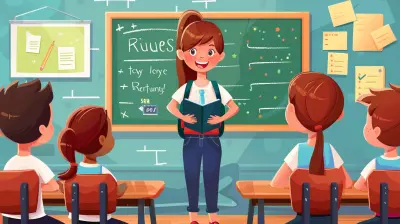
all images in this post were generated using AI tools
Category:
Classroom ManagementAuthor:

Bethany Hudson
Discussion
rate this article
2 comments
Pilar McCullough
Effective classroom management in 2027 requires teachers to balance authority with approachability. Students thrive in environments where they feel respected yet comfortable seeking guidance. It's key for learning success.
October 8, 2026 at 11:17 AM
Daniel Miller
This article hits the mark on a vital topic. Finding the right mix of authority and approachability is key to creating a positive learning environment. It feels especially relevant as we navigate the challenges of modern classrooms. Thanks for sharing!
September 13, 2026 at 4:34 AM
Bethany Hudson
Thank you for your thoughts! I agree that striking that balance is crucial, especially now. Glad you found the article relevant!