How AI Will Transform E-Learning Platforms by 2026
24 April 2026
Let’s be honest for a second. Remember the last time you tried to learn something online—maybe a coding course, a language app, or a history lecture—and you felt like you were just clicking through slides, waiting for the clock to run out? You’re not alone. E-learning has been a lifesaver for millions, but it’s also been, well, a bit robotic. It’s like having a textbook that talks back, but only in pre-recorded phrases. By 2026, that’s all about to change. Artificial intelligence isn’t just knocking on the door of e-learning; it’s about to kick it down, rearrange the furniture, and turn the whole experience into something that actually feels human. So, grab your coffee (or tea, I don’t judge), and let’s dive into how AI will transform e-learning platforms by 2026. Trust me, this isn’t your typical tech hype—it’s a heartfelt shift that could redefine how we grow.
The One-Size-Fits-All Era Is Over
Think back to school: you sat in a classroom, the teacher taught at one pace, and if you were bored or lost, well, tough luck. E-learning inherited that same cookie-cutter approach. You log in, watch a video, take a quiz, rinse, repeat. It’s like ordering a pizza only to get the same toppings every time, even if you’re allergic to pepperoni. By 2026, AI will kill that monotony for good.Here’s the thing: AI doesn’t just see you as a username. It sees patterns. It watches how you click, how long you stare at a diagram, and even when you sigh (figuratively, for now). By 2026, platforms will create a living, breathing curriculum tailored to you. Imagine a course that slows down when you’re struggling with calculus and speeds up when you’re breezing through grammar. It’s like having a personal tutor who knows you better than your best friend—minus the judgment when you zone out for five minutes.
This isn’t science fiction. Companies like Coursera and Khan Academy are already dabbling in adaptive learning, but by 2026, it’ll be the norm. You won’t just consume content; you’ll co-create your learning path with an AI that adjusts in real time. No more “next lesson” buttons that feel like chores. Instead, you’ll get a gentle nudge: “Hey, you struggled with quadratic equations yesterday—want to try a different approach today?” That’s empathy, coded into algorithms.
The End of Boring Quizzes and the Rise of Real Conversations
Let’s talk about assessments. I know, I know—they’re the worst part. Multiple-choice questions that feel like trapdoors, essay prompts that make you stare at a blank screen for an hour. By 2026, AI will turn this into something almost… fun. No, really.Picture this: instead of a quiz, you’re having a conversation with an AI chatbot that’s trained on your subject. You type out your answer, and it responds like a curious professor, asking follow-ups, challenging your assumptions, and guiding you to deeper understanding. It’s not about “right or wrong” anymore; it’s about “how did you get there?” This leverages something called natural language processing (NLP), which by 2026 will be so advanced that it can detect confusion, enthusiasm, or even sarcasm in your responses.
I’m talking about assessments that feel like a dialogue, not a interrogation. For example, if you’re studying history, the AI might say, “You mentioned the French Revolution was about bread—but what about the role of Enlightenment ideas? Want to explore that?” Suddenly, you’re not memorizing dates; you’re building arguments. And the best part? The AI remembers every conversation, so it can connect dots across weeks. It’s like having a study partner who never sleeps and never gets tired of your questions.

Personalized Feedback That Actually Hurts (In a Good Way)
We’ve all gotten feedback that’s as generic as a fortune cookie: “Good effort!” or “Needs improvement.” It’s like getting a hug from a robot—vague and unsatisfying. By 2026, AI will deliver feedback that’s specific, actionable, and sometimes a little tough—but always with your growth in mind.Here’s how it’ll work. You submit an essay, a code snippet, or even a recorded speech. The AI doesn’t just grade it; it dissects it. It’ll say things like, “Your argument in paragraph three is strong, but your transition to paragraph four is abrupt—try linking it with a cause-effect statement. Also, you used the word ‘very’ seven times. Let’s find synonyms.” That’s not robotic; that’s a coach. And because AI learns from thousands of other students, it can anticipate your mistakes before you make them. It’s like having a mentor who’s seen it all and isn’t afraid to call you out—but in a way that makes you want to improve.
But here’s the kicker: this feedback won’t feel cold. By 2026, AI voices and avatars will have emotional tones. They’ll say, “I see you’re frustrated with this concept—let’s take a break and try a different angle,” or “Wow, you nailed that analysis! Wanna push yourself with a harder challenge?” It’s the difference between a machine and a teacher who cares.

Virtual Reality + AI = Learning That Feels Real
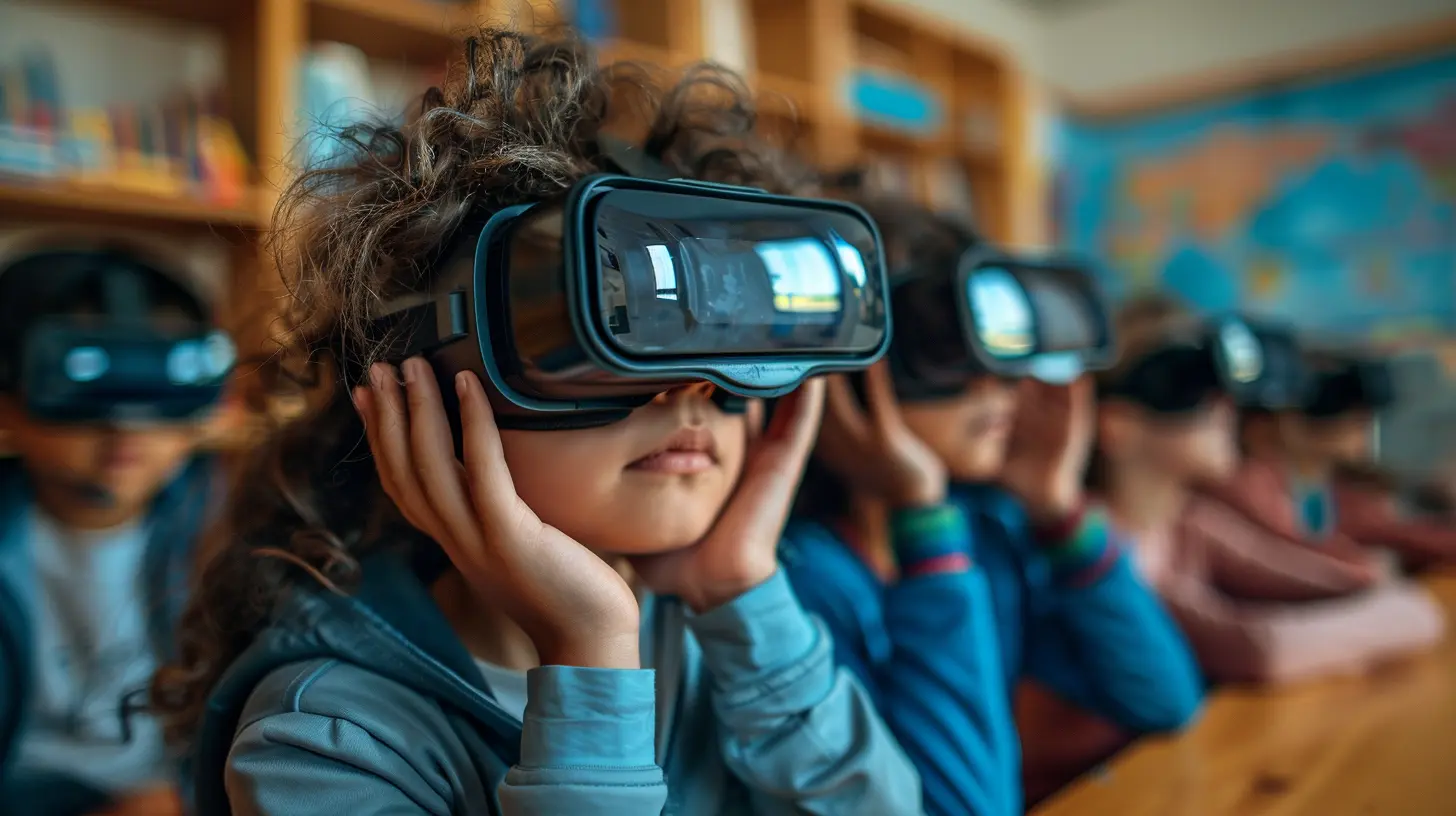
Okay, let’s get a little futuristic. By 2026, e-learning won’t just be on a screen; it’ll be in the experience. AI-powered virtual reality (VR) will let you step inside your lessons. Learning about the Roman Colosseum? You’ll walk through it, hear the crowd, and even “debate” with a gladiator avatar. Studying biology? You’ll shrink down and float inside a cell, watching mitochondria do their thing. It’s like a field trip without the bus ride.But here’s where AI makes it magical: the environment adapts to you. If you’re a visual learner, the VR world will highlight colors and shapes. If you’re auditory, it’ll emphasize sounds and dialogues. If you’re kinesthetic, you’ll get to grab and move objects. The AI watches your eye movements and adjusts the details in real time. It’s not just immersive; it’s intimate. And the best part? You don’t need expensive gear. By 2026, even budget VR headsets (or your phone) will run these experiences, thanks to cloud computing and lightweight AI models.
The Death of the “One Teacher” Model
We’ve always thought of learning as a one-to-many relationship: one teacher, many students. But by 2026, AI will flip that script. You’ll have a personal AI tutor that’s with you 24/7, but you’ll also have access to a global network of human experts and peers, all orchestrated by AI. It’s like having a personal assistant for your brain.Imagine this: you’re stuck on a physics problem at 2 AM. Your AI tutor can’t solve it? No problem—it instantly connects you to a human tutor in another time zone who’s awake. Or it finds a peer who just mastered the same concept and suggests a study session. The AI acts as a matchmaker, learning your communication style, your preferred time, and even your sense of humor. It’s like having a social coordinator for your education.
This also means that the role of human teachers will evolve. By 2026, they won’t be lecturers; they’ll be mentors, motivators, and emotional anchors. AI handles the data, the drills, and the repetitive stuff. Humans handle the inspiration, the empathy, and the “why should I care?” moments. It’s a partnership, not a replacement. And honestly, that’s the most exciting part—AI frees up teachers to be more human, not less.
Language Barriers? What Language Barriers?
One of the most heartfelt transformations by 2026 will be the death of language as a barrier. AI translation is already good, but by 2026, it’ll be seamless. You’ll take a course taught in Mandarin, and the AI will translate the instructor’s voice into your native language in real time, matching their tone, emotion, and even pauses. You won’t just read subtitles; you’ll hear the passion in their voice.But it goes deeper. The AI will also adapt cultural references. If a Japanese instructor talks about “hanami” (cherry blossom viewing), the AI might explain it as “spring picnics under blooming trees” for an American student. It’s not just translation; it’s cultural localization. By 2026, you’ll be able to learn from the best minds in the world, regardless of where they were born. That’s not just cool; it’s a step toward global equality in education.
The Emotional Side: AI That Knows When You’re Burned Out
Let’s get real for a moment. Learning is hard. It’s frustrating, lonely, and sometimes you just want to throw your laptop out the window. By 2026, AI will be able to sense that. Through your typing speed, your response times, and even your webcam (with your permission, of course), it’ll detect signs of fatigue, stress, or boredom.Here’s how it might work: you’re on your third hour of a coding tutorial, and your answers are getting sloppy. The AI might say, “Hey, I notice you’ve been at this for a while. How about a five-minute breathing exercise? Or maybe switch to a creative project?” It’s like having a study buddy who knows when to say, “Let’s take a walk.” This emotional intelligence is the secret sauce. By 2026, e-learning platforms won’t just teach you; they’ll care for you. And isn’t that what we all need?
What About Cheating? AI Will Outsmart It
I know what you’re thinking: “If AI is so smart, won’t students use it to cheat?” Fair question. But by 2026, AI will be even better at detecting dishonesty. It won’t just look for plagiarism; it’ll analyze your writing style, your voice patterns, and even your mouse movements. If you suddenly submit a perfect essay after weeks of mediocre work, the AI will flag it for a human review. But here’s the twist: AI will also make cheating obsolete by design. When learning is personalized, adaptive, and conversational, you want to engage. You don’t need to cheat because the system is built for your success. It’s like playing a video game that’s perfectly balanced—you’d rather beat it fair and square.The Cost: Education for Everyone (Finally)
Let’s talk money. Traditional e-learning platforms can be expensive, and premium courses often cost a fortune. By 2026, AI will drive costs down dramatically. Why? Because AI can automate the creation, assessment, and personalization of content. Instead of paying a team of instructors to produce one course, a platform can use AI to generate thousands of variations, all tailored to individual learners. The result? High-quality education that’s accessible to anyone with an internet connection. It’s not about profit margins; it’s about democratizing knowledge. And that’s a future worth fighting for.
But Wait—Is This Too Good to Be True?
Okay, I’ll be real with you. AI isn’t perfect. There are ethical concerns: data privacy, algorithmic bias, and the risk of losing human connection. By 2026, we’ll need strict regulations. Platforms will have to be transparent about how they use your data, and AI models must be trained on diverse datasets to avoid stereotyping. But here’s the hopeful part: the same AI that personalizes learning can also audit itself for fairness. It’s a double-edged sword, but with careful design, it’s a sword that cuts toward justice.Also, not everyone will embrace this. Some will miss the old way—the smell of textbooks, the sound of a teacher’s voice. And that’s okay. By 2026, e-learning platforms will offer “classic” modes too. Choice is the ultimate luxury.
A Personal Note: Why This Matters to Me
I’ve been where you are. I’ve struggled with online courses that felt like punishment. I’ve stared at a screen, feeling stupid, wondering if I’d ever get it. And I’ve also had moments where a great teacher or a smart tool lit a fire in me. That’s what AI can do by 2026—it can turn every learner’s frustration into a spark. It won’t replace the human heart of education, but it will amplify it. It’s like a amplifier for your potential.So, as we look ahead to 2026, I’m not just excited about the technology. I’m excited about the stories: the kid in rural India who finally learns calculus because an AI adapted to her pace; the single mom who earns a degree in her spare moments because the platform knew when she was tired; the retiree who picks up a new language just for fun. That’s the real transformation. And it’s coming sooner than you think.
Wrapping It Up: The Future Is Already Here
Alright, let’s land this plane. By 2026, e-learning won’t be a passive activity—it’ll be a dynamic, empathetic, and deeply personal journey. AI will turn platforms into partners, not just portals. You’ll have a tutor in your pocket, a world in your headset, and a curriculum that grows with you. It’s not about replacing teachers; it’s about giving them superpowers. It’s not about making learning easier; it’s about making it possible for everyone.So, here’s my challenge to you: start paying attention to how you learn today. Notice what frustrates you, what bores you, what excites you. Because by 2026, AI will be listening. And it’s going to change everything—one lesson at a time.
all images in this post were generated using AI tools
Category:
E Learning PlatformsAuthor:

Bethany Hudson
Discussion
rate this article
2 comments
Rivenheart Barrett
This article offers valuable insights into the future of e-learning. The integration of AI could personalize learning experiences, enhancing engagement and accessibility. It's exciting to think about how technology will reshape education, making it more tailored to individual needs by 2026.
June 6, 2026 at 11:02 AM
Bethany Hudson
Thank you for your thoughts! I'm glad you found the insights valuable. The potential of AI to personalize learning is indeed exciting and could greatly benefit learners by 2026.
Tenley McClendon
In the realm of screens where knowledge blooms, AI's gentle touch will shatter old tombs. By 2026, a fresh dawn will arise, Transforming e-learning, igniting bright skies.
April 25, 2026 at 3:01 AM
Bethany Hudson
I love this vision of AI reshaping e-learning. The future looks promising, and I can't wait to see how it unfolds.