How to Cultivate Meaningful Peer Connections in Virtual Classrooms
27 November 2026
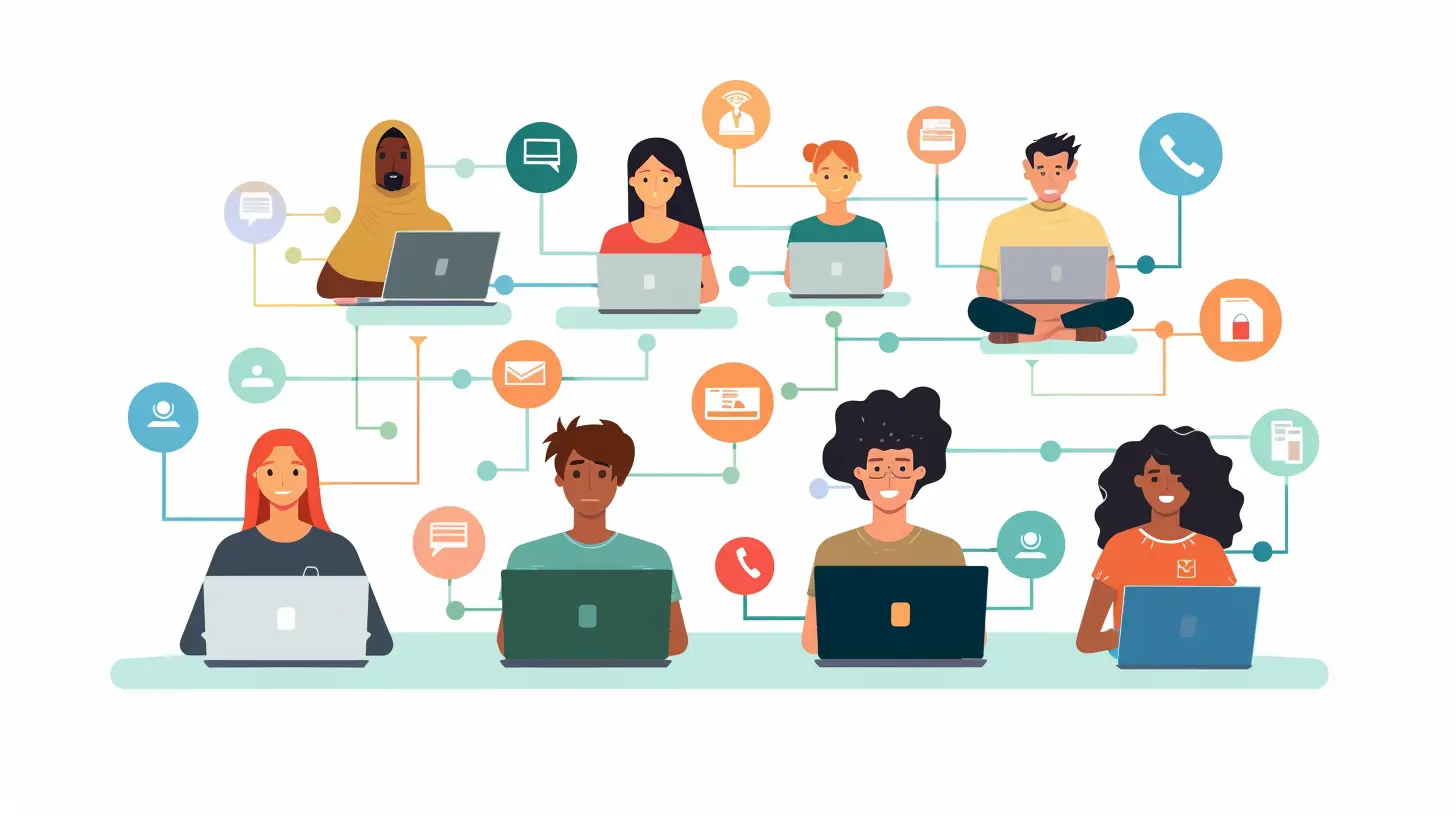
A virtual classroom can feel like a room full of strangers who happen to share a screen. Everyone is present, the camera lights are on, and the chat is scrolling, yet genuine relationships often fail to form. This is not a failure of technology. It is a design problem, a facilitation problem, and a cultural problem. Meaningful peer connections do not emerge automatically from being in the same online space any more than they emerge from sitting in the same lecture hall. They are built through intentional structures, repeated low-stakes interactions, and a deliberate shift in how we think about what a classroom is for.
This article examines why virtual peer connections so often stay shallow, what actually drives relationship formation in online settings, and how educators and learners can build the conditions for real connection without turning every session into an awkward icebreaker marathon.

Why Virtual Classrooms Struggle With Connection
The default virtual classroom is optimized for content delivery, not for relationship building. A typical session involves a presenter, a slide deck, a muted audience, and a chat window used mostly for logistical questions. This format works for transmitting information, but it strips away nearly everything that makes in-person classrooms fertile ground for friendship and collaboration.Consider what happens naturally in a physical classroom. Students arrive early and chat in the hallway. They pass notes, form study groups, grab coffee after class, and read body language across the room. These micro-interactions are unplanned and continuous. In a virtual setting, each of these moments must be deliberately recreated, and most course designs do not bother.
There is also the psychological distance problem. When you see someone as a small rectangle on a grid, your brain processes them as less socially real. Research on video-mediated communication suggests that people retain less social information about others in large grid views and feel less accountable for their behavior. The result is a classroom that feels transactional. Students log in, consume, and leave.
Then there is the camera question. Many learners keep cameras off for legitimate reasons: bandwidth, privacy, anxiety, or a chaotic home environment. But camera-off participation reduces the nonverbal cues that build rapport. The tension between respecting privacy and fostering presence is real, and it has no universal solution. What matters is that facilitators acknowledge the tension rather than pretending it does not exist.

The Difference Between Interaction and Connection
A common mistake is equating interaction with connection. A class can be highly interactive, with polls, breakout rooms, and chat prompts, and still leave students feeling isolated. Interaction is the exchange of information. Connection is the formation of a relationship in which people feel seen, remembered, and valued.This distinction matters because many virtual classroom strategies optimize for interaction volume rather than relational depth. Fifty quick polls do not build friendships. One sustained conversation with the same small group over several weeks often does.
Connection requires three ingredients: repeated contact, reciprocal disclosure, and shared purpose. Repeated contact means seeing the same people in the same context often enough to build familiarity. Reciprocal disclosure means gradually sharing more about yourself and receiving the same in return. Shared purpose means working toward something together, whether a project, a discussion goal, or a collective challenge.
Any strategy you adopt should be evaluated against these three ingredients. If it does not create repetition, reciprocity, or shared purpose, it is probably just activity for its own sake.
Designing for Repeated Contact
One of the most underused tools in virtual classrooms is stable grouping. Instead of randomizing breakout rooms every session, assign students to the same small group, often called a pod or learning team, for the duration of the course. This single design choice transforms the social dynamics of a class.When students return to the same group week after week, they stop performing politeness and start building real familiarity. They learn each other's communication styles, remember prior conversations, and develop the kind of easy rapport that normally takes months to form. The group becomes a social anchor within the larger class.
There are trade-offs. Stable groups can become cliques, and if one group has a dysfunctional dynamic, students may dread every session. To mitigate this, rotate group composition once midway through a long course, and give groups light facilitation tools such as a shared agenda or rotating roles. Also consider forming groups with some intentional diversity rather than letting students self-select entirely, since self-selection tends to reproduce existing social circles.
A second lever for repeated contact is the pre-session window. Open the virtual room five to ten minutes early and leave it open after class. Do not fill this time with content. Let it be a hallway. Some of the most valuable peer connections form in these unstructured margins, precisely because they are low-pressure and voluntary.

The Power of Low-Stakes, Recurring Rituals
Rituals are repeated, predictable social practices that signal belonging. In physical classrooms, rituals include the morning greeting, the shared joke, the weekly review game. Virtual classrooms need their own rituals, and they work best when they are small and consistent.Examples include a two-minute opening check-in where each person shares one word about their week, a rotating "question of the day" that is personal but not intrusive, or a closing round where each student names one thing they are taking away. These rituals feel trivial individually, but over a semester they accumulate into a shared culture. Students begin to expect them, prepare for them, and use them as reference points for conversation.
The key is to keep rituals low-stakes. Anything that requires preparation or performance raises the social risk and reduces participation. A one-word check-in invites everyone. A five-minute presentation invites only the confident.
Rituals also serve a diagnostic function. When a normally chatty student goes quiet during check-ins, that is a signal worth noticing. In a physical room, you might catch that in passing. In a virtual room, rituals are how you catch it at all.
Rethinking Icebreakers
Icebreakers have a bad reputation, and much of it is deserved. The classic "two truths and a lie" or "share a fun fact" format forces performance under time pressure and often produces superficial or fabricated disclosures. It also assumes a level of extroversion that many learners do not have.Better icebreakers are structured around shared tasks rather than self-presentation. Instead of asking students to talk about themselves, give them something to solve together. A short collaborative puzzle, a "find five things your group has in common" challenge, or a quick brainstorm on a shared document creates conversation as a byproduct of doing something. People bond more reliably through joint activity than through forced disclosure.
Timing matters too. Icebreakers work best at the start of a course or the start of a new group formation, not as a recurring feature of every session. Once a group has established rapport, repeating icebreakers feels infantilizing. Read the room and retire them when they stop serving a purpose.
The Role of Asynchronous Connection
Not all connection happens in real time. Asynchronous spaces, such as discussion forums, shared documents, or messaging channels, offer something synchronous sessions cannot: time to think. Shy students, non-native speakers, and those with unpredictable schedules often contribute more thoughtfully in writing than in live conversation.But asynchronous spaces fail when they are treated as assignment submission portals. A discussion forum where students post once and reply twice to meet a rubric does not build relationships. It builds compliance. To foster connection, asynchronous spaces need to be social as well as academic.
Practical approaches include a persistent "introductions and updates" thread where students can share what is going on in their lives, a peer feedback system where students respond to the same partner over multiple assignments, and informal channels for off-topic conversation. The goal is to create spaces where students return voluntarily, not just when required.
One useful pattern is the "weekly reflection partner." Each student is paired with one peer for the week and exchanges a short reflection on the course material. Because the pairing rotates, students gradually build a web of one-on-one relationships rather than only knowing the group as a whole. One-on-one formats reduce the social pressure of speaking in front of a crowd and often produce more honest conversation.
Facilitation Techniques That Build Trust
The facilitator sets the social temperature of a virtual classroom. Small choices in how you speak, respond, and structure time send strong signals about what kind of space this is.First, model vulnerability appropriately. When you share a brief, genuine reflection about your own challenges, you give permission for others to do the same. This is not about oversharing. It is about demonstrating that the space is human.
Second, name the social dynamics out loud. If you notice that the same three students are dominating the chat, say so and invite others in. If a discussion gets tense, acknowledge the tension rather than rushing past it. Learners take their cues from the facilitator's comfort level with difficult moments.
Third, use structured turn-taking. Unstructured discussion in virtual settings tends to reward the fastest speakers and the most confident typists. Techniques like round-robin sharing, written brainstorming before verbal discussion, and assigned roles in breakout rooms give quieter participants a genuine opening.
Fourth, follow up on what you hear. If a student mentions a project they are working on, ask about it next week. Remembering details is the most basic form of building trust, and it is also the most neglected. In a physical classroom, memory is aided by visual cues. Online, you may need to keep light notes to help you follow up consistently.
Common Mistakes and Misconceptions
Several myths persist about virtual peer connection, and each one leads to wasted effort.The first myth is that more technology equals more connection. Adding a new collaboration platform every week fragments attention and creates fatigue. Consistency matters more than novelty. A single well-used tool beats five half-used ones.
The second myth is that cameras must be on for connection to happen. Cameras help, but they are not sufficient, and forcing them on can damage trust with students who have legitimate reasons to keep them off. Focus instead on voice participation, chat engagement, and asynchronous contribution.
The third myth is that connection is the students' responsibility. In self-directed learning environments, it is tempting to assume that adults will form their own networks. Some will. Many will not, especially those who are new, introverted, or already overloaded. Facilitation is not hand-holding. It is designing the conditions for something valuable to happen.
The fourth myth is that connection requires large time investments. In practice, small consistent moves, like a two-minute check-in or a stable group structure, often outperform elaborate social events. The problem with big events is that they raise expectations and stakes. Small rituals lower them.
Measuring Whether It Is Working
It is easy to assume connection is happening because the chat is lively. But liveliness is not the same as relationship. A better measure is whether students are initiating contact with each other without prompting. Are they messaging each other outside of class? Are they forming study groups? Are they referencing prior conversations in new discussions?You can also ask directly. A short anonymous survey midway through a course, with questions about whether students feel known by their peers and whether they have someone they could ask for help, gives you real data. Do not rely on your impression of the room. Virtual rooms are easy to misread.
Pay attention to who is missing. Connection gaps are usually not random. Students with caregiving responsibilities, those in different time zones, and those with disabilities are often the first to disengage. If your connection strategies only work for students with flexible schedules and reliable bandwidth, they are not working for everyone.
A Practical Framework for Educators
If you want a starting point, build your course around four commitments.First, structure for repetition. Use stable small groups, recurring rituals, and consistent time slots. Repetition is the foundation of familiarity.
Second, design for shared tasks. Give groups something to do together that requires conversation, not just something to discuss. Joint activity produces connection more reliably than joint discussion.
Third, create multiple channels. Offer synchronous and asynchronous options, group and one-on-one formats, and text and voice participation. Different students connect through different modes, and offering more than one increases the odds that each student finds a way in.
Fourth, facilitate actively. Do not assume connection will happen on its own. Name dynamics, invite participation, follow up on details, and adjust when something is not working.
None of these commitments require expensive tools or dramatic course redesigns. They require intention and consistency, which are the same qualities that build connection in any setting, virtual or otherwise.
Final Thoughts
Meaningful peer connections in virtual classrooms are not a nice-to-have. They are a core part of what makes learning stick, what keeps students enrolled, and what turns a course into a community. But they do not happen by accident online. They happen when someone decides to design for them.The good news is that the levers are well understood. Repetition, shared purpose, reciprocal disclosure, and active facilitation do most of the work. The harder part is resisting the temptation to treat connection as a bonus rather than a design requirement. Once you treat it as central, the specific techniques become easier to choose and easier to adjust.
Start small. Pick one ritual, one group structure, and one asynchronous space. Give them a few weeks to take root. Then watch for the signs that something real is forming: students arriving early, conversations continuing after class, and the quiet shift from a room of strangers to a group of people who know each other.
all images in this post were generated using AI tools
Category:
Learning CommunitiesAuthor:

Bethany Hudson
Discussion
rate this article
1 comments
Phoenix Flores
This article offers valuable insights on fostering peer connections in virtual classrooms. Building strong relationships enhances learning experiences and helps create a supportive educational environment. Great read!
November 27, 2026 at 5:10 AM