Learning Ecosystems of 2026: Beyond the Classroom Walls
25 September 2026
For more than a century, the dominant image of education has been a room. Four walls, a board at the front, rows of desks, a bell that decides when thinking starts and stops. That image is now dissolving, and not because classrooms are failing. It is dissolving because the tools, expectations, and economic realities surrounding learning have changed so completely that the room can no longer contain the process.
By 2026, the most forward-looking schools, employers, and independent learners are operating inside what researchers and practitioners call learning ecosystems. These are connected networks of people, places, platforms, and practices that support learning across a lifetime rather than a semester. The shift is not a rebranding of online courses. It is a structural change in who teaches, where learning happens, how it is verified, and what counts as evidence of competence.
This article examines what that ecosystem actually looks like, why it works when it works, where it fails, and how educators, parents, employers, and self-directed learners can navigate it without getting lost.
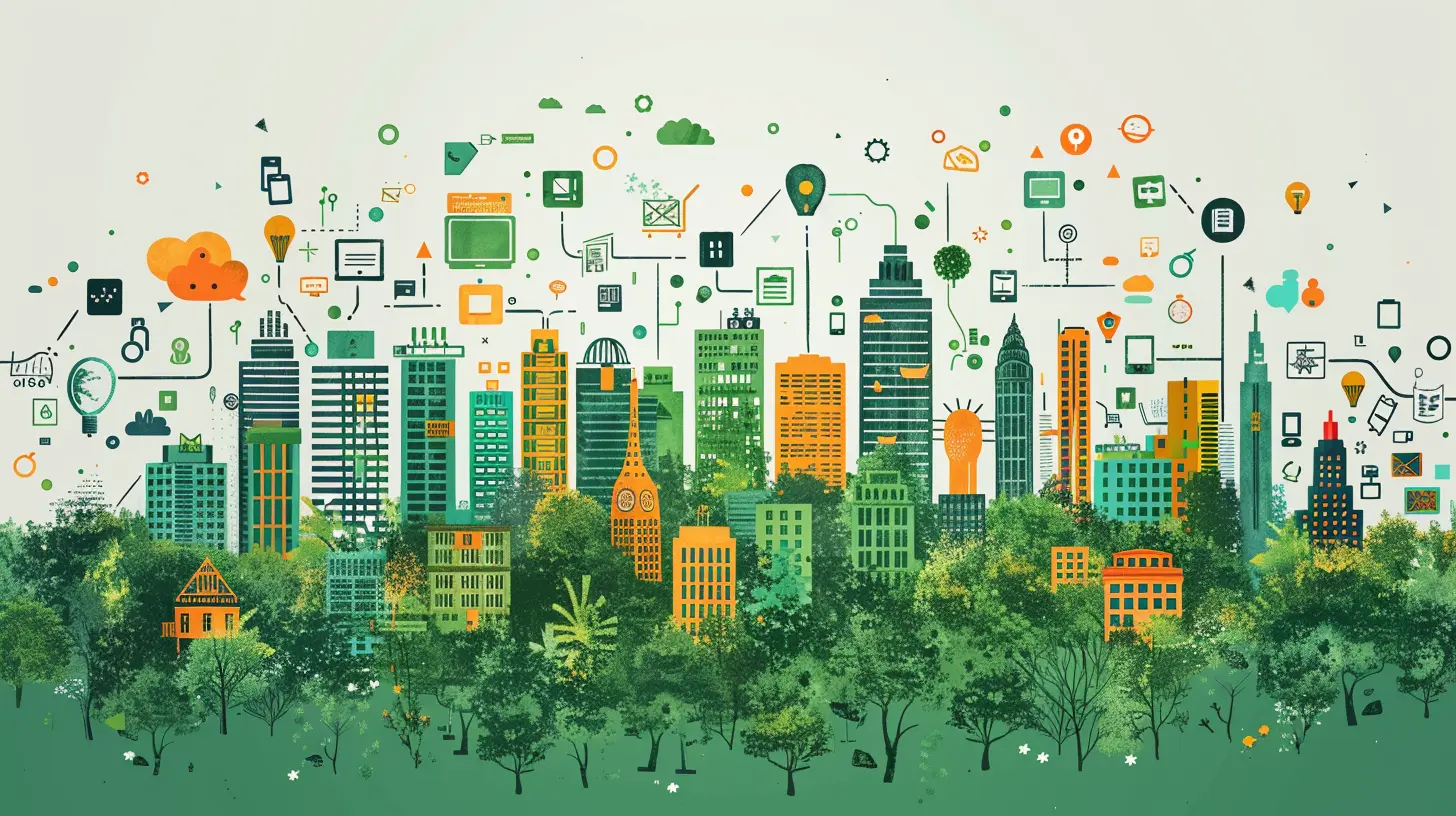
What a Learning Ecosystem Really Means
A learning ecosystem is not a single product or platform. It is the full set of relationships and resources a person can draw on to build knowledge and skill. In practical terms, it usually includes:- Formal institutions such as schools, colleges, and vocational programs
- Informal communities such as professional networks, hobby groups, and mentoring relationships
- Digital infrastructure including learning platforms, collaboration tools, and AI assistants
- Physical spaces such as libraries, makerspaces, labs, and workplaces
- Assessment and credentialing systems that translate effort into recognized proof
The key word is ecosystem, not system. A system is designed top-down and controlled. An ecosystem evolves, has many participants, and depends on healthy connections between them. That distinction matters because most education reform over the past thirty years tried to improve the system while ignoring the ecosystem around it.
A student in 2026 might take a core mathematics course at school, join an online competition team, get feedback from a retired engineer in a community forum, and earn a microcredential that a local employer recognizes. No single institution owns that learning journey. The ecosystem does.

Why the Classroom Walls Are Coming Down
Several forces converged to make this shift inevitable rather than fashionable.First, the half-life of specific technical knowledge keeps shrinking. Careers now routinely require adults to reskill two or three times. A model that front-loads all learning into ages five through twenty-two cannot keep pace.
Second, the cost and friction of access dropped dramatically. A learner with a modest device and an internet connection can reach lectures, datasets, code environments, and expert communities that once required physical presence at a wealthy institution.
Third, employers grew skeptical of traditional signals. A degree still matters in many fields, but hiring managers increasingly test for demonstrable skill. Portfolios, work samples, and verified credentials now carry weight that a transcript alone cannot.
Fourth, the pandemic forced a global experiment in remote and hybrid learning. The results were mixed, but they permanently normalized the idea that learning does not have to happen in one building at one time.
None of this means classrooms are obsolete. It means the classroom became one node in a larger network instead of the entire network.

The Four Layers of a Working Ecosystem
To make sense of a complex landscape, it helps to think in layers. Each layer answers a different question, and healthy ecosystems keep all four in balance.Layer One: Access and Infrastructure
This is the plumbing. Devices, connectivity, identity systems, and platform access. It is the least glamorous layer and the one most likely to determine whether an ecosystem is equitable or exclusionary.A common mistake is treating infrastructure as solved once every student has a laptop. Access also includes reliable home internet, assistive technology, language support, and quiet space to work. A district that distributes devices but ignores connectivity has built a bridge that stops halfway.
Layer Two: Content and Experience
This layer includes curriculum, projects, simulations, labs, and real-world tasks. The most effective ecosystems blend structured content with open-ended experience. Structured content builds foundations efficiently. Open-ended experience builds transfer, judgment, and resilience.The trade-off is real. Pure structure produces compliance and fragile knowledge that collapses outside the test format. Pure exploration produces engagement but often leaves gaps and misconceptions. The strongest designs alternate between the two deliberately rather than favoring one ideology.
Layer Three: People and Relationships
Mentors, peers, coaches, and practitioners. This is where most digital learning initiatives underperform. A platform can deliver content, but it cannot easily replicate the accountability and encouragement of a person who notices when you struggle.Consider a teenager learning to write code. A tutorial can teach syntax. A mentor who reviews her pull requests, asks why she chose one approach over another, and introduces her to a professional community changes her trajectory. The content was necessary. The relationship was decisive.
Layer Four: Recognition and Credentials
This layer answers a practical question: how does the outside world know what you can do? Traditional diplomas, industry certifications, digital badges, portfolios, and verified assessments all compete and complement here.The friction point is trust. A credential is only useful if employers, institutions, or communities accept it. This is why so many badge initiatives stalled. They solved the issuing problem but not the recognition problem.
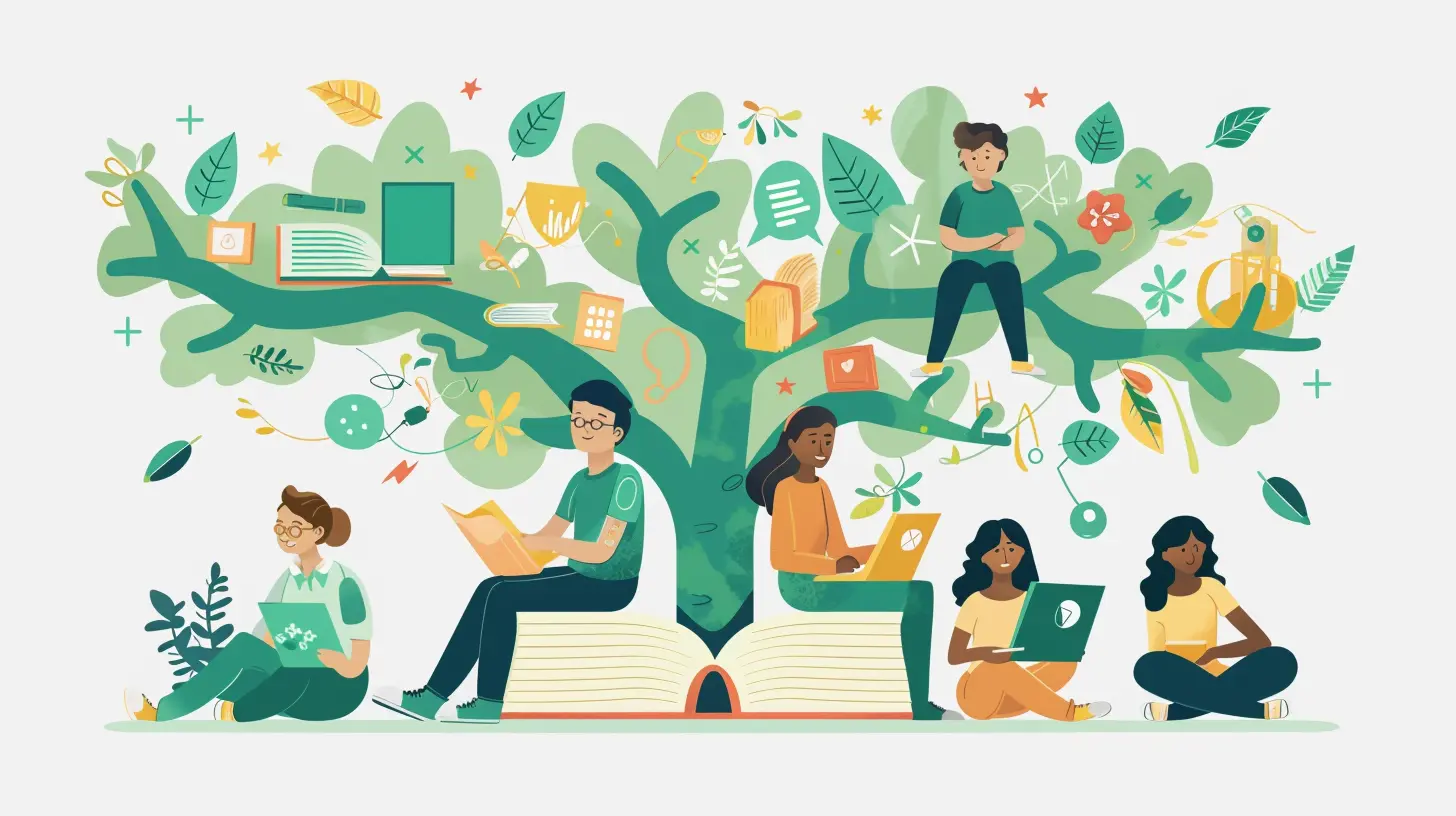
How AI Changes the Dynamic
Artificial intelligence is the most visible force reshaping ecosystems, and also the most misunderstood.AI tutors can provide patient, on-demand practice in ways that were impossible a decade ago. They can generate problems, give immediate feedback, and adapt difficulty. For foundational skills like vocabulary, arithmetic fluency, and basic coding patterns, this is genuinely powerful.
But AI does not replace the harder parts of learning. It cannot reliably build motivation in a disengaged student. It cannot model professional judgment in ambiguous situations. It cannot provide the social belonging that keeps people persisting when material gets difficult.
There is also a serious risk that AI makes learning feel frictionless in a way that undermines it. Productive struggle is where durable understanding forms. If a tool removes every obstacle instantly, learners may complete more exercises while retaining less.
The practical guidance for 2026 is straightforward. Use AI for high-frequency, low-stakes practice and feedback. Keep humans responsible for goal setting, complex feedback, and emotional support. Audit regularly whether the tool is building independence or dependence.
Common Mistakes and Misconceptions
The ecosystem language attracts hype, and hype produces predictable errors.Mistake one: confusing access with learning. Signing students up for twenty platforms does not create an ecosystem. It creates clutter. Ecosystems need curation and coherence, not accumulation.
Mistake two: abandoning structure too early. Self-directed learning is a skill, not a default. Beginners usually need more scaffolding, not less. Autonomy should be earned through demonstrated self-regulation.
Mistake three: treating credentials as the goal. Chasing badges and certificates can crowd out actual skill development. The credential should document learning, not replace it.
Mistake four: assuming technology is neutral. Platforms shape behavior through their design. A tool optimized for engagement may optimize for time-on-app rather than depth. Ask what the design rewards.
Misconception: ecosystems mean no teachers. The opposite is true. Teachers in strong ecosystems shift from delivering content to designing experiences, coaching, and connecting learners to networks. That role is harder, not easier.
Misconception: online is automatically flexible. Poorly designed online learning can be more rigid than a classroom, with fixed deadlines and no room for dialogue.
What Strong Ecosystems Look Like in Practice
Abstract principles become clearer with concrete patterns. The following examples describe general practices rather than specific programs.The School as Network Hub
Some secondary schools now function as connectors rather than containers. Students attend for core instruction and then spend part of their week in internships, community projects, or online advanced courses that the school does not offer. The school verifies attendance, provides mentorship, and integrates the experiences back into a coherent transcript.This works because it respects the reality that no single institution can offer everything. It fails when coordination is weak and students end up with fragmented experiences that never connect.
The Employer as Learning Partner
A growing number of companies run internal academies that blend vendor certifications, internal mentoring, and project-based assessment. Employees earn credentials that are portable within an industry, not just within one company.The advantage is relevance. Learning maps directly to work. The risk is narrowness. If training is too company-specific, workers lose mobility, and that can breed resentment and stagnation.
The Self-Directed Learner
Independent learners build personal ecosystems by choosing a small number of high-quality sources, joining at least one active community, and committing to a public artifact such as a portfolio or project log. The public artifact matters because it creates accountability and gives others something concrete to respond to.This path suits disciplined, motivated people. It is a poor fit for those who need external structure to start, which is most people at the beginning of a new field.
The Community Learning Space
Libraries, museums, and community centers increasingly host drop-in learning labs with equipment, mentors, and open schedules. These spaces serve people who fall outside formal institutions, including adults changing careers and homeschooled students.Their strength is low barriers and local trust. Their weakness is sustainability, since they often depend on grants and volunteer labor.
Comparing Approaches: Trade-offs That Matter
Choosing among models requires honesty about trade-offs.Structured versus open learning. Structured programs are efficient for foundations and easier to assess. Open learning builds adaptability and ownership but demands more maturity. Best practice is sequencing: structure early, openness later.
In-person versus remote. In-person excels at relationship building, hands-on work, and informal mentoring. Remote excels at access, scheduling flexibility, and reaching specialized expertise. Hybrid designs capture some of both but require deliberate effort to avoid losing the relational benefits.
Institutional versus independent credentials. Institutional credentials carry broad recognition but move slowly. Independent credentials adapt quickly but vary wildly in quality. Learners should verify recognition before investing significant time.
AI-assisted versus human-led feedback. AI offers speed and availability. Humans offer context, nuance, and encouragement. Use both, but be clear about which decisions require a person.
Practical Guidance for Different Readers
Advice only helps when it fits the reader's situation.For Educators
Start by mapping what your learners already access outside your classroom. You will likely find resources you can integrate and gaps you can fill. Then redesign one unit to include an external connection, whether a mentor, a dataset, or a community project. Measure what changes in engagement and retention before scaling.For Parents
Focus less on which platform your child uses and more on whether they have at least one adult who takes genuine interest in their learning. That relationship predicts persistence better than any tool. Also protect unstructured time, which is where curiosity often develops.For Employers
Audit whether your training produces portable skills or only internal compliance. If you want loyalty, invest in employee growth that they could take elsewhere. Counterintuitively, that investment often increases retention because people stay where they feel they are becoming more capable.For Self-Directed Learners
Choose depth over breadth. Pick one skill, one community, and one public project. Set a review point at ninety days to evaluate progress and adjust. Resist the urge to collect courses without finishing them.Risks Worth Taking Seriously
Ecosystems are not automatically better. They can amplify inequality when access is uneven. They can fragment attention when curation is absent. They can weaken public accountability when private platforms hold the data and set the rules.Three safeguards matter. First, transparency about what data is collected and how it is used. Second, portability of credentials so learners are not locked into one vendor. Third, public investment in the infrastructure layer so that access does not depend solely on family income.
Ignoring these risks does not make them disappear. It simply shifts the cost onto the people with the least power to absorb it.
What Comes Next
The direction of travel is clear. Learning will continue to spread across more settings, more ages, and more formats. The classroom will remain important, but it will be one part of a larger pattern rather than the whole picture.The most valuable skill in this environment is not any single subject. It is the ability to build and maintain your own learning ecosystem: to know how you learn best, to find the right people, to choose tools wisely, and to keep going when motivation fades.
That skill can be taught. It can be practiced. And in a world where change is constant, it may be the most durable thing anyone can learn.
all images in this post were generated using AI tools
Category:
Learning CommunitiesAuthor:

Bethany Hudson