Will Augmented Reality Redefine E-Learning by 2026?
15 May 2026
Picture this: you are sitting in your living room, coffee in hand, trying to wrap your head around the human circulatory system. Instead of staring at a flat diagram in a textbook, you pop on a pair of lightweight glasses. Suddenly, a 3D heart appears right in front of you, beating in real time. You can walk around it, pinch the aorta to zoom in, and watch blood cells race through capillaries like tiny delivery trucks. Sounds like science fiction, right? Well, it is not. It is augmented reality, or AR, and it is creeping into every corner of our lives, from Snapchat filters to IKEA furniture shopping. But the big question is: will augmented reality redefine e-learning by 2026?
Let me be honest with you. E-learning has been around for decades. We went from CD-ROMs to clunky online courses, then to Zoom calls that make us all look like pixelated potatoes. But something is missing. That something is immersion. And AR? It might just be the secret sauce that turns digital learning from a chore into an adventure. In this article, we are going to unpack why AR could be the game-changer for education by 2026, how it works, and what it means for you, the student, teacher, or lifelong learner. Buckle up, because this ride is going to be fun.
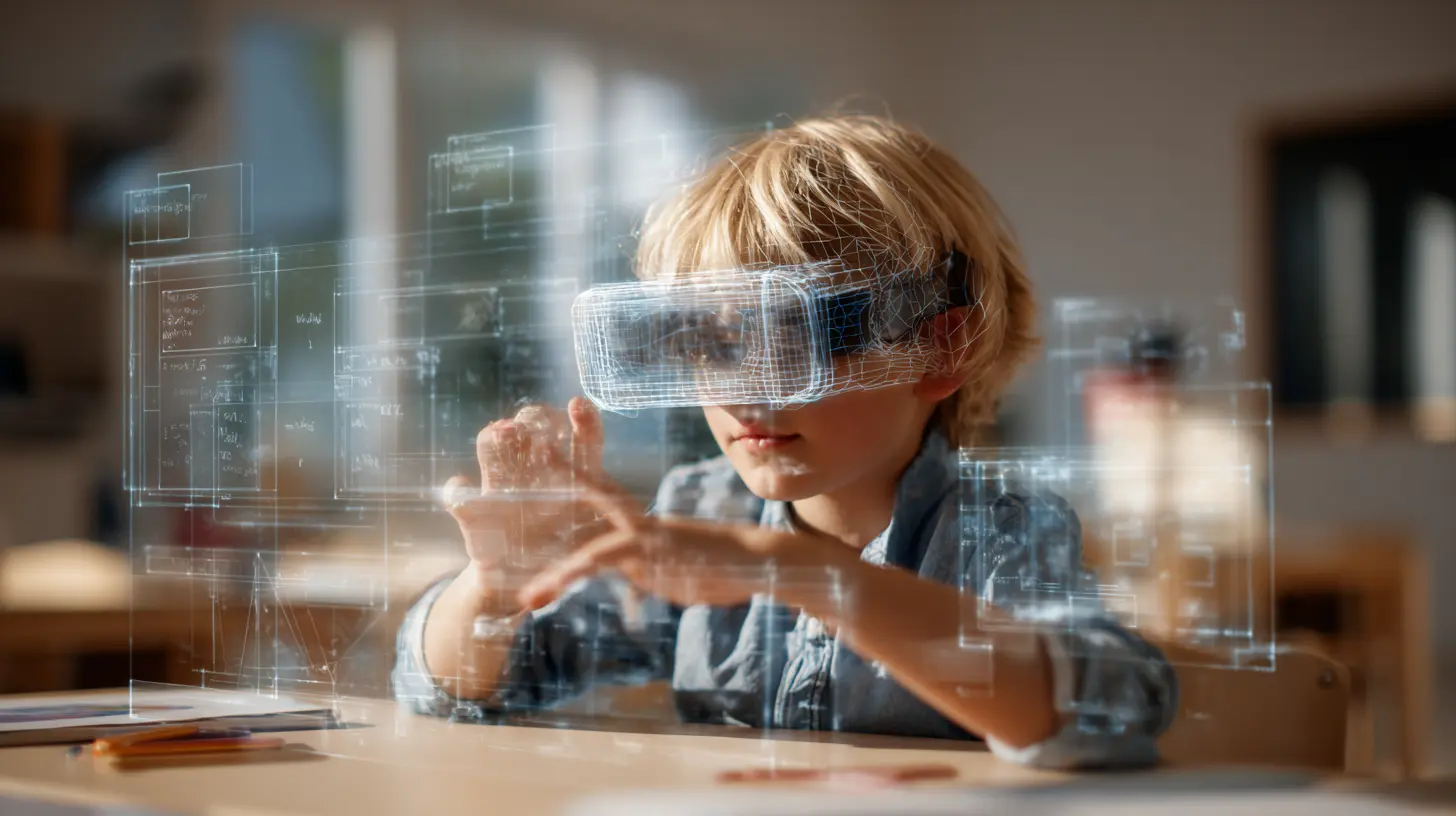
Why E-Learning Needs a Makeover
Let me ask you a question. Have you ever fallen asleep during a recorded lecture? I have. And I bet you have too. The problem with most e-learning platforms is that they try to replicate the classroom experience without the energy of a real room. You stare at a screen, click through slides, and maybe answer a quiz. It is passive. It is boring. And it makes your brain check out faster than a Netflix show you already binged.But here is the kicker: humans are wired to learn by doing. Think about how you learned to ride a bike. Did you read a manual? No. You got on, wobbled, fell, and tried again. That is active learning. Augmented reality brings that hands-on energy back into e-learning. Instead of reading about the solar system, you can point your phone at the ceiling and watch planets orbit your lamp. Instead of memorizing chemical formulas, you can mix virtual compounds in a safe, digital beaker. It is learning by experience, not by memorization.
By 2026, the e-learning market is expected to hit over $400 billion. That is a lot of money. But if it keeps relying on static videos and PDFs, people will tune out. AR offers a way to wake up the senses. It is like swapping a black-and-white newspaper for a full-color, interactive movie. And honestly, who would choose the newspaper?
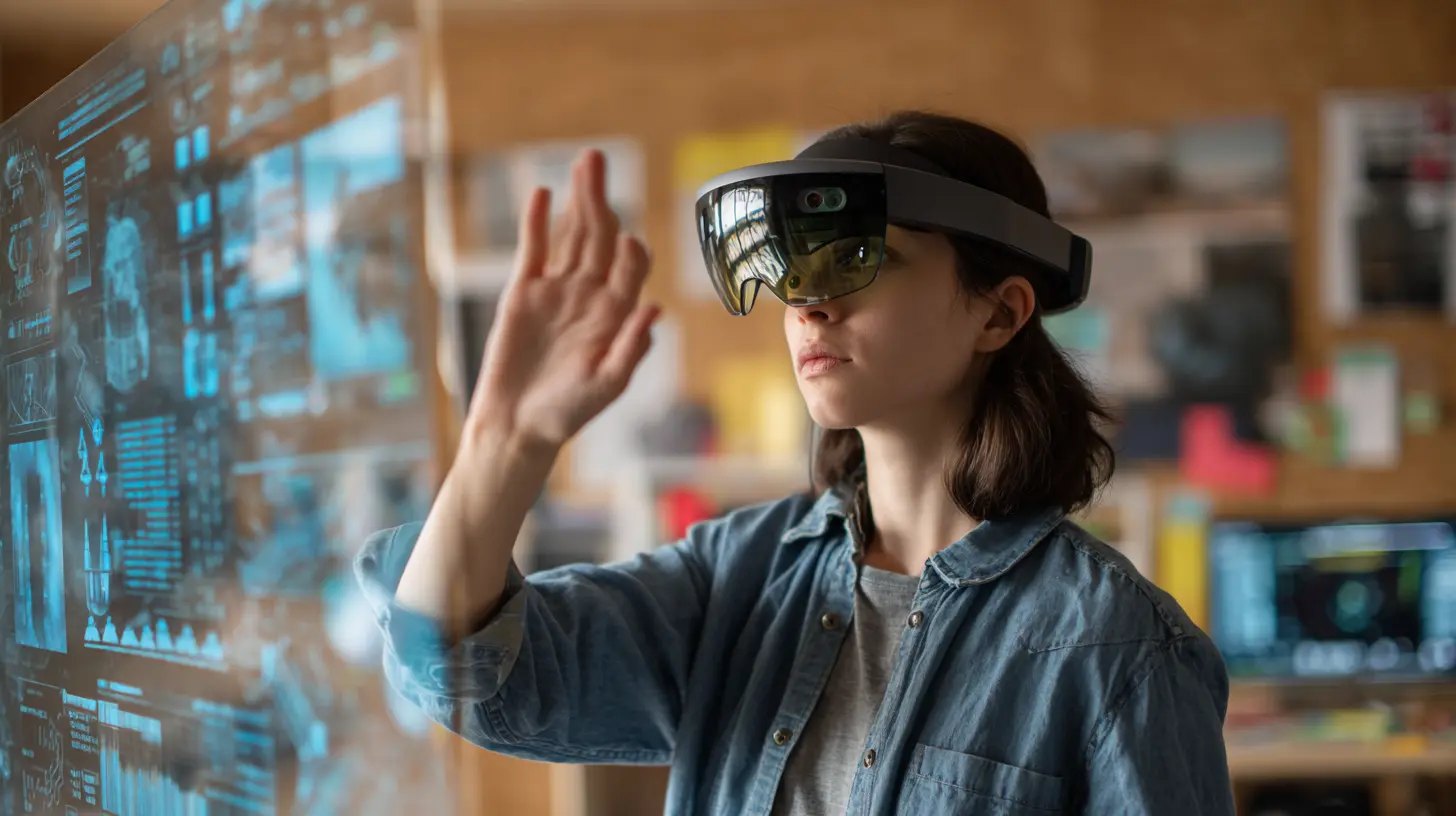
What Is Augmented Reality, Really?
Before we dive deeper, let me clear up a common mix-up. Augmented reality is not virtual reality. VR drops you into a completely fake world, like a video game. AR, on the other hand, layers digital stuff on top of the real world. Think of it as a digital sticker on your real-life photo. You see your actual room, but there is a hologram of a dinosaur standing on your rug. That is AR.The technology is already more common than you think. Remember Pokemon Go? That was AR. Snapchat filters that give you dog ears? Also AR. Even some car dashboards project directions onto the windshield. The hardware is getting cheaper and smaller. Apple and Meta are racing to release lightweight AR glasses that do not look like you are wearing a scuba mask. By 2026, these gadgets could be as normal as a pair of reading glasses.
So how does this apply to learning? Imagine a biology student dissecting a virtual frog without the smell of formaldehyde. Or a history student standing inside a 3D recreation of ancient Rome, watching gladiators fight. AR takes abstract concepts and makes them tangible. It turns the invisible into the visible. And that is where the magic happens.

The Classroom of 2026: No Walls, No Limits
Let me paint a picture for you. It is 2026. You are a high school student studying physics. Your teacher says, "Today we are learning about Newton's laws." Instead of a boring lecture, she hands you a pair of AR glasses. You put them on, and suddenly, the classroom transforms. A giant bowling ball appears in the middle of the room. You push it, and it rolls across the floor, accelerating just like Newton said it would. You can change the mass, add friction, or even throw it in zero gravity. It is like a video game, but you are actually learning.This is not a fantasy. Companies like Google and Microsoft already have AR education tools. Google's Expeditions lets teachers take students on virtual field trips to the Great Barrier Reef or Mars. Microsoft's HoloLens is used in medical schools to overlay 3D anatomy on real patients. By 2026, these tools will be cheaper and more widespread. Schools will not need expensive lab equipment. They will just need a headset and a good internet connection.
And here is the best part: AR works for any age. Kindergarteners can learn letters by seeing them float around the room. College students can practice surgery on a virtual patient. Retirees can explore the Louvre without leaving their couch. It is learning that adapts to you, not the other way around.
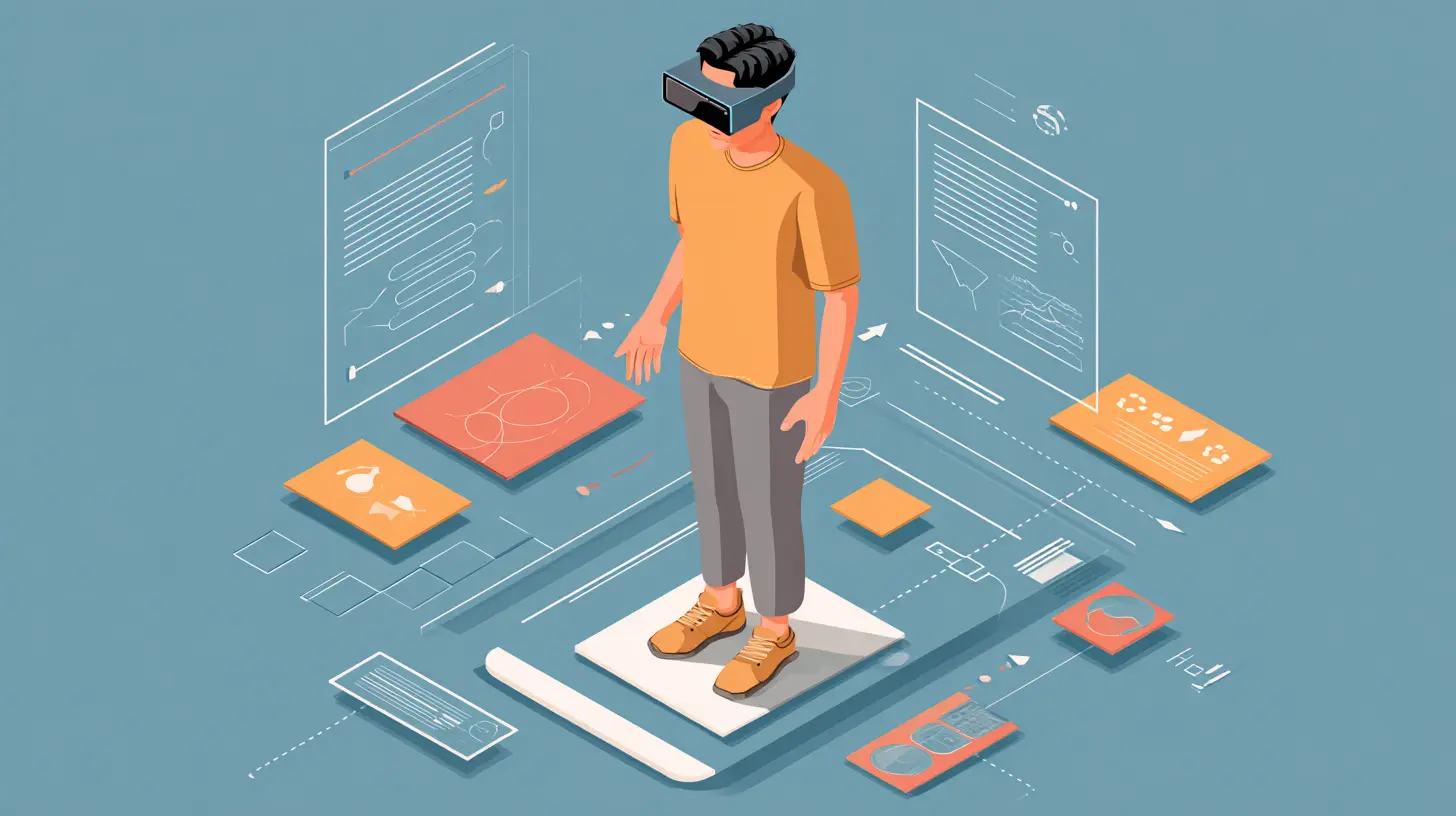
How AR Makes Learning Stick
You know that feeling when you try to remember something you read last week, but it is already gone? That is because your brain filters out boring stuff. But if you experience something, you remember it. Scientists call this "embodied cognition." When you move, touch, and interact, your brain creates stronger neural pathways. AR taps into that.Think of AR as a memory superglue. If I tell you that the Earth's core is about 5,500 degrees Celsius, you might forget it by dinner. But if you put on AR glasses and watch a glowing ball of molten iron pulse beneath your feet, you will never forget it. It becomes a story your brain can anchor onto.
This is huge for subjects that are traditionally hard to teach online. Take geometry. How do you explain a 3D shape on a 2D screen? You can't. But with AR, students can rotate a dodecahedron in mid-air, count its faces, and even cut it open. Suddenly, math is not abstract anymore. It is something you can hold in your hands, even if those hands are virtual.
By 2026, expect AR to be used for everything from language learning to vocational training. Imagine learning Spanish by pointing your phone at objects around your house and seeing their Spanish names pop up. Or practicing welding on a virtual metal beam before you touch a real torch. The possibilities are endless.
The Social Side of AR Learning
One of the biggest complaints about e-learning is that it is lonely. You sit alone in your room, staring at a screen. No classmates to ask questions. No teacher to crack a joke. AR can fix that too.New AR systems let multiple users see and interact with the same digital objects. Imagine a group of students in different cities all looking at the same 3D model of a human heart. They can point, highlight, and discuss it in real time. It is like being in the same room, but without the commute. Teachers can walk around the virtual model and point out details. Students can raise their virtual hands. It brings back the social energy that makes learning fun.
And let us not forget the fun part. AR turns learning into a game. When you finish a biology module, a virtual badge pops up. You can compete with friends to see who can identify the most constellations. It is like turning your study time into a treasure hunt. And who does not love a good treasure hunt?
But Wait, Are There Hurdles?
I am not going to pretend AR is perfect. There are some bumps on the road to 2026. First, cost. Good AR hardware is still expensive. A HoloLens can cost thousands of dollars. But remember how flat-screen TVs used to cost a fortune? Now you can grab one for a few hundred bucks. The same will happen with AR. By 2026, basic AR glasses might cost as much as a tablet.Then there is the internet problem. AR needs fast, stable connections to stream all that 3D data. In rural areas or developing countries, that is a challenge. But 5G is rolling out fast, and satellite internet like Starlink is getting better. We are not there yet, but we are getting close.
Another worry is screen fatigue. You might not want to wear glasses for hours. But designers are working on lighter, more comfortable frames. Some AR systems even use your smartphone camera, so you do not need extra gear. The key is to make it feel natural, not clunky.
And let me address the elephant in the room: distraction. If a student can summon a virtual dinosaur in the middle of a history lesson, will they pay attention? That is a real risk. But good teachers know how to guide focus. AR is a tool, not a toy. Used wisely, it amplifies learning instead of derailing it.
What Does This Mean for Teachers?
Teachers, I see you. You have been through the wringer. From chalkboards to smartboards to Zoom burnout. AR might feel like another thing to learn. But here is the good news: AR does not replace teachers. It makes your job more exciting.Instead of spending hours drawing diagrams on the board, you can pull up a 3D model with a wave of your hand. Instead of grading boring worksheets, you can watch students explore and ask questions. AR takes care of the boring stuff, so you can focus on what matters: inspiring curiosity.
By 2026, teacher training will include AR basics. You will learn how to set up virtual labs, create interactive scavenger hunts, and guide students through digital worlds. It is like being a tour guide for the mind. And honestly, that sounds way more fun than grading papers.
The Future Is Already Here
Let me give you some real examples. In 2023, a school in Japan used AR to teach kids about tsunami safety. Students saw a virtual wave rise in their classroom and practiced climbing to higher ground. In the UK, medical students used AR to practice stitching wounds on a virtual arm. In the US, a history class "visited" the Colosseum in Rome without leaving Texas.These are not one-off experiments. They are prototypes of what is coming. By 2026, AR will be baked into mainstream learning platforms. Imagine logging into a course and seeing a "3D mode" button next to the video. You click it, and suddenly you are inside the lesson. That is not a pipe dream. That is the next step.
And it is not just for schools. Companies will use AR for employee training. Imagine a new mechanic learning to fix an engine by seeing arrows and instructions overlaid on the real parts. Or a chef learning knife skills by watching virtual guides appear on their cutting board. The same technology that helps kids learn fractions will help adults learn job skills.
Will It Really Redefine E-Learning?
So, back to our big question: will augmented reality redefine e-learning by 2026? I think the answer is yes, but with a caveat. AR will not replace all e-learning. You will still read articles, watch videos, and take quizzes. But AR will be the spark that transforms the most boring topics into unforgettable experiences.Think of it like this. E-learning today is like listening to music on a tinny phone speaker. It works, but it is flat. AR is like putting on noise-canceling headphones and hearing the bass drop. It adds depth, emotion, and presence. By 2026, the students who learn with AR will have a huge advantage. They will not just memorize facts. They will understand them deeply.
But here is the thing: technology does not change education by itself. People do. Teachers, developers, and learners have to embrace it. If we treat AR as a gimmick, it will fizzle out. If we use it to ask better questions, solve real problems, and spark joy, it will redefine everything.
So, what do you think? Are you ready to put on those glasses and see the world differently? Because 2026 is not that far away. And the future of learning is already knocking at your door. It is colorful, interactive, and a little bit magical. All you have to do is open your eyes.
all images in this post were generated using AI tools
Category:
E Learning PlatformsAuthor:

Bethany Hudson
Discussion
rate this article
1 comments
Kate Middleton
Augmented reality has the potential to transform e-learning by creating immersive environments that enhance engagement and retention. By 2026, we may see a shift towards personalized learning experiences, making education more interactive and accessible for diverse learners around the globe.
May 22, 2026 at 2:42 AM
Bethany Hudson
I completely agree. Augmented reality can make learning more engaging and tailored to individual needs, opening up new possibilities for education worldwide. Let's see how quickly this evolves.