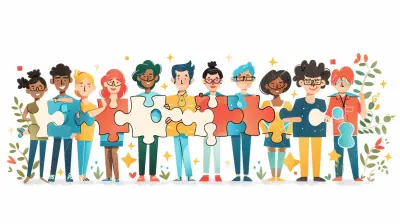
Why Group Projects Are Changing in 2026
7 September 2026
Group projects have been a staple of education for decades. The image of four students huddled around a library table, dividing slides, and hoping one person does not ghost the rest is practically a cultural touchstone. But that model is cracking. By 2026, the way collaborative assignments are designed, executed, and assessed is shifting in fundamental ways. This is not a trend driven by a single app or a new teaching fad. It is a response to how work itself has changed, how students communicate, and what employers actually need.

The Old Model Is Broken
Let us be honest about why traditional group projects often failed. The standard setup was simple: assign a topic, form teams of three to five, give them a deadline, and grade the final output. The problems were predictable. One student did most of the work. Another vanished until the night before. A third was too polite to confront anyone. The quiet student got steamrolled. The grade was a shared average, which meant the hard worker felt cheated and the slacker got a free pass.This system did not teach collaboration. It taught students how to manage resentment and how to do damage control. The teacher could not see who contributed what, because the final product was a single artifact. Process was invisible. Effort was guessed at. In 2026, that opacity is no longer acceptable, mostly because we now have the tools to see inside the work, and because the nature of professional collaboration has changed so much that the old classroom rituals feel like practicing for a job that no longer exists.

What Changed in the Workforce
The biggest driver of change is the shift to hybrid and asynchronous work. In 2019, a group project meant meeting in person. By 2024, most knowledge work involved distributed teams. By 2026, the expectation is that you can collaborate with someone you have never met, across time zones, using shared documents, version control, and asynchronous messaging. Schools have to prepare students for that reality.But more important than the tools is the workflow. Modern teams do not divide tasks by topic. They use continuous integration. They review each other's code or drafts in real time. They leave comments, suggest edits, and merge changes. The final product is not a single submission; it is a living document with a history. That history is the evidence of contribution.
So the 2026 group project is less about producing a static PowerPoint and more about demonstrating a process. Teachers are now looking at revision histories, comment threads, and task boards to see who did what, when, and how well. This is not surveillance. It is accountability, and it changes the incentive structure entirely.
The Rise of the Collaborative Document
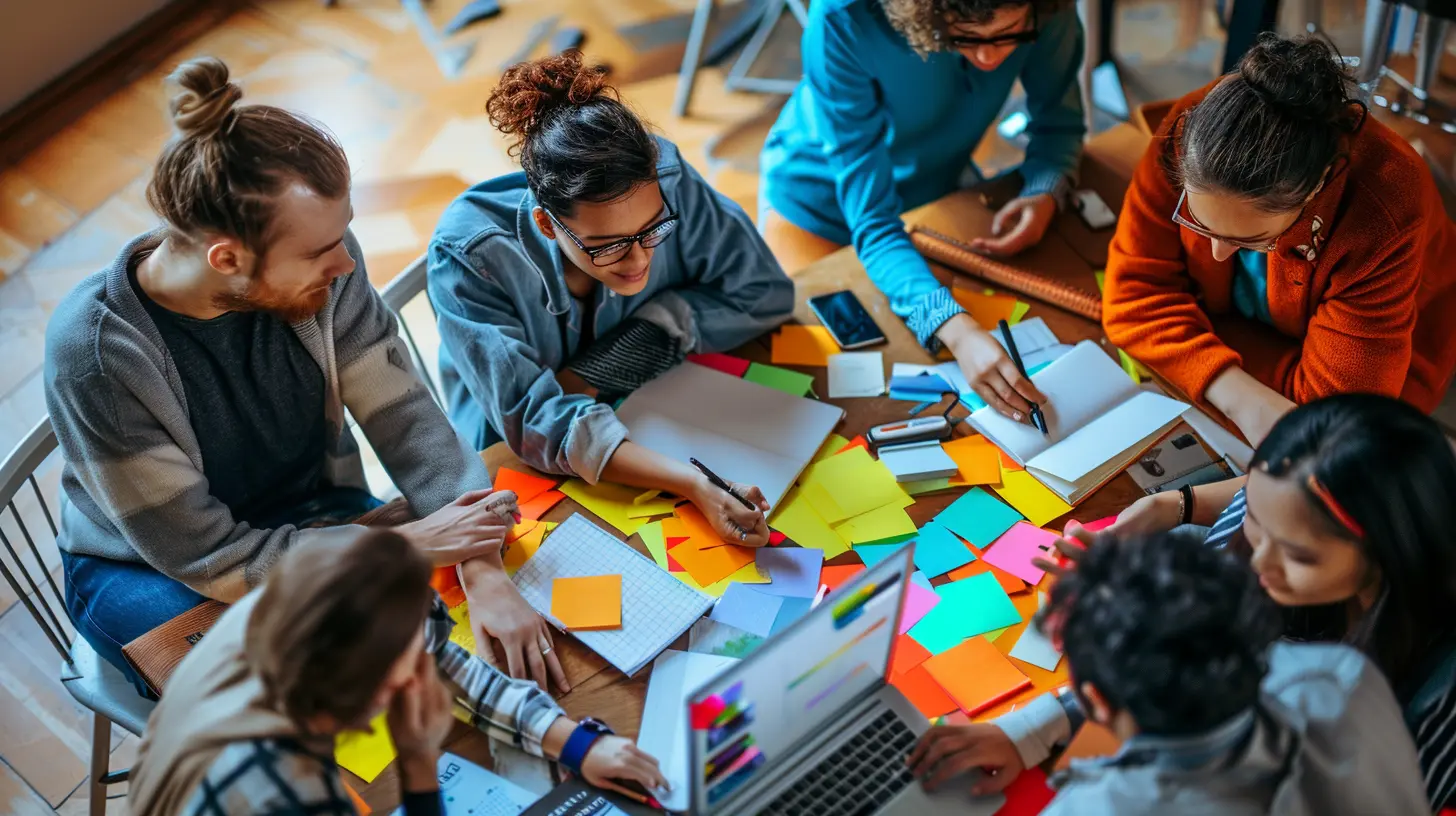
Consider the shift from emailing files to working in a shared document. Tools like Google Docs, Notion, and specialized platforms such as Figma for design or GitHub for code have become the default. But the real change is that these tools record everything. Every edit is timestamped and attributed. Every comment is visible. Every decision has a trail.In 2026, a well-designed group project will require students to work in a shared space from day one. The teacher can see the first tentative outline, the early messy draft, the argument in the comments about which sources to use, and the final polish. This does not just make grading fairer. It makes the learning visible. Students can reflect on their own process, see where they stalled, and understand how their contribution affected the group.
This is a double-edged sword. Some students find constant visibility stressful. They worry about making mistakes in front of peers and teacher. But that anxiety is exactly what professional life feels like now. In a remote workplace, your manager can see your commit history. Your colleagues can see your edit timestamps. Learning to work under that kind of benign scrutiny is a skill, and 2026 classrooms are starting to teach it directly.

Artificial Intelligence Changes the Division of Labor
The elephant in the room is AI. By 2026, generative AI is not a novelty. It is a standard tool. This has forced a rethink of what group projects are for. If a student can ask an AI to write a five-paragraph essay in ten seconds, then assigning that essay as homework is pointless. But group projects are not pointless, because AI cannot collaborate with humans in the same way. AI does not negotiate. It does not compromise. It does not get frustrated or learn from conflict.So the new group project is designed around tasks that AI cannot do alone, or rather, tasks where the human process is the point. For example, a group might be asked to debate a controversial policy and then write a joint recommendation. The AI can generate arguments for both sides, but the group must decide which arguments are stronger, which evidence is credible, and how to reach consensus. That decision-making process is the assignment.
This also changes the role of AI within the group. In 2024, using AI in a group project was often seen as cheating. By 2026, it is seen as a basic skill. The question is not whether to use AI, but how to attribute it. Groups are now required to document which parts were AI-generated and which were human-written. They must verify AI output for accuracy and bias. They must explain why they accepted or rejected AI suggestions. This is a much higher-order skill than writing a paragraph from scratch.
Assessment Shifts from Product to Process
The most visible change in 2026 is grading. The old rubric looked at content, organization, and presentation. The new rubric looks at contribution quality, communication patterns, and problem-solving behavior. Teachers are using data from collaboration platforms to build what are sometimes called process portfolios.A process portfolio might include:
- A log of who initiated tasks
- The number and quality of comments left on peers' work
- Evidence of incorporating feedback
- Screenshots or exports of chat discussions
- A final reflection that analyzes group dynamics
This does not mean the final product is ignored. It still matters. But it is weighted differently. A polished final report that one student wrote alone might earn a B. A rougher report that clearly shows deep collaboration, equal participation, and thoughtful negotiation might earn an A. The message is clear: how you work together matters as much as what you produce.
This shift has critics. Some argue it punishes naturally efficient groups. If two people do most of the work because the other two are slower, should the fast pair be penalized? The answer in 2026 is nuanced. Efficiency is valued, but only if it comes from good delegation, not from exclusion. A group that divides work by strengths and then integrates it well is different from a group where one person quietly does everything to avoid conflict.
New Roles and New Responsibilities
In the old model, roles were often informal. Someone became the leader because they were loud. Someone became the editor because they were good at grammar. The 2026 model formalizes roles, but not in the way you might think. Instead of assigning a single leader, groups often rotate roles every week.Common roles include:
- Facilitator (keeps meetings on track, sets agendas)
- Recorder (takes notes, tracks decisions)
- Devil's advocate (challenges assumptions, asks hard questions)
- Integrator (combines individual contributions into a coherent whole)
- Liaison (communicates with the teacher, requests resources)
Rotating these roles ensures that every student experiences the burden of facilitation and the discipline of integration. It prevents the common problem where one person dominates every conversation. It also teaches empathy. Students who have been the facilitator understand why the facilitator is not just a boss. They have felt the difficulty of keeping a group moving.
This rotation is not always popular. Some students are naturally better at certain roles. A shy student might dread being the devil's advocate. But that discomfort is the point. The goal is not to stay in a comfort zone. It is to build a toolkit of collaborative skills.
The Problem of Free Riding in a Digital World
Free riding, the act of letting others do the work, has not disappeared. But it has changed shape. In the past, a free rider could hide by doing nothing. In 2026, doing nothing is visible immediately. The collaboration platform shows zero activity. The teacher can see that a student has not opened the document in three days. This makes free riding harder to get away with, but it also makes confrontation more necessary.A common mistake in new group project designs is to rely on the software to solve the problem. The teacher sees the inactivity, but the students are still expected to handle it. Many groups do not know how to confront a peer. They do not want to be mean. They hope the problem will resolve itself. It will not.
So 2026 group projects often start with a lesson on conflict resolution. Students are taught how to have a direct, respectful conversation about non-participation. They practice scripts like, "I noticed you have not been in the document since Tuesday. Is there something blocking you?" This is uncomfortable, but it is a life skill. In the workplace, you cannot go to the manager every time a colleague is slacking. You have to learn to address it yourself.
If the direct conversation fails, there is an escalation path. The group can document their attempts, then bring the issue to the teacher. The teacher's role is not to punish the free rider immediately, but to mediate. The goal is to get the student re-engaged, not to shame them. Sometimes the student is dealing with a personal issue. Sometimes they are overwhelmed. A good process in 2026 is flexible enough to accommodate that, while still holding everyone accountable.
The Importance of Asynchronous Collaboration
One of the biggest changes in 2026 is the acceptance of asynchronous work. In the past, group projects required meetings. Everyone had to be in the same room at the same time. That was a logistical nightmare for commuters, athletes, and students with jobs. It also favored extroverts who think out loud. Introverts, who think more slowly and prefer writing, were often silenced.Asynchronous collaboration fixes that. Students can contribute when they are most productive. A night owl can write at midnight. An early riser can edit at six in the morning. The conversation happens in comments and threads, not just in live discussions. This does not mean live meetings disappear. They still happen, but they are shorter and more focused. The bulk of the work happens in the shared space.
This model is more inclusive. Students who are not quick on their feet can craft thoughtful responses. Students who speak English as a second language can take time to compose their thoughts. Students with social anxiety can participate without the pressure of a live audience. The result is often higher-quality work, because every voice is heard, not just the loudest.
However, asynchronous work has a downside. It requires strong written communication skills. A student who can talk well in a meeting but writes poorly will struggle. This is a real trade-off. Schools are responding by teaching written communication more explicitly, not as a grammar exercise, but as a collaborative tool. How do you write a comment that is critical but not harsh? How do you ask a clarifying question without sounding accusatory? These are the skills of 2026.
Real-World Example: The Engineering Capstone
Let us look at a concrete example. In many engineering programs, the senior capstone project is a group effort. In 2020, that meant a team of four students building a physical prototype. They met in a lab, used shared tools, and presented a final demo. In 2026, the same capstone might be entirely virtual. The team is spread across two campuses. They design the prototype in CAD software. They simulate it using cloud computing. They use a version control system for their code and a shared document for their report.The teacher does not see the final demo only. The teacher sees the git commit history. They see that one student wrote the simulation code, but another student found a critical bug and fixed it. They see that the third student wrote the test cases, and the fourth did the literature review. The final presentation is a video, but the process is fully transparent.
This capstone is harder than the 2020 version. It requires more self-management. There is no lab instructor walking around to keep students on task. There is no shared physical space that creates accidental conversations. The team must schedule their own check-ins, set their own milestones, and hold each other accountable. Students who thrive in this environment are highly sought after by employers, because they have already proven they can work in a distributed, digital team.
Common Mistakes Schools Are Making
Not every institution is adapting well. Some are making predictable errors.First, they are buying expensive collaboration platforms but not training students or teachers on how to use them effectively. A tool is only as good as the workflow around it. If the teacher still grades only the final PDF, then the collaboration data is wasted.
Second, they are over-correcting and making every assignment a group project. Collaboration is a skill, but so is independent work. Some tasks are better done alone. Reading comprehension, for example, is personal. Forcing group work on every assignment creates fatigue and resentment. The best curricula in 2026 balance individual and collaborative work deliberately.
Third, they are ignoring the emotional dimension. Group projects are stressful because they involve interpersonal risk. Students are afraid of being judged, rejected, or ignored. A teacher who simply says, "Work together," without providing scaffolding for trust-building is setting the group up for failure. Good group project design includes icebreakers, team agreements, and early low-stakes tasks that build cohesion before the high-stakes work begins.
Fourth, they are using AI detection tools as a weapon rather than a teaching tool. If a group is required to document their AI use, then the teacher should not punish them for using AI. The punishment should come only if they fail to document it, or if they use AI to replace their own thinking. The goal is not to catch cheaters. The goal is to teach responsible use.
Practical Advice for Students
If you are a student facing a group project in 2026, here is what you should do.First, treat the collaboration platform as your primary workspace. Do not do your work in a separate document and then paste it in. Do everything in the shared space, even if it is messy. The mess is evidence of your effort.
Second, communicate early and often. If you are confused, ask a question in the group chat. If you disagree, say so respectfully. Silence is not a strategy. It is a way to build resentment.
Third, volunteer for the role you are least comfortable with. If you are shy, volunteer to facilitate a meeting. If you are disorganized, volunteer to be the recorder. This is the fastest way to grow.
Fourth, document your AI use carefully. When you use an AI tool, copy the prompt and the output into a separate document. Then write a short note explaining what you changed and why. This shows the teacher that you are using AI as an assistant, not a replacement.
Fifth, do not wait until the last minute to review your peers' work. Leave comments early, when there is still time to change things. Late feedback is almost useless.
Practical Advice for Teachers
For teachers, the most important shift is to stop thinking of yourself as the sole assessor and start thinking of yourself as a coach and process designer.Design the project backwards. Decide what collaborative skills you want to teach, then create a task that requires those skills. If you want to teach negotiation, create a task with limited resources so groups must argue about allocation. If you want to teach integration, give each student a different piece of the puzzle so they must share and combine.
Use the collaboration data, but do not obsess over it. The data is a starting point for conversation, not a verdict. If you see that one student has done very little, talk to them privately before assuming the worst. Ask what is going on. Sometimes the student is struggling with the material. Sometimes they are dealing with a crisis. Sometimes they are simply lost and too embarrassed to ask for help.
Finally, grade the process, but also grade the learning. Have each student write an individual reflection that answers three questions: What did I contribute? What did I learn from my peers? What will I do differently next time? This reflection is where the real learning becomes visible.
The Role of Peer Evaluation
Peer evaluation is not new, but it is becoming more sophisticated. In 2026, students are not just rating each other on a scale of one to five. They are providing qualitative feedback on specific behaviors. For example, a student might write, "I appreciated that Maria shared her sources early, but I wish she had asked for feedback before finalizing her section."This feedback is shared anonymously with the teacher, and often with the student. The goal is not to punish but to improve. A good peer evaluation system is structured to encourage honesty. Students are told that their evaluations will be compared with the collaboration data. If a student gives everyone perfect scores but the data shows they did no work, that is a red flag.
Some schools are moving away from peer evaluations entirely because they are biased. Students often rate friends higher and quiet students lower, regardless of actual contribution. The counterargument is that peer evaluation is a skill in itself. Learning to give honest, specific, and kind feedback is valuable. The solution is to train students on how to evaluate, not to abandon the practice.
The Future Beyond 2026
Looking ahead, the trend is clear. Collaboration will become even more distributed, more digital, and more transparent. Virtual reality might eventually allow groups to meet in shared spaces that feel physical. AI might become an active participant in group discussions, not just a tool. But the core principles will remain. Good collaboration requires trust, communication, and accountability. The tools change, but the human skills are constant.The group project of 2026 is not easier than the group project of 2010. It is harder in some ways, because it demands more self-awareness and more intentionality. But it is also fairer. The quiet student can be heard. The free rider can be seen. The process is not a mystery. That is a genuine improvement, and it is worth embracing.
all images in this post were generated using AI tools
Category:
Student LifeAuthor:

Bethany Hudson
Discussion
rate this article
2 comments
Eva McCarthy
This article offers valuable insights into the evolving landscape of group projects. It's encouraging to see how collaboration methods adapt, fostering creativity and teamwork in new ways.
October 8, 2026 at 3:10 AM
Buzz McCartney
Group projects in 2026 emphasize collaboration, technology, and real-world problem solving.
September 11, 2026 at 3:05 AM
Bethany Hudson
Absolutely, the shift towards collaboration and technology in group projects is transforming how we tackle real-world challenges. It's exciting to see students engage in more meaningful, hands-on experiences.